Home

Main navigation

  • home
  • slides
  • essays
  • articles
  • books
  • video
  • q & a
  • blog
Secondary menu
  • about us
    • scholars
    • privacy
    • support
    • image rights
    • credits
    • contact us
  • resources

Secondary menu

  • about us
    • scholars
    • privacy
    • support
    • image rights
    • credits
    • contact us
  • resources

Ancient Indus Valley Civilization Articles

370 peer-reviewed articles from leading journals about the latest discoveries about the ancient Indus civilization, its antecedents and contemporaries in the Persian Gulf and Mesopotamia, during the Bronze Age 3500-1700 BCE by the world's ancient Indus archaeologists and scholars.
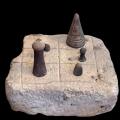
Split Appearance. Patchy and Coherent Features in Fragments of Gameplay, Mohenjo-daro, Sindh

  • Possible burnt brick gameboard from Mohenjo-daro
Elke Rogersdotter

Picture a lane in Mohenjo-daro around 2300 BCE, a narrow, mudbrick-lined passages that still trace the lower town today, just as remarkable in their orderliness as the city's famous covered drains. Someone sets down a handful of small objects. >

Preliminary Report on Kot Diji Excavations 1957-58

  • Cover
F. A. Khan

The booklet Kot Diji published by the Department of Archaeology details the excavations carried out at the site of Kot Diji, located in the Khairpur district of Sindh about 40 km from Mohenjo-daro. >

Wheeled Vehicles of the Indus Valley Civilization

  • Toy cart from Nausharo, Harappan period
Jonathan Mark Kenoyer

The paper's central argument is straightforward and important: the wheeled bullock cart of the Indus Valley was an indigenous invention, not a technology diffused from Mesopotamia or Central Asia, as earlier colonial-era scholars once assumed. >

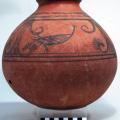
Perspectives from the Indus: Contexts of interaction in the Late Harappan/Post-Urban period

  • indus jar gulf
Rita P. Wright

Rita P. Wright, an archaeologist with long experience understanding the Indus areas around Harappa (see the Beas Settlement and Land Survey) looks at the complex evidence surrounding the decline of Indus civilization at the end of the third and beginning of the second millennium (around 2000 BCE and afterwards). >

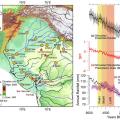
River drought forcing of the Harappan metamorphosis

  • Figure 1
Hiren Solanki

This article, which has received widespread press coverage, provides a detailed climate and hydrological reconstruction of the Indus (Harappan) civilization, focusing on how cycles of river drought and fluctuating monsoon rainfall influenced its trajectory. >

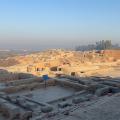
Aspects of Palace Life at Mohenjo-Daro

  • So-called College on the Stupa Mound
Massimo Vidale

Were there palaces at Mohenjo-daro? This article examines the social implications associated with historical architecture. The presence of centralized "palaces" suggests a social stratification including an elite class. >

An Investigation of a Harappan Trading Outpost on the Makran Coast

  • sotka koh
Kaiser Tufail

"We drove eastward for another half mile into the Shadi Kaur Valley. There the trail just disappeared. After winding througha mosaic of sand hills, we came to the service road connecting Pasni with a new water-pumping station. But the station marked the end of that road too, so we drove cross-count… >

Regional Diversity in the Harappan World: The Evidence of the Seals

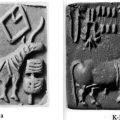
  • Comparison of hatch necked Unicorn Seals from Lothal and Kalibangin
Marta Ameri

During the second half of the 3rd millennium BC, the Harappan Civilization covered an area of over one million square kilometers in South Asia, from the Afghan highlands to western India. Excavations at large urban sites like Harappa, Mohenjo-daro, and Dholavira, as well as at smaller production si… >

Different strategies in Indus agriculture: the goals and outcomes of farming choices

  • Charred wheat seeds
Jennifer Bates

Things were never simple in Indus times. This excellent paper neatly summarizes what we know about ancient Indus agricultural strategies in the face of diverse local conditions and possibly radical climate changes about 4,000 years ago. >

Deep Learning in Archiving Indus Script and Motif Information

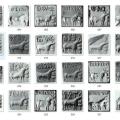
  • A few samples from the image dataset of IVC seals.
Vaishnavi Dixit

One day Artificial Intelligence (AI) could be of great help in reading ancient Indus inscriptions. There are likely to be many steps before we get there however. >

Lepromatous leprosy in Bronze Age Oman: micro-CT provides tools for paleopathology in fragmentary and commingled assemblages

  • Right and left maxillae from the bone pit
Gwen Robbins Schug

The study from Frontiers in Medicine, March 2025 presents the first paleopathological evidence for lepromatous leprosy in Bronze Age Oman (2500–2000 BCE), specifically at the site of Dahwa. >

Were the Cretulae (Clay Sealings) from the Indus Port Town of Lothal Part of an Administrative Archive? Contextual, Interpretive, and Comparative Evidence

  • First specimens of clay sealings collected from the 1920s
Dennys Frenez

"Once considered in all their components, clay sealings can in fact be key objects for understanding several aspects of the socio-economic organisation of the Indus Civilization," writes the author of this important recent paper built on years of work and thinking about the unique Lothal sealing trove he has done so much to help us understand. >

New radiocarbon dates of human tooth enamel reveal a late appearance of farming life in the Indus Valley

  • Map with location of Mehrgarh
Benjamin Mutin

This is an extremely important paper, just published in Nature. It completely scrambles timelines around South Asia and the development of agriculture in the region. >

Bronze Age cymbals from Dahwa: Indus musical traditions in Oman

  • The cymbals after removing part of the fill layer
Khaled A. Douglas

Sometimes you have to find something far away to understand something nearby. This seems to be the case with the discovery of a complete set of copper cymbals in Oman, which have allowed archaeologists to be much more sure that similar finds of only one cymbal in Mohenjo-daro and elsewhere were actually musical instruments. >

The So-Called Stupa Mound at Mohenjo Daro and its Relationship with the Ancient Citadel

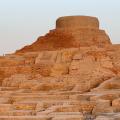
  • Mohenjo-daro view of Stupa mound at sunset
Giovanni Verardi

What was really going on at the so-called stupa mound in Mohenjo-daro? This important paper by Giovanni Verardi and Federica Barba challenges the long-standing interpretation of the so-called Stupa Mound at Mohenjo Daro, as a Buddhist stupa dating to the 2nd century AD. >

Taphonomy and labour at the Indus Valley site of Harappa (3700–1300 BC)

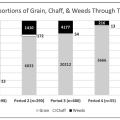
  • Proportions of grain, chaff and weed seeds in Harappa assemblages
Nathaniel James

This is a complex paper that addresses an important issue in the emergence of cities during the Bronze Age: how were people in new and developing urban centers fed? As the authors put it crisply: "The populations of urban sites such as Harappa required substantial food supplies." >

Faking it? X-Ray Diffraction Analysis of Beads from Kotada Badli Reveals Evidence for Imitation Steatite in Harappan Gujarat

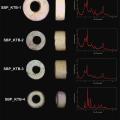
  • Four Small White Beads from Kotada Bhadli and their XRD Spectra
Brad Chase

An intriguing article in the way it creates multiple openings in thinking about ancient Indus society. The subject is a set of three of four beads found at a rural "Sorath Harappan" site (2300-1900 BCE) in Gujarat. >

Debt and inequality: Comparing the "means of specification" in the early cities of Mesopotamia and the Indus civilization

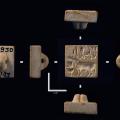
  • Photograph of an Indus seal from each side
Adam S. Green

"Debt lurks in the shadow of reciprocity," is the wonderful starting sentence of this paper. Highly theoretical, it opens up important questions about seals in the ancient Indus and Mesopotamian civilizations and their role in the system of administrative control which helped integrate society at the dawn of urban civilization. >

Feeding ancient cities in South Asia: dating the adoption of rice, millet and tropical pulses in the Indus civilisation

  • The region across which Indus-period settlements are distributed
Cameron A. Petrie

An investigation of the agricultural practices that supported the rise of the Indus civilization by focusing on summer and winter crops used at settlements in the Rakhigarhi, Haryana area, particularly Masudpur VII and Masudpur I. >

Sabarmati and its connection with the Harappan port Lothal and the Nal corridor: A study using multi-sensor data, cloud-computing and multi-platforms

  • Study area map
Ekta Gupta

Was the ‘dockyard’ at Lothal a ‘dockyard’ or not? An in-depth look at this question in a true multi-dimensional manner is long overdue. This study seeks to revisit the dockyard hypothesis by examining Lothal from a landscape perspective, using advanced techniques such as multi-sensor remote sensing, cloud computing, and digital elevation models. >

A Bronze Age Inland Water Network and Its Role in the Maritime Trade Network of the Harappan (Indus) Civilization

  • Study Area Map
Ekta Gupta

Lothal was part of an important inland system of navigable pathways that traversed the whole adjoining region, possibly even extending towards Mohenjo-daro. >

Mohenjo-daro and Interregional Connections in the Indus Civilization: Evidence from Inscribed Seals

  • Indus Unicorn Seal
Gregg M. Jamison

One way to understand the connections between ancient Indus sites, often separated by enormous distances, is to look ever more closely at some of their smallest artefacts – in this case unicorn seals, usually merely 5 cm square. >

Invisible Value or Tactile Value? Steatite in the Faience Complexes of the Indus Valley Tradition

  • faience bangle and miscellaneous faience objects
Heather M.L. Miller

It is really nice when an author posits a hypothesis, discusses why or why it may not be true, introduces another and then weighs them without necessarily strongly committing to either. In this case, Dr. Heather M. L. Miller tries to determine why ancient Indus craftspeople added steatite (or talc… >

Proto-Elamite Writing in Iran

  • Map of the archaeological sites
Francois Desset

Early writing or sign systems were fragile. They could disappear leaving seemingly little trace in the systems that followed. This is true of the ancient Indus sign system. It is also true of the proto-Elamite one. >

Counter-intuitive influence of Himalayan river morphodynamics on Indus Civilisation urban settlements

  • Topographic map showing northwestern India and Pakistan
Ajit Singh

This is a really important article in that it shows how modern scientific tools and techniques can be used to cast surprising light on the assumptions and conclusions [myths?] that are often drawn from the limited set of evidence archaeologists have to work with. >

Artifact Reuse and Mixed Archaeological Contexts in Chatrikhera, Rajasthan

  • Stone mortar that has been repurposed as a pivot for a wooden gate
Teresa R. Raczek

"Studying the reuse and recycling of artifacts in contemporary contexts aids in the understanding of such actions in the past," write the authors (p. 486), who provide ample evidence that this is the case and offer another lens through which one can interrogate archaeological findings. >

On the Development of Indus Technical Virtuosity and Its Relation to Social Structure

  • Steatite beads from the Early Harappan Periods
Massimo Vidale

This paper focusses on "the distinctive Indus characteristic of inventing and diffusing elaborated techniques for the production of small, valuable objects, especially ornaments." >

Early Villages from Baluchistan to Western Uttar Pradesh and Gujarat

  • map
Dilip K. Chakrabarti

There are not many comprehensive summaries of the development of agriculture in the western subcontinent. This 50 page piece from the book History of Ancient India II: Protohistoric Foundations (2014) is a welcome exception and explores the development of early agricultural villages from Balochistan to Gujarat and their role in the rise of the Harappan Civilization. >

The Story of an Ancient Dock: Lothal in the History of the Indian Ocean

  • Lothal Dockyard
Shereen Ratnagar

Shereen Ratnagar writes with a crystalline, no-nonsense intelligence about Lothal and its famous "dockyard" in a way that both uplifts and contextualizes this strange feature of a relatively small Harappan site. >

Inscribed Unicorn Seals from Bagasra, Gujarat: A Comparative Analysis of Morphology, Carving Styles, and Distribution Patterns

Gregg M. Jamison

The substantial article examines seven inscribed unicorn steatite seals from the Indus site of Bagasra (Gola Dhoro), in Gujarat. These seals are important for understanding the craft industry of the Indus Civilization. >

Pagination

  • Page 1
  • Page 2
  • Page 3
  • Page 4
  • Page 5
  • Page 6
  • Page 7
  • Page 8
  • Page 9
  • …
  • Next page
  • Last page

follow us

Follow us on Facebook, Twitter and Instagram.
Videos on YouTube.
Occasional Newsletter.

Articles by Subject (48)
  • Agriculture
  • Animals
  • Archaeological History
  • Archaeologists
  • Architecture
  • Beads
  • Cemeteries and Burials
  • Ceramics
  • Crafts
  • Culture
  • Decline
  • Dilmun
  • Environment
  • Evolution
  • Excavations
  • Figurines
  • Fishing
  • Flint
  • Food
  • Games
  • Gender
  • Harappa
  • Kulli Culture
  • Manufacture
  • Mesolithic Period
  • Music
  • Nal
  • Natural Resources
  • Neolithic
  • New Discoveries
  • Ornaments
  • Pottery
  • Raw Materials
  • Religion
  • Rock Art
  • Script
  • Seals
  • Steatite
  • Stoneware
  • Technology
  • Textiles
  • Tools
  • Toys
  • Trade
  • Unicorn
  • Urbanism
  • Water
  • Writing

Q and A

Questions and Answers from our site visitors to Indus scholars like Iravatham Mahadevan, Richard H. Meadow, Shereen Ratnagar, Jane McIntosh, Asko Parpola and Rita P. Wright.

Articles by Place (54)
  • Afghanistan
  • Ahar Banas [Rajasthan]
  • Allahdino
  • Amri
  • Arabia
  • Bagasra
  • Balakot
  • Balathal
  • Balochistan
  • Binjor
  • BMAC
  • Central Asia
  • Chanhu-daro
  • Dholavira
  • Dilmun
  • Dilmun (Bahrain)
  • Farmana
  • Gujarat
  • Halil Rud
  • Harappa
  • Haryana
  • Iran
  • Kalibangan
  • Karanpura
  • Kashmir
  • Khambat
  • KPK (NWFP)
  • Lakhan Jo Daro
  • Lothal
  • Madhya Pradesh
  • Margiana
  • Mehrgarh
  • Mesopotamia
  • Mitathal
  • Mohenjo-daro
  • Mundigak
  • Oman
  • Oxus
  • Pak
  • Punjab
  • Rajasthan
  • Rakigarhi
  • Rohri Mines
  • Rojdi
  • Sanauli
  • Shahr-i Sokhta
  • Shikarpur
  • Shortugai
  • Sindh
  • Sonari
  • Sutkagen Dor
  • Tamil Nadu
  • Trade
  • Uttar Pradesh
Articles by Author (299)
  • F. A. Khan
  • Abe, Yoshinari
  • Adhikari, Ronojoy
  • Ajithprasad, P.
  • Al-Jahwari, Nasser S.
  • Ameri, Marta
  • Amundson, Ronald
  • Arbuckle, Benjamin S.
  • Aruz, Joan
  • Ashraf, Md. Izhar
  • Atturu, Deva
  • Baidya, Abu Saeed
  • Bakry, A.
  • Balakrishnan, R.
  • Balasubramaniam, Chitra
  • Balista, Claudio
  • Baqri, Syed Rafiqul Hassan
  • Barba, Federica
  • Basak, Shubjam
  • Bates, Jennifer
  • Beaubien, Harriet F.
  • Beaudry, Marilyn P.
  • Belcher, Wayne R.
  • Belcher, William R.
  • Betts, Alison
  • Bhan, Kuldeep
  • Bhaskar, M. V.
  • Bhattacharya, Ujjwal
  • Biagi, Paolo
  • Blevins, K. Elaine
  • Bolger, Diane
  • Bondioli, Luca
  • Bosch, David
  • Bosch, Leslie
  • Bryson, Reid A.
  • Burton, James H.
  • Buylaert, Jan-Pieter
  • Cable, Charlotte M.
  • Cárdenas, Marc
  • Carter, Alison
  • Carter, Andrew
  • Carter, R. A.
  • Carter, Savannah
  • Caspers, Elisabeth C.L. During
  • Cattani, Maurizio
  • Ceccarelli, Alessandro
  • Chakrabarti, Dilip K.
  • Chase, Brad
  • Chatterjee, Malavika
  • Chattopadhyay, Pranab K.
  • Choi, Jungwoo
  • Clark, J. Desmond
  • Clark, Sharri R.
  • Conesa, Francesc C.
  • Coningham, Robin
  • Coppa, Alfredo
  • Cork, Edward
  • Cortesi, E.
  • Cox, Brett
  • Craig, Oliver E.
  • Cremaschi, Mauro
  • Cubas, Miriam
  • Dales, George F.
  • Dangi, Vivek
  • Daniell, Rachel
  • Dave, Vasant
  • David-Cuny, Helene
  • Davis, Mary A.
  • Decaix, Alexia
  • Densmore, Alexander L.
  • Desset, Francois
  • Didier, Aurore
  • Dixit, Vaishnavi
  • Dixit, Yama
  • Douglas, Khaled A.
  • Dubova, Nadezhda A.
  • Dupree, Louis
  • Esposti, Michele Degli
  • Fantuzzi, Tiziano
  • Franco, Carlo
  • Franke, Ute
  • French, Charly A. I.
  • Frenez, Dennys
  • Fuller, Dorian Q.
  • Gadekar, Charusmita
  • Garbe, Lisa
  • Garcia, Arnau
  • García-Granero, Juan José
  • Garrett, Zenobie S.
  • Gasparotto, Giorgio
  • Ghauri, Zubair Shafi
  • Giesche, Alena
  • Giosan, Liviu
  • Girod, Alberto
  • Glascock, Michael D.
  • Good, Irene
  • Gray, Kelsey
  • Green, Adam S.
  • Jade d'Alpoim Guedes
  • Guha, Sudeshna
  • Guida, Giuseppe
  • Gupta, Ekta
  • Gupta, Sanjeev
  • Haerinck, Ernie
  • Haider, Romana
  • Haquet, Jerome F.
  • Hemphill, Brian E.
  • Henny, A. S.
  • Heron, Carl P.
  • Hesein, Mohammed
  • Heydari, M.
  • Higham, T.
  • Hobbs, Franklin
  • Hoddell, David A.
  • Hoffman, Brett C.
  • Hong, Jong Ha
  • Hritz, Carrie
  • Hussain, Nushrat
  • Jadhav, Nilesh
  • Jain, Mayank
  • Jain, Vikrant
  • James, Nathaniel
  • Jamison, Gregg M.
  • Jarrige, Jean-François
  • Jogelkar, P. P.
  • Joglekar, Hrishikesh
  • Jones, Penelope J.
  • Kamenov, George D.
  • Kashyap, Arunima
  • Kazi, M. Mukhtiar
  • Kennedy, K.A.R.
  • Kenoyer, Jonathan Mark
  • Khan, Aurangzeb
  • Kim, Yong Jun
  • Kimbrough, C. K.
  • Kingwell-Banham, Eleanor
  • Knox, J. Robert
  • Krigbaum, John
  • Krishnan, K.
  • Kumar, Manmohan
  • Lancelotti, Carla
  • Laursen, Steffen Terp
  • Law, Randall
  • Lazzari, A.
  • Leach, Alexandra
  • Lee, , W. J.
  • Lemmen, Carsten
  • Lentz, David L.
  • Lightfoot, E.
  • Lombardo, Giovanni
  • Lovell, Nancy
  • Lukacs, John R.
  • Mackay, Dorothy
  • Mackay, Ernest
  • Madella, Marco
  • Mahadevan, Iravatham
  • Mahajan, Sangeeta
  • Majid, Jaseera C.
  • Malik, Arun
  • Mandal, D.
  • Manjul, Arvin
  • Manjul, Sanjay Kumar
  • Manuel, Mark
  • Mariottini, Maurizio
  • Mark, Darren F.
  • Mason, Philippa J.
  • Mazuy, Arnaud
  • Meadow, Richard H.
  • Meiggs, David
  • Mery, Sophie
  • Michniak, Ryszard
  • Mille, Benoit
  • Miller, Heather M.L.
  • Miller, Heidi J.
  • Mishra, Vimal
  • Misra, V. D.
  • Misra, V. N.
  • Mitra, Debasis
  • Mohanty, R. K.
  • Moraleda-Cibrián, Nuria
  • Moulherat, Christophe
  • Mughal, M. Rafique
  • Mukhopadhyay, Bahata Ansumali
  • Muller, Wolfgang
  • Munshi, Avadreep
  • Murray, Andrew S.
  • Mushrif-Tripathy, V.
  • Mutin, Benjamin
  • Nakai, Izumi
  • Narasimhan, Vagheesh M
  • Nava, Allessia
  • Negrino, Fabio
  • Neumayer, Erwin
  • News, Dawn
  • Nisbet, Renato
  • T. C. O'Connell
  • Tamsin C. O'Connell
  • Oh, Chang Seok
  • Oldijam, Eric
  • Orengo, Hector A.
  • Otarola-Castillo, Erik
  • Pal, Dipak C.
  • Pal, J.N.
  • Pandey, Lalit
  • Panyam, Amrithavalli
  • Parikh, Danika
  • Parpola, Asko
  • Patel, Ambika
  • Patterson, Nick J
  • Paul, Debajyoti
  • Pendall, Elise
  • Petrie, Cameron A.
  • Pisan, Alessandra
  • Possehl, Gregory L.
  • Prabhakar, V. N.
  • Pracejus, Bernhard
  • Price, T. Douglas
  • Priori, Gianfranco
  • Quinn, P. S.
  • Quivron, Gonzague
  • Raczek, Teresa R.
  • Rahmstorf, Lorenz
  • Rajagopalan, Balaji
  • Rajesh, S.V.
  • Rao, Rajesh P. N.
  • Ratnagar, Shereen
  • Reade, Julian
  • Reddy, Seetha N.
  • Regert, Martine
  • Rizvi, Uzma Z.
  • Robinson, Andrew
  • Rogersdotter, Elke
  • Roux, P. le
  • Salvatori, Sandro
  • Sankhyan, A. R.
  • Schug, Gwen Robbins
  • Schug, Malcolm
  • Schuldenrein, Joseph
  • Sengupta, Shamashis
  • Sharma, Bhanu Prakash
  • Sharma, G.R.
  • Sher, G. M.
  • Shin, Dong Hoon
  • Shinde, Vasant
  • Shirataki, Junko
  • Shirvalkar, Prabodh
  • Sidoti, Giancarlo
  • Singh, Ajit
  • Singh, Ravindra N.
  • Sinha, Rajiv
  • Sinha, Sitabhra
  • Siviero, Anna
  • Smith, Monica L.
  • Solanki, Hiren
  • Sonawane, V. H.
  • Spataro, Michela
  • Spate, Michael
  • Starnini, Elisabetta
  • Strolin, Laura
  • Sucuoglu, Can
  • Sugandhi, Namita S.
  • Suryanarayan, Akshyeta
  • Tengberg, Margareta
  • Thirumalai, Kaustubh
  • Thomsen, Kristina J.
  • Thornton, Christopher P.
  • Tombret, Olivier
  • Tosi, M.
  • Toyoma, Kanac
  • Tufail, Kaiser
  • Turner, A. Keith
  • Uesugi, Akinori
  • Vahia, Mayank
  • Valentine, Benjamin
  • Varma, Supriya
  • Veesar, G. Mohiuddin
  • Verardi, Giovanni
  • Vermaak, Petrus S.
  • Vidale, Massimo
  • Villanueva, Joan
  • Villasana, Isabell
  • Vreeze, Michel de
  • Waele, An De
  • Waghmare, Pranjali
  • Walker, Joanna R.
  • Wankowski, Jacek
  • Weber, Steve
  • Weeks, Lloyd
  • Williams, Kimberly D.
  • Woo, Eun Jin
  • Wright, Rita P.
  • Xu, Huifang
  • Yadav, Nisha
  • Yadav, Yogesh
  • Yamahana, Kyoko
  • Yatoo, Mumtaz
  • Zahir, Muhammad
  • Zazzo, Antoine
  • Zhang, Guilin
© Harappa.com 1995-2026 31