Home

Main navigation

  • home
  • slides
  • essays
  • articles
  • books
  • video
  • q & a
  • blog
Secondary menu
  • about us
    • scholars
    • privacy
    • support
    • image rights
    • credits
    • contact us
  • resources

Secondary menu

  • about us
    • scholars
    • privacy
    • support
    • image rights
    • credits
    • contact us
  • resources

Ancient Indus Valley Civilization Articles

371 peer-reviewed articles from leading journals about the latest discoveries about the ancient Indus civilization, its antecedents and contemporaries in the Persian Gulf and Mesopotamia, during the Bronze Age 3500-1700 BCE by the world's ancient Indus archaeologists and scholars.
Bricks and urbanism in the Indus Valley rise and decline

Aurangzeb Khan

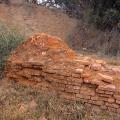
"The building material for the villages and cities of the IVC [Indus Valley Civilization] was predominantly mud brick. Only in the Mature phase were baked bricks used in quantity, especially for walls and floors exposed to water (Possehl, 2002; Datta, 2001). This phase of baked bricks coincides wit… >

Indus Administrative Technology - New Insights on Harappan Stamp Seals and their Impressions on Clay Tags

Dennys Frenez

A richly illustrated slide journey through seals and sealings, how and why they were used in other ancient civilizations, and primarily what we might know and deduce about their use in ancient Indus cities. Dennys Frenez has been studying a large group of accidentally fired Lothal sealings for many years, and is joined by other distinguished archaeologists in what was originally a symposium on bead and seal technologies at the University of Padua, Italy, in 2019. >

Killing the Priest-King: Addressing Egalitarianism in the Indus Civilization

  • Unicorn stamp seals recovered from Mohenjo-daro
Adam S. Green

A provocative paper which claims that "the Indus civilization reveals that a ruling class is not a prerequisite for social complexity" (p. 1). The author, who is at Cambridge University where he has long been involved with the groundbreaking Two Rains project, starts with John Marshall and other ea… >

Archaeology at Ras Muari: Sonari, A Bronze Age Fisher-Gatherers Settlement at the Hab River Mouth (Karachi, Pakistan)

Paolo Biagi

Italian archaeologists have been critical to unearthing the distant human past in Sindh and Balochistan for many years. This paper describes in detail yet another important find which in the words of the authors is "the prehistoric settlement of Sonari (SNR-1). Sonari is the only Bronze Age fisher-… >

The Indus Script: Origins, Use and Disappearance

Jonathan Mark Kenoyer

"The contexts of script and changes in the writing over time indicate that the Indus script was versatile and that it was probably used to communicate complex ideas as well as multiple languages. The disappearance of the Indus script can be associated with the transformation and decline of Indus ur… >

Issues in the Determination of Ancient Value Systems: The Role of Talc (Steatite) and Faience in the Indus Civilization

Heather M.L. Miller

"There was a frequent use of new, artificial materials during the Indus Integration Era, or Mature Harappan period (ca. 2600-1900 B.C.E.)," writes Heather Miller. "Looking more broadly, this seems a characteristic not only of the Indus, but of many of the Western Asian civilizations of the third and second millennia." >

Origin and Development of the Indus Script: Insights from Harappa and other sites

  • steatite unicorn seal from Harappa
Jonathan Mark Kenoyer

This comprehensive look at the development of the Indus script makes a clear and cogent case that its origins likely can be traced to the pre and post-firing graffiti marks found on pottery throughout the region. Ssigns that appear in these marks that later appear in the script, particularly the mo… >

Indus Mortuary Behavior: Between Action and Symbolic Meaning

Gwen Robbins Schug

"This chapter [in the forthcoming book Pratnamani: Felicitation Volume for Professor Vasant Shinde, 2020] explores previously reported variation in the mortuary practices of two Indus cities—Rakhigarhi and Harappa—to describe the typical range of variation for Indus cemeteries." >

Workers in the Night and the Indus Civilization

Rita P. Wright

"The theme of this volume has forced us to consider and grapple with what activities occur at night and how that can be applicable to the archaeological record of the Indus civilization. In doing so we have focused on water and sewage system maintenance, a traditional nighttime activity of the modern world, to demonstrate how the common spaces and activities of maintenance would have constructed a shared sense of belonging for participants and/or imposed shared identities upon them by outside viewers," write the authors. >

Stone Sculptures from the Protohistoric Helmand Civilization, Afghanistan

George F. Dales

The eminent archaeologist George F. Dales (1927-1992, author of Excavations at Mohenjo-Daro, Pakistan: The Pottery) looks at a "creamy buff soft stone" sculpture, just under 10 centimeters in height, that he was shown and photographed in Afghanistan in the early 1970s. >

Bactria and Margiana Seals: A New Assessment of Their Chronological Position and a Typological Survey

  • stepped lozenge seals
Sandro Salvatori

A learned and detailed look at seals and seal types from the central Asia just north of Afghanistan, Afghanistan and western Iran in relationship to the ancient Indus valley seal types, and how different kinds of seals seem to have predominated at different times and in different places. >

Bronze Age Glyptics of Eastern Jazmurian, Iran

  • Ancient Iran map
M. Heydari

"Illegal excavations and looting of archaeological sites in parts of the Indo-Iranian borderlands and regions of South- Eastern Iran and Central Asia have been rampant over several decades. Archaeologists have attempted to minimise the damage caused by the plundering of sites by studying and publishing artefacts abandoned by looters on-site, or those recovered by security forces," write the authors. >

A "Priest-King" at Shahr-i Sokhta?

  • Conjectural graphic reconstruction of the likely original setting of the Zahedan torso as a Priest King
Massimo Vidale

"A small showcase of the Zahedan Museum keeps, among other finds, the fragmentary headless torso of a small statuette in a buff-grey limestone, with a strongly weathered surface. Without opening the showcase, I was allowed to take several pictures of the fragment, from various angles," writes the author. >

Protohistory of the vara. Exploring the Proto-Indo-Iranian Background of an Early Mytheme of the Iranian Plateau

Massimo Vidale

"Correlating ancient textual sources with iconography and archaeological evidence in general is notoriously a controversial exercise, constantly carried out on endemically slippery grounds," writes the author at the very start. Then he launches into a formidable analysis that teases out a wide var… >

Gregory Louis Possehl (1941-2011)

Vasant Shinde

On his ninth death anniversary, a tribute to the American archaeologist Gregory M. Possehl, one of the most prolific writers on the ancient Indus civilization – no less than eight books by Possehl are listed on this site, many of them massive tomes, covering all aspects of Indus civilization. Prima… >

Indus potters in central Oman in the second half of the third millennium BC. First results of a technological and archaeometric study

  • Salut Oman aerial view
Sophie Mery

"A wide range of Indus artefacts have been found over the past forty years at many coastal and inland sites in the Oman peninsula, including utilitarian and ritual pottery, ornaments, seals, weights and, more recently, terracotta toys for children," write the authors. >

Konar Sandal South, Nindowari, and Lakhan Jo daro - Beyond the Limits of a Known World

Rita P. Wright

"What were the limits of the known world to the people that inhabited this region during the long prehistory for which we have evidence? What changes did they and their successors experience? What more can we say about the lure of distant lands?" >

Prehistoric Balochistan: Cultural Developments in an Arid Region

Ute Franke

"It has become clear that Balochistan can neither be perceived as a border nor as a frontier; but rather as a core area with its own dynamics and characterised by regionally distinctive styles." >

Who Holds the Keys? Identifying Female Administrators at Shahr-i Sokhta

Marta Ameri

Although not directly concerned with the ancient Indus civilization, this eye-opening article challenges many assumptions one might have about ancient societies being ruled or dominated by men. >

Shahr-i Sokhta and the chronology of the Indo-Iranian regions

  • Mundigak figurines
Jean-François Jarrige

A comprehensive overview of the chronology and possible relationships between so-called Helmand and other cultures in the Indo-Iranian region during pre-Indus and ancient Indus times. >

The Indus-Mesopotamia Relationship Reconsidered

Julian Reade

"Recent work on Mesopotamian chronology supports the theory, maybe first proposed by Bibby (1970: 355), that long-distance trade between the two partners was initiated from the Indus." >

Saar and its external relations: new evidence for interaction between Bahrain and Gujarat during the early second millennium BC

R. A. Carter

The apparently sudden appearance of Indus-type seals, pottery and other implements around 2000 BCE in the Arabian Gulf, just before the Indus cities and culture seems to have gone into decline, is a great mystery. >

Harappan Migrations: A Perspective about the Gujarat Harappans

Prabodh Shirvalkar

An insightful paper that covers a lot of important ground: a brief history of Indus discoveries and excavations in Gujarat, a look at the core vs. periphery model of cultural expansion that has been used to theorize that Indus people from Sindh moved into Gujarat. >

Control Mechanisms in Mesopotamia, the Indus Valley, the Aegean and Central Europe, c. 2600–2000 BC, and the Question of Social Power in Early Complex Societies

Lorenz Rahmstorf

"In the study of the archaeology of early complex societies in archaeology three questions concerning power are of interest: (1) Who had power? (2) Why did they have power? And (3) How was power exercised? " >

Prehistoric Fishing along the Coasts of the Arabian Sea: A Short Overview from Oman, Balochistan and Sindh (Pakistan)

Paolo Biagi

"The scope of this paper is to update and discuss the available evidence for prehistoric fishing along the Arabian Sea coasts of the Sultanate of Oman, Las Bela and Sindh in Pakistan," write the authors. By prehistoric they mean going back to at least the 7th millennium BCE (7000-6000 BCE). >

Evidence for Patterns of Selective Urban Migration in the Greater Indus Valley (2600- 1900 BC): A Lead and Strontium Isotope Mortuary Analysis

  • Farmana on map of Indus region
Benjamin Valentine

Although cemeteries and burial analysis of Indus peoples is sparse, the authors write, "however, important insights have been gleaned from available mortuary populations. Previous morphological and strontium isotope studies of skeletal material at the sites of Harappa and Lothal suggest residence change may have been common for certain individuals and that increased mobility facilitated gene flow with hinterland groups." >

Deconstructing the 'Harappan Courtiers': A Re-evaluation of Some of the Anthropomorphic Terracotta Figurines from Harappa

Sharri R. Clark

A comprehensive and important paper that actually takes on the much larger question of Mesopotamian to Indus influence which animated the work of earlier archaeologists. Clark discusses so-called "Harappan courtiers," figurines with tiaras and flower headresses that are thought to have parallels with Mesopotamian artifacts, particularly the royal burial goods of Queen Puabi. >

Archaeological and anthropological studies on the Harappan cemetery of Rakhigarhi, India

Vasant Shinde

A fascinating summary of the first data from the Rakigarhi cemetery that, in the words of the authors, while "insufficient to provide a complete understanding of Harappan Civilization cemeteries, nevertheless does present new and significant information on the mortuary practices and anthropological features at that time." >

Indus Copper and Bronze: Traditional Perspectives and New Interpretations

Brett C. Hoffman

An excellent distillation of where we stand to the "Bronze" in the Bronze Age Indus Civilization. "Besides clay," writes the author, "there is no other raw material that Indus craftspeople worked into such a diversity of forms and types of artifacts." >

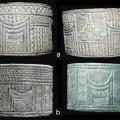
A Study on Faience Objects in the Ghaggar Plains During Urban and Post-urban Indus Periods

Akinori Uesugi

"This research project focuses on the Ghaggar plains, which occupies the north-eastern corner of the Indus society, in order to understand the temporal change of craft production through time from the Indus urban period to the post-urban period in this region. As a part of the project, faience objects have been subjected to a series of scientific analyses to identify their raw materials and production technology" (p. 1) write the authors. >

Pagination

  • First page
  • Previous page
  • Page 1
  • Page 2
  • Page 3
  • Page 4
  • Page 5
  • Page 6
  • Page 7
  • Page 8
  • Page 9
  • …
  • Next page
  • Last page

follow us

Follow us on Facebook, Twitter and Instagram.
Videos on YouTube.
Occasional Newsletter.

Articles by Subject (48)
  • Agriculture
  • Animals
  • Archaeological History
  • Archaeologists
  • Architecture
  • Beads
  • Cemeteries and Burials
  • Ceramics
  • Crafts
  • Culture
  • Decline
  • Dilmun
  • Environment
  • Evolution
  • Excavations
  • Figurines
  • Fishing
  • Flint
  • Food
  • Games
  • Gender
  • Harappa
  • Kulli Culture
  • Manufacture
  • Mesolithic Period
  • Music
  • Nal
  • Natural Resources
  • Neolithic
  • New Discoveries
  • Ornaments
  • Pottery
  • Raw Materials
  • Religion
  • Rock Art
  • Script
  • Seals
  • Steatite
  • Stoneware
  • Technology
  • Textiles
  • Tools
  • Toys
  • Trade
  • Unicorn
  • Urbanism
  • Water
  • Writing

Q and A

Questions and Answers from our site visitors to Indus scholars like Iravatham Mahadevan, Richard H. Meadow, Shereen Ratnagar, Jane McIntosh, Asko Parpola and Rita P. Wright.

Articles by Place (54)
  • Afghanistan
  • Ahar Banas [Rajasthan]
  • Allahdino
  • Amri
  • Arabia
  • Bagasra
  • Balakot
  • Balathal
  • Balochistan
  • Binjor
  • BMAC
  • Central Asia
  • Chanhu-daro
  • Dholavira
  • Dilmun
  • Dilmun (Bahrain)
  • Farmana
  • Gujarat
  • Halil Rud
  • Harappa
  • Haryana
  • Iran
  • Kalibangan
  • Karanpura
  • Kashmir
  • Khambat
  • KPK (NWFP)
  • Lakhan Jo Daro
  • Lothal
  • Madhya Pradesh
  • Margiana
  • Mehrgarh
  • Mesopotamia
  • Mitathal
  • Mohenjo-daro
  • Mundigak
  • Oman
  • Oxus
  • Pak
  • Punjab
  • Rajasthan
  • Rakigarhi
  • Rohri Mines
  • Rojdi
  • Sanauli
  • Shahr-i Sokhta
  • Shikarpur
  • Shortugai
  • Sindh
  • Sonari
  • Sutkagen Dor
  • Tamil Nadu
  • Trade
  • Uttar Pradesh
Articles by Author (300)
  • F. A. Khan
  • Iqtedar Alam
  • Abe, Yoshinari
  • Adhikari, Ronojoy
  • Ajithprasad, P.
  • Al-Jahwari, Nasser S.
  • Ameri, Marta
  • Amundson, Ronald
  • Arbuckle, Benjamin S.
  • Aruz, Joan
  • Ashraf, Md. Izhar
  • Atturu, Deva
  • Baidya, Abu Saeed
  • Bakry, A.
  • Balakrishnan, R.
  • Balasubramaniam, Chitra
  • Balista, Claudio
  • Baqri, Syed Rafiqul Hassan
  • Barba, Federica
  • Basak, Shubjam
  • Bates, Jennifer
  • Beaubien, Harriet F.
  • Beaudry, Marilyn P.
  • Belcher, Wayne R.
  • Belcher, William R.
  • Betts, Alison
  • Bhan, Kuldeep
  • Bhaskar, M. V.
  • Bhattacharya, Ujjwal
  • Biagi, Paolo
  • Blevins, K. Elaine
  • Bolger, Diane
  • Bondioli, Luca
  • Bosch, David
  • Bosch, Leslie
  • Bryson, Reid A.
  • Burton, James H.
  • Buylaert, Jan-Pieter
  • Cable, Charlotte M.
  • Cárdenas, Marc
  • Carter, Alison
  • Carter, Andrew
  • Carter, R. A.
  • Carter, Savannah
  • Caspers, Elisabeth C.L. During
  • Cattani, Maurizio
  • Ceccarelli, Alessandro
  • Chakrabarti, Dilip K.
  • Chase, Brad
  • Chatterjee, Malavika
  • Chattopadhyay, Pranab K.
  • Choi, Jungwoo
  • Clark, J. Desmond
  • Clark, Sharri R.
  • Conesa, Francesc C.
  • Coningham, Robin
  • Coppa, Alfredo
  • Cork, Edward
  • Cortesi, E.
  • Cox, Brett
  • Craig, Oliver E.
  • Cremaschi, Mauro
  • Cubas, Miriam
  • Dales, George F.
  • Dangi, Vivek
  • Daniell, Rachel
  • Dave, Vasant
  • David-Cuny, Helene
  • Davis, Mary A.
  • Decaix, Alexia
  • Densmore, Alexander L.
  • Desset, Francois
  • Didier, Aurore
  • Dixit, Vaishnavi
  • Dixit, Yama
  • Douglas, Khaled A.
  • Dubova, Nadezhda A.
  • Dupree, Louis
  • Esposti, Michele Degli
  • Fantuzzi, Tiziano
  • Franco, Carlo
  • Franke, Ute
  • French, Charly A. I.
  • Frenez, Dennys
  • Fuller, Dorian Q.
  • Gadekar, Charusmita
  • Garbe, Lisa
  • Garcia, Arnau
  • García-Granero, Juan José
  • Garrett, Zenobie S.
  • Gasparotto, Giorgio
  • Ghauri, Zubair Shafi
  • Giesche, Alena
  • Giosan, Liviu
  • Girod, Alberto
  • Glascock, Michael D.
  • Good, Irene
  • Gray, Kelsey
  • Green, Adam S.
  • Jade d'Alpoim Guedes
  • Guha, Sudeshna
  • Guida, Giuseppe
  • Gupta, Ekta
  • Gupta, Sanjeev
  • Haerinck, Ernie
  • Haider, Romana
  • Haquet, Jerome F.
  • Hemphill, Brian E.
  • Henny, A. S.
  • Heron, Carl P.
  • Hesein, Mohammed
  • Heydari, M.
  • Higham, T.
  • Hobbs, Franklin
  • Hoddell, David A.
  • Hoffman, Brett C.
  • Hong, Jong Ha
  • Hritz, Carrie
  • Hussain, Nushrat
  • Jadhav, Nilesh
  • Jain, Mayank
  • Jain, Vikrant
  • James, Nathaniel
  • Jamison, Gregg M.
  • Jarrige, Jean-François
  • Jogelkar, P. P.
  • Joglekar, Hrishikesh
  • Jones, Penelope J.
  • Kamenov, George D.
  • Kashyap, Arunima
  • Kazi, M. Mukhtiar
  • Kennedy, K.A.R.
  • Kenoyer, Jonathan Mark
  • Khan, Aurangzeb
  • Kim, Yong Jun
  • Kimbrough, C. K.
  • Kingwell-Banham, Eleanor
  • Knox, J. Robert
  • Krigbaum, John
  • Krishnan, K.
  • Kumar, Manmohan
  • Lancelotti, Carla
  • Laursen, Steffen Terp
  • Law, Randall
  • Lazzari, A.
  • Leach, Alexandra
  • Lee, , W. J.
  • Lemmen, Carsten
  • Lentz, David L.
  • Lightfoot, E.
  • Lombardo, Giovanni
  • Lovell, Nancy
  • Lukacs, John R.
  • Mackay, Dorothy
  • Mackay, Ernest
  • Madella, Marco
  • Mahadevan, Iravatham
  • Mahajan, Sangeeta
  • Majid, Jaseera C.
  • Malik, Arun
  • Mandal, D.
  • Manjul, Arvin
  • Manjul, Sanjay Kumar
  • Manuel, Mark
  • Mariottini, Maurizio
  • Mark, Darren F.
  • Mason, Philippa J.
  • Mazuy, Arnaud
  • Meadow, Richard H.
  • Meiggs, David
  • Mery, Sophie
  • Michniak, Ryszard
  • Mille, Benoit
  • Miller, Heather M.L.
  • Miller, Heidi J.
  • Mishra, Vimal
  • Misra, V. D.
  • Misra, V. N.
  • Mitra, Debasis
  • Mohanty, R. K.
  • Moraleda-Cibrián, Nuria
  • Moulherat, Christophe
  • Mughal, M. Rafique
  • Mukhopadhyay, Bahata Ansumali
  • Muller, Wolfgang
  • Munshi, Avadreep
  • Murray, Andrew S.
  • Mushrif-Tripathy, V.
  • Mutin, Benjamin
  • Nakai, Izumi
  • Narasimhan, Vagheesh M
  • Nava, Allessia
  • Negrino, Fabio
  • Neumayer, Erwin
  • News, Dawn
  • Nisbet, Renato
  • T. C. O'Connell
  • Tamsin C. O'Connell
  • Oh, Chang Seok
  • Oldijam, Eric
  • Orengo, Hector A.
  • Otarola-Castillo, Erik
  • Pal, Dipak C.
  • Pal, J.N.
  • Pandey, Lalit
  • Panyam, Amrithavalli
  • Parikh, Danika
  • Parpola, Asko
  • Patel, Ambika
  • Patterson, Nick J
  • Paul, Debajyoti
  • Pendall, Elise
  • Petrie, Cameron A.
  • Pisan, Alessandra
  • Possehl, Gregory L.
  • Prabhakar, V. N.
  • Pracejus, Bernhard
  • Price, T. Douglas
  • Priori, Gianfranco
  • Quinn, P. S.
  • Quivron, Gonzague
  • Raczek, Teresa R.
  • Rahmstorf, Lorenz
  • Rajagopalan, Balaji
  • Rajesh, S.V.
  • Rao, Rajesh P. N.
  • Ratnagar, Shereen
  • Reade, Julian
  • Reddy, Seetha N.
  • Regert, Martine
  • Rizvi, Uzma Z.
  • Robinson, Andrew
  • Rogersdotter, Elke
  • Roux, P. le
  • Salvatori, Sandro
  • Sankhyan, A. R.
  • Schug, Gwen Robbins
  • Schug, Malcolm
  • Schuldenrein, Joseph
  • Sengupta, Shamashis
  • Sharma, Bhanu Prakash
  • Sharma, G.R.
  • Sher, G. M.
  • Shin, Dong Hoon
  • Shinde, Vasant
  • Shirataki, Junko
  • Shirvalkar, Prabodh
  • Sidoti, Giancarlo
  • Singh, Ajit
  • Singh, Ravindra N.
  • Sinha, Rajiv
  • Sinha, Sitabhra
  • Siviero, Anna
  • Smith, Monica L.
  • Solanki, Hiren
  • Sonawane, V. H.
  • Spataro, Michela
  • Spate, Michael
  • Starnini, Elisabetta
  • Strolin, Laura
  • Sucuoglu, Can
  • Sugandhi, Namita S.
  • Suryanarayan, Akshyeta
  • Tengberg, Margareta
  • Thirumalai, Kaustubh
  • Thomsen, Kristina J.
  • Thornton, Christopher P.
  • Tombret, Olivier
  • Tosi, M.
  • Toyoma, Kanac
  • Tufail, Kaiser
  • Turner, A. Keith
  • Uesugi, Akinori
  • Vahia, Mayank
  • Valentine, Benjamin
  • Varma, Supriya
  • Veesar, G. Mohiuddin
  • Verardi, Giovanni
  • Vermaak, Petrus S.
  • Vidale, Massimo
  • Villanueva, Joan
  • Villasana, Isabell
  • Vreeze, Michel de
  • Waele, An De
  • Waghmare, Pranjali
  • Walker, Joanna R.
  • Wankowski, Jacek
  • Weber, Steve
  • Weeks, Lloyd
  • Williams, Kimberly D.
  • Woo, Eun Jin
  • Wright, Rita P.
  • Xu, Huifang
  • Yadav, Nisha
  • Yadav, Yogesh
  • Yamahana, Kyoko
  • Yatoo, Mumtaz
  • Zahir, Muhammad
  • Zazzo, Antoine
  • Zhang, Guilin
© Harappa.com 1995-2026 31