
Dr. Fazal Ahmad Khan (F. A. Khan) was the Director of Archaeology in Pakistan. He is widely considered the father of post-partition Pakistani archaeology. While he worked across the country, his excavations at Kot Diji and later in Mainamati (East Pakistan, now Bangladesh) defined the scientific standards for the department during the 1950s and 60s.
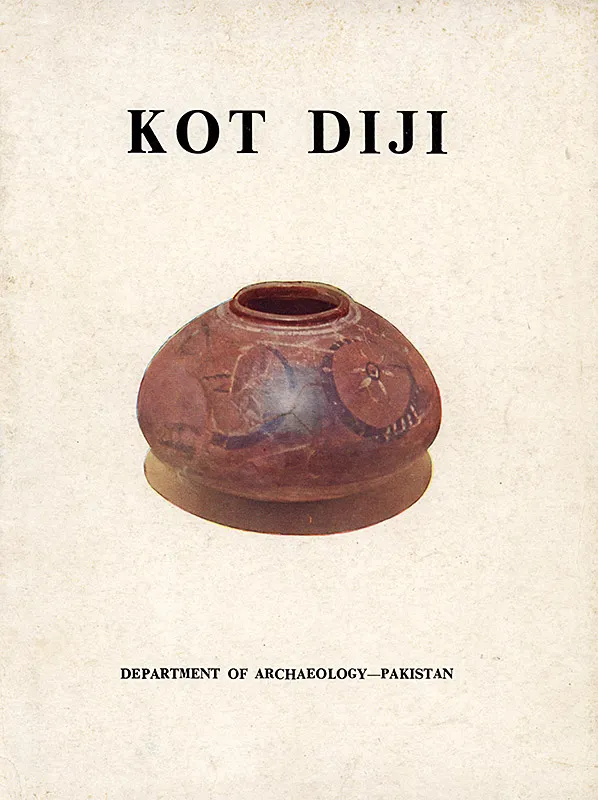
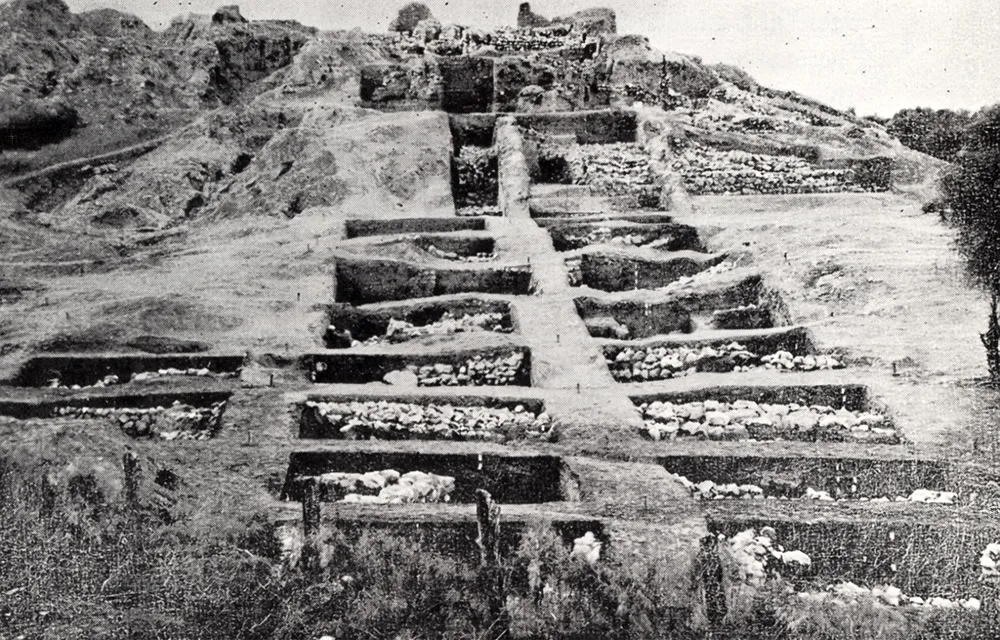
The booklet Kot Diji published by the Department of Archaeology details the excavations carried out at the site of Kot Diji, located in the Khairpur district of Sindh about 40 km from Mohenjo-daro. The core of the booklet discusses the discovery of "Kot Dijian" culture. Dr. Khan describes a distinct, older layer of civilization sitting directly beneath the Harappan levels. This was the first time a "Pre-Harappan" (now called Early Harappan) culture was clearly identified. It details the massive defensive wall built of mud-bricks and stone, indicating a highly organized society with a ruling class conjectured to be living in a fortified "Citadel." The booklet is famous for describing "Kot Dijian" pottery—fine, thin-walled ware often decorated with a "horned deity" or dark bands, which differed significantly from the later, heavier Harappan black-on-red ware.
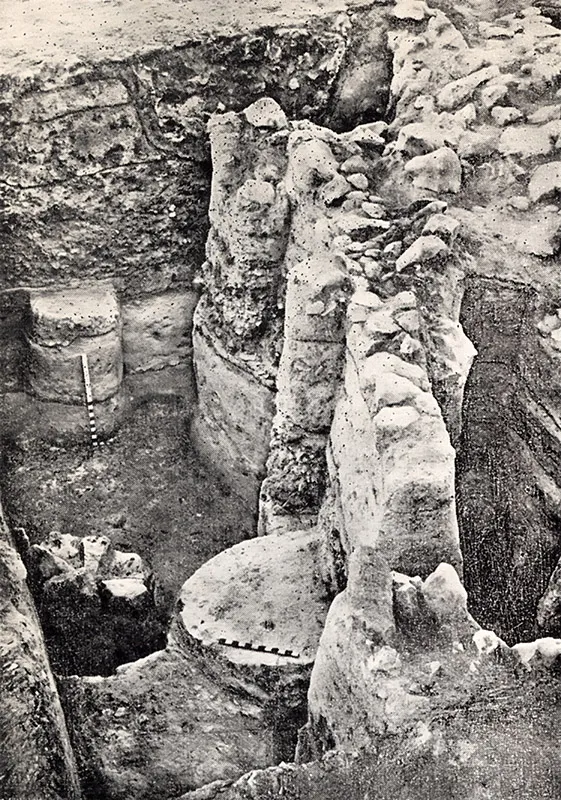
F. A. Khan observed a layer of charcoal and ash approximately 12 inches thick separating the "Kot Dijian" (Early Harappan) levels from the "Mature Harappan" levels. He interpreted this as evidence of a violent conflagration—a massive fire that destroyed the settlement—suggesting that the Mature Harappans may have forcefully displaced the original inhabitants. However later archaeologists have questioned this interpretation as ash was only found in certain excavated trenches, could have come from domestic sources or otherwise not be related to an external power destroying the settlement.
In 1958, this document was a "bombshell" of sorts in the archaeological world for several reasons (its findings were also reported in the article Before Mohenjo-daro: New Light on the Beginnings of the Indus Valley Civilisation, from Recent Excavations at Kot Diji in the Illustrated London News of May 24, 1958.). Before this report, Indus Civilization cities like Harappa and Mohenjo-daro seemed to appear out of nowhere. Khan’s work at Kot Diji showed that there was a sophisticated "formative" period that would have led up to the great cities. By showing the clear physical layering (stratigraphy) of one culture on top of another, Khan provided a timeline that helped archaeologists understand the evolution of urban life in South Asia. Coming just a decade after the creation of Pakistan, this document is said to have provided the new nation with a unique "origin story" located within its own borders.
The booklet remains a primary reference for anyone studying the Early Harappan period, as it defined the "Kot Diji phase" that archaeologists still use to categorize sites across Pakistan and Northwest India today.
Images: 1. Cover 2. Stone structures at Kot-Diji, in layers 2 and 5, fire-place in layer 4. and bed-rock in the foreground. The large kiln in the background is in layer 2. 3. Excavated areas of the lower city in the foreground, the citadel in the background, and part of the defensive system in the centre.
The entire booklet can be downloaded and read below.