Home

Main navigation

  • home
  • slides
  • essays
  • articles
  • books
  • video
  • q & a
  • blog
Secondary menu
  • about us
    • scholars
    • privacy
    • support
    • image rights
    • credits
    • contact us
  • resources

Secondary menu

  • about us
    • scholars
    • privacy
    • support
    • image rights
    • credits
    • contact us
  • resources

Ancient Indus Valley Civilization Articles

371 peer-reviewed articles from leading journals about the latest discoveries about the ancient Indus civilization, its antecedents and contemporaries in the Persian Gulf and Mesopotamia, during the Bronze Age 3500-1700 BCE by the world's ancient Indus archaeologists and scholars.
Stone Beads in Oman during the 3rd to 2nd Millennia BCE. New Approaches to the Study of Trade and Technology

Jonathan Mark Kenoyer

"In this paper," write the authors, "we present the preliminary results of a long-term and multifaceted study of the role of craft specialists and traders who were present in ancient Magan during the 5th-1st millennia BCE (Table 1), with a specific focus on beads found at sites in modern Oman, and … >

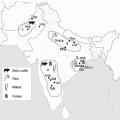
Multi-cropping, Intercropping and Adaptation to Variable Environments in Indus South Asia

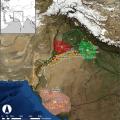
  • Hypothetical areas within the Indus zone
Cameron A. Petrie

A comprehensive look at what we know about agricultural strategies during the ancient Indus period, and how truly varied and sophisticated these most likely were, with careful adaptation to local conditions and water availability. As the authors write, "The South Asian subcontinent stands out as a … >

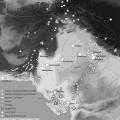
A Note on the Interregional Interactions between the Indus Civilization and the Arabian Peninsula during the Third Millennium BCE

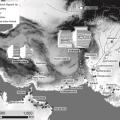
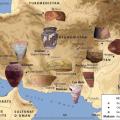
  • Distribution of Indus-related pottery in the Indus region
Akinori Uesugi

"This article examines the diachronic developments of the interregional relationship between the two regions based on the ceramic evidence both from the Greater Indus Valley and the Arabian peninsula. The examination of the ceramic evidence from the Greater Indus Valley, especially the diachronic d… >

Quarries in Harappa

Paolo Biagi

"Flint was the most important raw material exploited by the third millennium BCE Bronze Age inhabitants of the Indus Valley and its related territories." This uncompromising statement by a scholar and field researcher who has been working in the region for decades offers a window on what must clear… >

Diversity, variability, adaptation and ‘fragility’ in the Indus Civilization

Cameron A. Petrie

A superb framing of how we might think of the Indus civilization and its evolution as a larger entity in comparison and contrast with other ancient civilizations. How did Indus cities fit into a rural context? Were they ruled by elites? How did they manage to survive so long? What can we say about … >

Carnelian and Agate Beads in the Oman Peninsula during the Third to Second millennia BC

Jonathan Mark Kenoyer

A detailed look at carnelian and agate sources and manufacture throughout the Gulf region, and how many of the beads found show clear evidence of ancient Indus manufacturing techniques. As the authors write: "Recent studies using more refined techniques of morphological and technological analysis c… >

Integrating Lipid and Starch Grain Analyses From Pottery Vessels to Explore Prehistoric Foodways in Northern Gujarat, India

Juan José García-Granero

A solid foray into the question of what the ancient Indus people, at least in Gujarat, cooked and ate, and how that might have changed after the civilization seems to have declined. Using some of the latest techniques, in particular by looking for both plant and animal residues in the same analyses… >

Heritage, Archaeology and the Indus Civilization

Sudeshna Guha

Dr. Guha goes through the epistemology governing each period's research and framing of the Indus Civilization with respect to those civilizations around, and those closer to home. "The palpable materiality of archaeological 'facts' regarding civilizational origins, legacies, and traditions add to m… >

The Important Stone and Metal Resources of Gujarat during the Harappan Period

Randall Law

"In the year 2000," writes the author, "I initiated a large‐scale effort to identify the geologic sources from which peoples of the Indus Civilization (ca. 2600 to 1900 BC) acquired rock and mineral resources." >

Setting the wheels in motion: Re-examining ceramic forming techniques in Indus Civilisation villages in northwest India

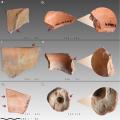
  • Indus wheel fragments
Alessandro Ceccarelli

"The discovery of the rotational capabilities of the wheel was one of the most significant human inventions, and wheel-enhanced rotation is now pervasive in the tools and machines that we use in our everyday lives. Importantly, the wheel was a major contributor to a range of developments in craft production technology, perhaps most visibly in the various forms of potter’s rotational devices and wheels." >

Documenting Mohenjo-Daro: Digitization and Visualization of Architecture, Infrastructure, and Artefacts from DK-G South

Uzma Z. Rizvi

Another example of how modern data science and the re-analysis of data collected by early archaeologists are opening new frontiers of discovery. In this case, finds made in one area of Mohenjo-daro, excavated by K.N. Dikshit, are being tabulated and located precisely in relation to other objects and the strata or level they were found at. >

Bioarchaeology of the Indus Valley Civilization: Biological Affinities, Paleopathology, and Chemical Analyses

Nancy Lovell

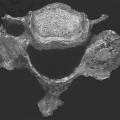
"In spite of the challenges that face bioarchaeological research in South Asia, the results obtained from the investigations of the past 30 years have revolutionized our understanding of the peoples of the ancient Indus Valley, providing contemporary, scientifically informed interpretations from skeletal collections that were often collected decades ago." >

The use of colour in the Protohistoric pottery from Pakistani Balochistan and from Mundigak (Afghanistan): Cultural Identities and Technical Traditions

  • Polychrome wares in the Indo-Iranian borderlands
Aurore Didier

A rare article looking in detail at something archaeologists usually do not focus on, but was and is of immense importance in art and human experience. Ancient Balochistan before the Indus period was known for some of the most vibrant colour pottery in South Asia. >

INAA of agate sources and artifacts from the Indus, Helmand, and Thailand Regions

Randall Law

"Geologically speaking," write the authors, "agate is not a particularly uncommon rock . . .. However, good agate – i.e, that which ancient lapidaries would have found suitable for beadmaking – is not widely available. Nodules of the size and quality required to make Harappan-style long-barrel carnelian beads are, in fact, extremely rare" (p. 177). >

New evidence for early 4th millennium BP agriculture in the Western Himalayas: Qasim Bagh, Kashmir

Michael Spate

"The valleys of Kashmir and Swat in the Western Himalayan-Hindu Kush regions of India and Pakistan are home to an important prehistoric cultural complex beginning at around 5000 BP, loosely grouped as the “Northern Neolithic” (Coningham and Young, 2015), especially characterised by a rich agricultural tradition." >

Early Evidence of Bead-Making at Mehrgarh, Pakistan: A Tribute to the Scientific Curiosity of Catherine and Jean- François Jarrige

Massimo Vidale

Jean-Francois Jarrige (1940-2014) and his wife Catherine (b. 1942) were two of the most important archaeologists in the South Asian region, whose excavations at Mehrgarh, the site in Balochistan which predates the ancient Indus civilization by thousands of years, helped determine how far back the development of various traditions found in that and other regional civilizations actually reached. >

Indus Script and Indus Culture

Mayank Vahia

A succinct summary of some of the features and nature of the ancient Indus script by three Indian scholars who have spent a great part of their careers investigating it. Presented at the International Conference on Indus Script at Mohenjo Daro in January 2020, points are listed as clear statements that can help others puzzled by the script, or who wish to attempt or consider other approaches to "deciphering" the script. >

Early agriculture in South Asia

Eleanor Kingwell-Banham

A superb chapter from Cambridge Histories Online of the very complicated development of agriculture in the subcontinent, which is really the story of four different developments, in the northwest (including the Indus valley), north (the Gangetic plains), south and east, each with different timelines, crops and animal husbandry to account for. >

Indus Stone Beads in the Ghaggar Plain with a Focus on the Evidence from Farmana and Mitathal

Akinori Uesugi

The first in-depth look at stone beads from Indus sites besides Harappa, in this case two just south of Rakigarhi. Stone beads include those made of steatite (the vast majority, about 91%), carnelian (8%), as well as jasper, agate, lapis luzuli, limestone and more. Steatite and carnelian beads are found at levels corresponding to all time periods. >

The Indus Script: Invention and Use of a Bronze Age Writing System

Dennys Frenez

A well-illustrated 140 slide PDF that explores the Indus script, origins, writing direction and more. While the slides by Indus scholar Dennys Frenez lack his narration, many of the slides are self-explanatory and provide a rich visual overview of the Indus civilization its writing and the many issues involved. >

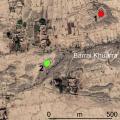
Short Report: A déjeté Levallois tool from Khyber Pakhtunkhwa (Pakistan) and the role it plays in the chronology of the Pleistocene terraces of the Bannu Basin

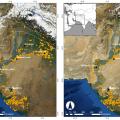
  • Locations of the Levallois tool on the gravel terraces of Barrai Khuarra
Paolo Biagi

Very little is known about the subcontinent's history hundreds of thousands of years ago, say 300,000-30,000 years ago, which would have been the Middle Paleolithic period for example, except for small clues left at places like the Rohri chert (flint) mines and along the Indus in Sindh and else whe… >

Preliminary Results of Excavation at Karanpura, a Harappan Settlement in District Hanumangarh, Rajasthan

  • Carnelian beads
V. N. Prabhakar

The results of two seasons of excavations 2012-2014 at a small site to the west of Rakigarhi in Rajasthan, on the modern River Chautang (Drishdavati). Largely destroyed by irrigation construction a few years previously – "it can now be assessed that at least 70% of the fortified settlement was destroyed" write the authors (p. 16) – Karanpura has nevertheless yielded an impressive set of artifacts from about 2800-2000 BCE. >

Decolonizing South Asia through Heritage- and Nation-Building

Sudeshna Guha

"British scholarship of Indian history during the colonial period produced an essentialist construct of an Indian cultural tradition that was deemed unchanged since antiquity and recoverable through archaeological excavations" (p. 31) writes the author, a Professor of History at Shiv Nadar Universi… >

Shikarpur lithic assemblage: New questions regarding Rohri chert blade production

Charusmita Gadekar

The intriguing question this paper takes on is whether or not chert blade (also known as flint, used for lighting fires) production could have taken place here, 500 km as the crow flies from the Rohri Flint Quarries, a massive site with evidence for mining going back hundreds of thousands of years and covered in detail by numerous scholars. >

Social change at the Harappan settlement of Gola Dhoro: a reading from animal bones

Brad Chase

"A detailed analysis of the animal bone assemblage at Gola Dhoro here throws light on the expansion of the Indus civilisation into Gujarat. A square fort, imposed on a settlement of livestock herders in the later third millennium BC, was shown to have contained people who introduced a broader diet of meat and seafood, and new ways of preparing it. These social and dietary changes were coincident with a surge in craft and trade." >

Lipid residues in pottery from the Indus Civilisation in northwest India

Akshyeta Suryanarayan

An exciting new study that looks at food residues ancient Indus pots found in sites around Rakigarhi to decode the foodstuffs that once were in those pots. By examining the lipids or fatty acids that can be extracted from pots and pottery fragments, investigators were able to determine some of the foodstuffs in the pots. >

The Indus Talc-Faience Complex: Types of Materials, Clues to Production

Heather M.L. Miller

"Talcose stone was used primarily to make beads, seals and tokens, but also for inlay pieces, small figurines and sculptures. In contrast to faience, massive talc was not commonly used to produce either small vessels or bangles. Massive talc was also sometimes glazed, particularly the beads, usuall… >

Pastoralism, climate change, and the transformation of the Indus Civilization in Gujarat: Faunal analyses and biogenic isotopes

Brad Chase

An important paper - given the painstaking analysis of data - which shows just how careful one has to be in attributing the demise of the Indus civilization to climate change. "A thorough accounting of how Indus peoples were impacted by—and may have adapted to—climatic fluctuations at the end of th… >

Royal "Chariot" Burials of Sanauli near Delhi and Archaeological Correlates of Prehistoric Indo-Iranian Languages

Asko Parpola

Another important and recent (October 2020) paper by Asko Parpola. He examines the 2018 finds from the Late Harappan site of Sanauli near Delhi in light of his research on early Indo-Aryan languages in the subcontinent and their origin in Central Asia. >

Material Culture and Childhood in Harappan South Asia

Supriya Varma

A comprehensive roundup of all that we seem to know about toys in the ancient Indus Valley from The Oxford Handbook of the Archaeology of Childhood >

Pagination

  • First page
  • Previous page
  • Page 1
  • Page 2
  • Page 3
  • Page 4
  • Page 5
  • Page 6
  • Page 7
  • Page 8
  • Page 9
  • …
  • Next page
  • Last page

follow us

Follow us on Facebook, Twitter and Instagram.
Videos on YouTube.
Occasional Newsletter.

Articles by Subject (48)
  • Agriculture
  • Animals
  • Archaeological History
  • Archaeologists
  • Architecture
  • Beads
  • Cemeteries and Burials
  • Ceramics
  • Crafts
  • Culture
  • Decline
  • Dilmun
  • Environment
  • Evolution
  • Excavations
  • Figurines
  • Fishing
  • Flint
  • Food
  • Games
  • Gender
  • Harappa
  • Kulli Culture
  • Manufacture
  • Mesolithic Period
  • Music
  • Nal
  • Natural Resources
  • Neolithic
  • New Discoveries
  • Ornaments
  • Pottery
  • Raw Materials
  • Religion
  • Rock Art
  • Script
  • Seals
  • Steatite
  • Stoneware
  • Technology
  • Textiles
  • Tools
  • Toys
  • Trade
  • Unicorn
  • Urbanism
  • Water
  • Writing

Q and A

Questions and Answers from our site visitors to Indus scholars like Iravatham Mahadevan, Richard H. Meadow, Shereen Ratnagar, Jane McIntosh, Asko Parpola and Rita P. Wright.

Articles by Place (54)
  • Afghanistan
  • Ahar Banas [Rajasthan]
  • Allahdino
  • Amri
  • Arabia
  • Bagasra
  • Balakot
  • Balathal
  • Balochistan
  • Binjor
  • BMAC
  • Central Asia
  • Chanhu-daro
  • Dholavira
  • Dilmun
  • Dilmun (Bahrain)
  • Farmana
  • Gujarat
  • Halil Rud
  • Harappa
  • Haryana
  • Iran
  • Kalibangan
  • Karanpura
  • Kashmir
  • Khambat
  • KPK (NWFP)
  • Lakhan Jo Daro
  • Lothal
  • Madhya Pradesh
  • Margiana
  • Mehrgarh
  • Mesopotamia
  • Mitathal
  • Mohenjo-daro
  • Mundigak
  • Oman
  • Oxus
  • Pak
  • Punjab
  • Rajasthan
  • Rakigarhi
  • Rohri Mines
  • Rojdi
  • Sanauli
  • Shahr-i Sokhta
  • Shikarpur
  • Shortugai
  • Sindh
  • Sonari
  • Sutkagen Dor
  • Tamil Nadu
  • Trade
  • Uttar Pradesh
Articles by Author (300)
  • F. A. Khan
  • Iqtedar Alam
  • Abe, Yoshinari
  • Adhikari, Ronojoy
  • Ajithprasad, P.
  • Al-Jahwari, Nasser S.
  • Ameri, Marta
  • Amundson, Ronald
  • Arbuckle, Benjamin S.
  • Aruz, Joan
  • Ashraf, Md. Izhar
  • Atturu, Deva
  • Baidya, Abu Saeed
  • Bakry, A.
  • Balakrishnan, R.
  • Balasubramaniam, Chitra
  • Balista, Claudio
  • Baqri, Syed Rafiqul Hassan
  • Barba, Federica
  • Basak, Shubjam
  • Bates, Jennifer
  • Beaubien, Harriet F.
  • Beaudry, Marilyn P.
  • Belcher, Wayne R.
  • Belcher, William R.
  • Betts, Alison
  • Bhan, Kuldeep
  • Bhaskar, M. V.
  • Bhattacharya, Ujjwal
  • Biagi, Paolo
  • Blevins, K. Elaine
  • Bolger, Diane
  • Bondioli, Luca
  • Bosch, David
  • Bosch, Leslie
  • Bryson, Reid A.
  • Burton, James H.
  • Buylaert, Jan-Pieter
  • Cable, Charlotte M.
  • Cárdenas, Marc
  • Carter, Alison
  • Carter, Andrew
  • Carter, R. A.
  • Carter, Savannah
  • Caspers, Elisabeth C.L. During
  • Cattani, Maurizio
  • Ceccarelli, Alessandro
  • Chakrabarti, Dilip K.
  • Chase, Brad
  • Chatterjee, Malavika
  • Chattopadhyay, Pranab K.
  • Choi, Jungwoo
  • Clark, J. Desmond
  • Clark, Sharri R.
  • Conesa, Francesc C.
  • Coningham, Robin
  • Coppa, Alfredo
  • Cork, Edward
  • Cortesi, E.
  • Cox, Brett
  • Craig, Oliver E.
  • Cremaschi, Mauro
  • Cubas, Miriam
  • Dales, George F.
  • Dangi, Vivek
  • Daniell, Rachel
  • Dave, Vasant
  • David-Cuny, Helene
  • Davis, Mary A.
  • Decaix, Alexia
  • Densmore, Alexander L.
  • Desset, Francois
  • Didier, Aurore
  • Dixit, Vaishnavi
  • Dixit, Yama
  • Douglas, Khaled A.
  • Dubova, Nadezhda A.
  • Dupree, Louis
  • Esposti, Michele Degli
  • Fantuzzi, Tiziano
  • Franco, Carlo
  • Franke, Ute
  • French, Charly A. I.
  • Frenez, Dennys
  • Fuller, Dorian Q.
  • Gadekar, Charusmita
  • Garbe, Lisa
  • Garcia, Arnau
  • García-Granero, Juan José
  • Garrett, Zenobie S.
  • Gasparotto, Giorgio
  • Ghauri, Zubair Shafi
  • Giesche, Alena
  • Giosan, Liviu
  • Girod, Alberto
  • Glascock, Michael D.
  • Good, Irene
  • Gray, Kelsey
  • Green, Adam S.
  • Jade d'Alpoim Guedes
  • Guha, Sudeshna
  • Guida, Giuseppe
  • Gupta, Ekta
  • Gupta, Sanjeev
  • Haerinck, Ernie
  • Haider, Romana
  • Haquet, Jerome F.
  • Hemphill, Brian E.
  • Henny, A. S.
  • Heron, Carl P.
  • Hesein, Mohammed
  • Heydari, M.
  • Higham, T.
  • Hobbs, Franklin
  • Hoddell, David A.
  • Hoffman, Brett C.
  • Hong, Jong Ha
  • Hritz, Carrie
  • Hussain, Nushrat
  • Jadhav, Nilesh
  • Jain, Mayank
  • Jain, Vikrant
  • James, Nathaniel
  • Jamison, Gregg M.
  • Jarrige, Jean-François
  • Jogelkar, P. P.
  • Joglekar, Hrishikesh
  • Jones, Penelope J.
  • Kamenov, George D.
  • Kashyap, Arunima
  • Kazi, M. Mukhtiar
  • Kennedy, K.A.R.
  • Kenoyer, Jonathan Mark
  • Khan, Aurangzeb
  • Kim, Yong Jun
  • Kimbrough, C. K.
  • Kingwell-Banham, Eleanor
  • Knox, J. Robert
  • Krigbaum, John
  • Krishnan, K.
  • Kumar, Manmohan
  • Lancelotti, Carla
  • Laursen, Steffen Terp
  • Law, Randall
  • Lazzari, A.
  • Leach, Alexandra
  • Lee, , W. J.
  • Lemmen, Carsten
  • Lentz, David L.
  • Lightfoot, E.
  • Lombardo, Giovanni
  • Lovell, Nancy
  • Lukacs, John R.
  • Mackay, Dorothy
  • Mackay, Ernest
  • Madella, Marco
  • Mahadevan, Iravatham
  • Mahajan, Sangeeta
  • Majid, Jaseera C.
  • Malik, Arun
  • Mandal, D.
  • Manjul, Arvin
  • Manjul, Sanjay Kumar
  • Manuel, Mark
  • Mariottini, Maurizio
  • Mark, Darren F.
  • Mason, Philippa J.
  • Mazuy, Arnaud
  • Meadow, Richard H.
  • Meiggs, David
  • Mery, Sophie
  • Michniak, Ryszard
  • Mille, Benoit
  • Miller, Heather M.L.
  • Miller, Heidi J.
  • Mishra, Vimal
  • Misra, V. D.
  • Misra, V. N.
  • Mitra, Debasis
  • Mohanty, R. K.
  • Moraleda-Cibrián, Nuria
  • Moulherat, Christophe
  • Mughal, M. Rafique
  • Mukhopadhyay, Bahata Ansumali
  • Muller, Wolfgang
  • Munshi, Avadreep
  • Murray, Andrew S.
  • Mushrif-Tripathy, V.
  • Mutin, Benjamin
  • Nakai, Izumi
  • Narasimhan, Vagheesh M
  • Nava, Allessia
  • Negrino, Fabio
  • Neumayer, Erwin
  • News, Dawn
  • Nisbet, Renato
  • T. C. O'Connell
  • Tamsin C. O'Connell
  • Oh, Chang Seok
  • Oldijam, Eric
  • Orengo, Hector A.
  • Otarola-Castillo, Erik
  • Pal, Dipak C.
  • Pal, J.N.
  • Pandey, Lalit
  • Panyam, Amrithavalli
  • Parikh, Danika
  • Parpola, Asko
  • Patel, Ambika
  • Patterson, Nick J
  • Paul, Debajyoti
  • Pendall, Elise
  • Petrie, Cameron A.
  • Pisan, Alessandra
  • Possehl, Gregory L.
  • Prabhakar, V. N.
  • Pracejus, Bernhard
  • Price, T. Douglas
  • Priori, Gianfranco
  • Quinn, P. S.
  • Quivron, Gonzague
  • Raczek, Teresa R.
  • Rahmstorf, Lorenz
  • Rajagopalan, Balaji
  • Rajesh, S.V.
  • Rao, Rajesh P. N.
  • Ratnagar, Shereen
  • Reade, Julian
  • Reddy, Seetha N.
  • Regert, Martine
  • Rizvi, Uzma Z.
  • Robinson, Andrew
  • Rogersdotter, Elke
  • Roux, P. le
  • Salvatori, Sandro
  • Sankhyan, A. R.
  • Schug, Gwen Robbins
  • Schug, Malcolm
  • Schuldenrein, Joseph
  • Sengupta, Shamashis
  • Sharma, Bhanu Prakash
  • Sharma, G.R.
  • Sher, G. M.
  • Shin, Dong Hoon
  • Shinde, Vasant
  • Shirataki, Junko
  • Shirvalkar, Prabodh
  • Sidoti, Giancarlo
  • Singh, Ajit
  • Singh, Ravindra N.
  • Sinha, Rajiv
  • Sinha, Sitabhra
  • Siviero, Anna
  • Smith, Monica L.
  • Solanki, Hiren
  • Sonawane, V. H.
  • Spataro, Michela
  • Spate, Michael
  • Starnini, Elisabetta
  • Strolin, Laura
  • Sucuoglu, Can
  • Sugandhi, Namita S.
  • Suryanarayan, Akshyeta
  • Tengberg, Margareta
  • Thirumalai, Kaustubh
  • Thomsen, Kristina J.
  • Thornton, Christopher P.
  • Tombret, Olivier
  • Tosi, M.
  • Toyoma, Kanac
  • Tufail, Kaiser
  • Turner, A. Keith
  • Uesugi, Akinori
  • Vahia, Mayank
  • Valentine, Benjamin
  • Varma, Supriya
  • Veesar, G. Mohiuddin
  • Verardi, Giovanni
  • Vermaak, Petrus S.
  • Vidale, Massimo
  • Villanueva, Joan
  • Villasana, Isabell
  • Vreeze, Michel de
  • Waele, An De
  • Waghmare, Pranjali
  • Walker, Joanna R.
  • Wankowski, Jacek
  • Weber, Steve
  • Weeks, Lloyd
  • Williams, Kimberly D.
  • Woo, Eun Jin
  • Wright, Rita P.
  • Xu, Huifang
  • Yadav, Nisha
  • Yadav, Yogesh
  • Yamahana, Kyoko
  • Yatoo, Mumtaz
  • Zahir, Muhammad
  • Zazzo, Antoine
  • Zhang, Guilin
© Harappa.com 1995-2026 31