Home

Main navigation

  • home
  • slides
  • essays
  • articles
  • books
  • video
  • q & a
  • blog
Secondary menu
  • about us
    • scholars
    • privacy
    • support
    • image rights
    • credits
    • contact us
  • resources

Secondary menu

  • about us
    • scholars
    • privacy
    • support
    • image rights
    • credits
    • contact us
  • resources

Ancient Indus Civilization Blog

50 recent posts, also carried on our Facebook page, about the ancient Indus Valley civilization, including important news, research and occasional visits to museums with ancient Indus artifacts. For the few hundred other posts, use the Subject selection box.

An Indus Concordance and Tamil Potsherds, Now Online

  • Indus Script Concordance 2

For nearly fifty years one the more useful object in Indus script studies has been a book almost nobody could get hold of: Iravatham Mahadevan's The Indus Script: Texts, Concordance and Tables (1977, Memoir No. 77 of the Archaeological Survey of India). It is the reference many researchers work from. >
The Unicorn and the Dancing Girl

  • The Unicorn and the Dancing Girl
During a recent online discussion, Salima Hashmi, daughter of the great Pakistani poet poet Faiz Ahmad Faiz, mentioned that he had written a single English poem, The Unicorn and the Dancing Girl. It was published, amended most likely by Faiz himself, in the book The Unicorn and the Dancing Girl in 1988. The original version was published in 1961. >

Richard Meadow (1946-2026)

  • Richard Meadow at Harappa

It is with real sadness that I report the passing away of Dr. Richard H. Meadow, Director of the Zooarcheaology Laboratory at the Peabody Museum of Anthropology and Ethnology at Harvard University. He was also one of the key contributors to Harappa.com – in fact it was an email from him in 1995 that set me down the road to building Harappa.com as a website that ultimately became fully dedicated to the ancient Indus civilization. >

Sunset at Mohenjo-daro

  • Stupa Mound Mohenjo-daro at Sunset

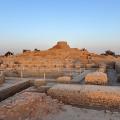
The sun sets on the Stupa Mound at Mohenjo-daro in early 2026 [Image 1]. The so-called "Divinity Lane" at Mohenjo-daro [2] separates the Stupa from the Great Bath, "College" and other areas. >

Mohenjo-daro Movie at Two Indian Film Festivals

  • Mohenjo-daro Movie Poster plus Laurels

Mohenjo-daro: Unsealing an Ancient Indus City has been selected for two upcoming film fests in India, the 15th Bangalore Shorts Film Fest, where it will be shown on June 21st, 2026. It has also been selected for the 9th South Asian Short Film Festival (SASFF) in Kolkata, where it will be shown on July 8th in the 1 pm slot at NANDAN – The Film Centre. >

A Visit to the Metropolitan's Indus Collection II

  • Two Goddesses Quetta Area

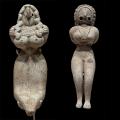
A decade after writing about a visit to the Metropolitan Museum of Art in New York's small Indus collection, I returned to find a number of new objects on display and others removed from view. Unfortunately. the larger issue with the display had not been solved. >

Mohenjo-daro in the 1960s

  • Mohenjo-daro in the 1960s

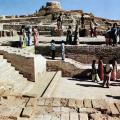
You could walk through the Great Bath, women wore saris, and in Karachi and Bombay, people were listening to the Beatles Yesterday on Radio Ceylon. >

An Archaeological Site in the AI Jungle

  • Cloudflare Indus stats May June 2026

What are the AI platforms doing to websites like Harappa.com which have been around since the dawn of the Internet? Like colonial powers, they happily claim territory through extra-legal procedures (although they are said to be far more intelligent than human beings, they can't understand our terms of service which kindly asks them to not crawl!). >

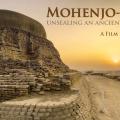
Our First Film: Mohenjo-daro: Unsealing an Ancient Indus City

  • Mohenjo-daro Film Poster

The 37-minute film explores one of the world's greatest lost civilizations through the eyes the founder of Harappa.com walking the site and exploring what we know — and still don't — about one of the world's greatest lost civilizations. >

Before Mohenjo-daro: New Light on the Beginnings of the Indus Valley Civilisation, from Recent Excavations at Kot Diji

  • The Kot Diji Fort at Kot Diji

The recent evidence from Mohenjo-daro of a "Kot Dijian" layer beneath its Indus ruins, including the city wall, dating from 2600 BCE or earlier, brings renewed interest to this precursor culture to the Indus civilization. >

Happy New Year 2026: Harappa.com @ 30

  • happy new year 2026

I founded Harappa.com in November 1995 from my then-home in the Mission district of San Francisco. I wanted to create a destination for students, scholars and general visitors to experience the Indus Valley. >

An Indus Seal Impression from Umma, Mesopotamia

"But even more revealing for the intensity of contact and commercial exchange between the two alluvial heartlands was the discovery in the Louvre reserves of a well-preserved clay impression stamped by an inscribed Indus seal, which had been brought to the museum by a dealer shortly before World War I, before the Indus Civilization had even been recognized." >

Who Were the Meluhha?

Cuneiform scripts on Sumerian and Akkadian cylinder seals and clay tablets mention Meluhha traders, who are generally assumed to belong to the Indus Valley region. Linguists have looked at the etymology of the Meluhha toponym, focusing on its purported Dravidian linkages. >

Harappa 1924-25: A Lost City Emerges

We have completed the brand new 104 slide section 1924-25: A Lost City Emerges by Dr. Sudeshna Guha which puts back together a pivotal excavation season at Harappa through photographs and text. >

The Only Known Meluhan Personal Names: Samar and Nanaza

Tucked into the fascinating book Babylonia, the Gulf Region and the Indus: Archaeological and Textual Evidence for Contact in the Third and Early Second Millennia BC (Mesopotamian Civilizations, 2017) is a tidbit that brings to light what are possibly the only two ancient Meluhan names we know of. >

Happy New Year 2025

As we embark on what by November will be our 30th year online, we wish everyone into the ancient Indus Civilization a very Happy New Year! >

Mehrgarh @ the Lahore Museum

"Mehrgarh World's Oldest City" claims the banner in the Lahore Museum gallery, where the wooden display cases seem not to have changed since John Lockwood Kipling was in charge more than a century ago. There are few other places to glimpse some of the finer treasures from this 7000 BCE site in western Balochistan, the oldest larger settlement found in the subcontinent. >

Separated at Birth?

The Dancing Girl of Mohenjo-daro and a postcard of a Dancing Girl by Gobindram Oodeyram of Jaipur from around 1905. In his new engaging and speculative book Ahimsa 100 Reflections on the Harappan Civilization, Devdutt Pattanaik writes of the famous so-called dancing girl figurine found at Mohenjo-daro. >

Ancient Indus @ the Ashmolean Oxford

  • 1

On a recent visit to Oxford, I used my iPhone 15 to take a closer look at a diverse set of ancient Indus objects, some of them acquired after colonial times, in one of the world's great university museums. >

Indus Objects at the National Museum of Pakistan, Karachi

A new 37 (to start) slide section takes the viewer through the ancient Indus pieces at the National Museum of Pakistan in Karachi. Pakistan's ancient Indus holdings are actually scattered across provincial, national and site museum collections. >

Happy New Year 2024

We turned 28 this year - founded in 1995! - and wish the thousands of people who come to the site every day from all over the world to learn about the ancient Indus civilization a very Happy New Year. >

Cracking the Indus Code

A recent VOX Unexplainable podcast featuring Prof. Rajesh Rao (University of Washington, Seattle) offers a broad overview of ancient Indus script research and where we are today. >

Nikhil Gulati in Conversation about The People of the Indus

Omar Khan and Nikhil Gulati in conversation about The People of the Indus, the best-selling graphic novel about the ancient Indus civilisation shortly after its release. >

More on Queen Puabi of Ur

A look at some of the other artifacts we have from this extraordinary female ruler of the Mesopotamian city-state of Ur around 2500 BCE. >

The Great Jar of Chanhu-daro

"Jar painted with birds. 2600-1900 BC, Terracotta with red slip and black painted decoration," is what the unvarnished description at the Museum of Fine Arts (MoFA), Boston reads; in truth this is one of the largest and most richly painted ancient Indus pots ever found. >

New! Unearthing the Mysteries of Harappa 1923-24

We are delighted to publish a new set of over 50 photographs from Daya Ram Sahni's second season at Harappa in 1923-24, before he or anyone knew about the ancient Indus civilization. Unearthing the Mysteries of Harappa is unique contribution to Indus archaeology curated by Dr. Nadine Zubair with contemporary commentary by Dr. Jonathan Mark Kenoyer. >

Carnelian and Gold Pendant

"Numerous inlaid shapes, such as droplets or circles, have been found at both Mohenjo-daro and Harappa," writes Dr. Mark Kenoyer, "but we did not know how these were incorporated into ornaments until we discovered a complete pendant at Harappa in 1987." >

Faience Shell Bangle

"Faience bangle made in the shape of a shell bangle or the stylized 'womb' motif, Harappa," writes Dr. Mark Kenoyer describing this exceptional piece. >

A Toponym in Chanhu-daro?

Can potential place-names in Indus inscriptions be isolated? Dr. Asko Parpola, in by far best single book on the subject, Decipering the Indus Script, after discussing how place names survive in people's names in Dravidian-speaking South India today, where "the name of the ancestral village often forms the first element of a person's proper name," continues by saying that "a similar survival of Harappan place-names in the Greater Indus Valley is not at all unlikely (§ 9.4). >

Chanhu-daro in Boston

The Museum of Fine Arts (MoFA) in Boston, USA has the largest collection of Indus artifacts outside India and Pakistan. MoFA collaborated with the American School of Indic and Iranian Studies in 1935-36 to excavate Chanhu-daro in Sindh, Pakistan, then British India. This mysterious, small and sophisticated craft manufacturing town about 80 miles south of Mohenjo-daro was discovered by N. G. Majumdar in 1931. He and the leader of the Chanhu-daro excavations Ernest J.H. Mackay had both worked at Mohenjo-daro earlier in the decade, so one can only imagine how thrilled they were to find another p… >

Queen Puabi of Ur's Burial Shroud

It is ironic that what is possibly one of the most spectacular examples of Indus craftsmanship and artistry was found not at Mohenjo-daro or Harappa, or even in the subcontinent, but in ancient Mesopotamia. >

Happy New Year 2023

As we come to the end - or is it the beginning? have we been here before? - of COVID, we look forward to another full year at Harappa.com. This includes the complete photographs from the 2nd season at Harappa 1923-24. >

Happy New Year 2022

As we start our 27th year on the web, Happy New Year to all our visitors and supporters around the world. The past year was particularly eventful: to celebrate the centennial of excavations at Harappa we opened a new section starting with the first discoveries by Daya Ram Sahni at the site in January 1921. In the coming year we will continue to explore the images from subsequent Archaeological Survey of India seasons at the site, 1921-1940, with the original words of the archaeologists who did the work. We also added numerous videos to our newly active YouTube channel, with many more prese… >

Ram @ Guimet

  • Ram figurine at the Guimet

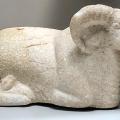
"The abundance of animal figurines at the major [Indus] urban centers suggests that they were commonly used in household and public rituals," writes Mark Kenoyer (Ancient Cities, p. 118). "All major domestic and wild animals are represented by terracotta figurines, but only a few animals were made in stone or faience. Two fragmentary stone sculptures of a seated ram were recovered from excavations at Mohenjo-daro," he continues; one was a faience amulet with a hole drilled through it, and there was also a larger sandstone of a seated ram [Image 3]. Ernest Mackay too noted how "model anima… >

Uniqueness of Ancient Indus Weight System

An exceptionally interesting, data-driven paper that suggests much was unique about the ancient Indus weight system: "To determine how different units of weight emerged in different regions, researchers compared all the weight systems in use between Western Europe and the Indus Valley from 3,000-1,000 BC." >

Mohenjo-daro Indian State Railways Brochure

An Indian State Railways brochure advertising Mohenjo-daro from approximately 1935. With the full text of the brochure (figures, captions charts and images): "Until quite recently, India's wonderful and varied history seemed to spring straight out of nothingness—like the warriors that sprang full-armed from the dragon's teeth sown by Cadmus." >

Major Ancient Indus Online Conference at Cambridge University

The ground-breaking Two Rains Project centered at Cambridge University is presenting a 7 event conference across 7 weeks online. >

The Indus Civilization: 100 Years of Discovery

An audio interview with Dr. Jonathan Mark Kenoyer with Wisconsin Public Radio explores his work and discoveries at Harappa, where stone tools suggest the area was inhabited as early as 10,000 BCE. An fine hour of highlights and key finds around crops, animals and culture and evidence for the earliest curries and writing. >

Ancient Indus Laddoos

An exciting find, not only because this is the first foodstuff preserved in such excellent condition, but also for the continuity with today, is this Times of India article on multi-grain, high-protein laddos found at the 4MSR site in Rajasthan on the border with Pakistan. >

Haider Ali's Mohenjo-daro

A stunning VW Bug by the Pakistani folk artist Haider Ali in Sindh. >

A Passport from Mohenjo-daro?

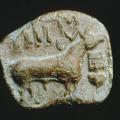
"Sealing or token with impression made from a unicorn seal with script. The back is smooth and rounded, suggesting that this object was a certificate or pass representing the seal owner and not something attached to a bundle of goods. Three script signs appear above a unicorn which stands facing right, with a ritual object or offering placed under a head" writes archaeologist Mark Kenoyer about this object found at Mohenjo-daro. He also writes that "impressions of seals on clay tags and on circular tokens show how the rulers and traders actually used their seals and provide insight into co… >

Ancient City Unearthed

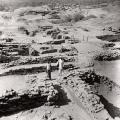
A Wide World Photo news agency photograph with the title given above was dated June 4, 1959. The caption, reflecting then popular conceptions like "invaders," was printed on the back: "For three thousand years a great and peaceful civilization has lain buried and forgotten on the banks of the Indus in what is today Pakistan. Now archaeologists are slowly excavating its capital, the ancient city of Moenjo Daro, a few miles south of Dokri. The city of Moenjo Daro is remarkable in many ways but most of all in its complete absence of fortifications. The assumption has been that the civilisat… >

Knobbed Terracotta Vessel MSR4

"This terracotta vessel with a pronounced knob at the centre has engaged the attention of archaeologists as a "unique find" and was probably used in rituals or ceremonies. Similar vessels have been depicted on Harappan seals and copper plates" according to the ASI description of this object found at Bijnor (MSR 4) in 2017. >

Mundigak at the Guimet, Paris

A brand new slide show has just been opened featuring objects from Mundigak, a little-known Bronze Age [c. 4000-2400 BCE] set of mounds in southern Afghanistan. The objects are now at the Guimet, the French National Museum of Asian Art in Paris. Their similarity to objects and motifs in the ancient Indus Valley is remarkable. Examples include the pipal leaf, a rat trap, the humped bull, a bird whistle and classic goblets the Mundigak excavators called "brandy balloons." There is even a stone sculpture which resembles the "priest-king." This 33 slide section Mundigak @ the Guimet is accompa… >

The Musee Guimet Indus and Amri Collection in Paris

In the summer of 2019, one of the warmest ever in Paris, I managed to slip one afternoon into the Musee Guimet, and click away on my iPhone at objects usually not seen in colour. This French national museum which contains one of the best collections of Asian Art in the world (as one collector of Indian art, Gursharan Sidhu once put it, the French taste in objects from India is second to none). >

A Counting or Prayer Disc?

Was this disc from Mohenjo-daro at the National Museum of Pakistan in Karachi used for counting? The circles with dots in the middle are identical to those found on other ivory objects from Mohenjo-daro thought to have been used as counters. >

Etched Carnelian Beads from Chanhu-daro

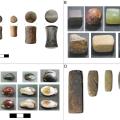
Etched carnelian beads are a hallmark of the Harappan phase and copies of them in different materials are found during this period illustrating their value to the people of the Indus Valley Civilization. Examples of this bead type have also been found in Mesopotamia, Iran and the Gulf and it is believed now that all of these may have been manufactured in the Indus Valley. >

Four Seals Up Close

A visit to the National Museum of Pakistan in Karachi gave me the opportunity to take close shots of four seals from Mohenjo-daro. They show both the exquisite workmanship of Indus craftsmen and the merciless wear, in different degrees, of four thousand years of history. >

Indus Figures at the National Museum, Karachi

On a visit earlier in 2019 to the National Museum of Pakistan in Karachi, an iPhone camera was a welcome companion in trying to bring out something of the character of Indus figurines resident within the large glass vitrines. >

Glimpses of Ganweriwala

The least excavated of the five large known ancient Indus cities – Mohenjo-daro and Dholavira, Harappa and Rakigarhi – is Ganweriwala, discovered in the late 1980s by Rafique Mughal. Deep in the desert, far from towns and close to the Indian border, it is hardly written about. >

Blog Posts by Subject (16)
  • Animals
  • Art
  • Children
  • City Life
  • Conferences
  • Crafts and Industry
  • Evolution
  • Excavations
  • Food
  • Homes
  • Media
  • Museums
  • Mysteries
  • News
  • People
  • Seals

follow us

On Facebook, Twitter, Instagram.
Videos on YouTube.
Occasional Newsletter.

donate

Serving 30K/day. Non-profit.
Since 1995.

© Harappa.com 1995-2026 31