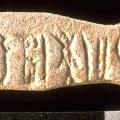
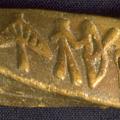
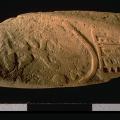
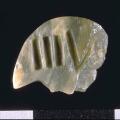
Methods and results of a systematic attempt to decipher the Indus script as a logo-syllabic writing system with Proto-Dravidian as the underlying language are first outlined. >
In 2004 Steve Farmer, Richard Sproat (University of Illinois) and Michael Witzel (Harvard University) stunned the world of ancient Indus scholarship with the claim that the Indus sign system was not writing. Asko Parpola's work was a target of their critique. This is his response. >
A Dravidian solution to the Indus script problem was presented as the Katalgnar M. Karunanidhi Classical Tamil Research Endowment Lecture on June 25, 2010 in Coimbatore. >
In 2008, Dr. Parpola published an updated 2nd paper addressing the controversial Farmer thesis Is the Indus script indeed not a writing system? It originally appeared as part of a felicitations volume in honor of Iravatham Mahadevan published in Chennai, India. >
Asko Parpola presents a wide-ranging investigation of the evidence of crocodiles in the Indus Civilization and later traditions. He draws on zoological, material, ethnographic, epigraphic, etymological and historical evidence to offer an impressively detailed narrative on the role of the crocodile … >
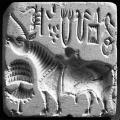
"My conclusion," writes the Indus script scholar Asko Parpola, "is that the Indian Rsyasrnga legend goes back to the Harappan religion, where the unicorn bull depicted on thousands of seals has a real local animal, the nilgai antelope, called rsya in Sanskrit. His single horn, the length of which is exaggerated, has a phallic connotation and emphasizes the importance of this animal as a symbol of fertility." >
A proof of this upcoming survey article by the dean of Indus script scholarship, Asko Parpola, is now available on Academia.edu; it will be published in the highly anticipated Seals and Sealing in the Ancient World (Cambridge, 2018). >
On his ninth death anniversary, a tribute to the American archaeologist Gregory M. Possehl, one of the most prolific writers on the ancient Indus civilization – no less than eight books by Possehl are listed on this site, many of them massive tomes, covering all aspects of Indus civilization. Prima… >
Another important and recent (October 2020) paper by Asko Parpola. He examines the 2018 finds from the Late Harappan site of Sanauli near Delhi in light of his research on early Indo-Aryan languages in the subcontinent and their origin in Central Asia. >