A detailed look at carnelian and agate sources and manufacture throughout the Gulf region, and how many of the beads found show clear evidence of ancient Indus manufacturing techniques. As the authors write: "Recent studies using more refined techniques of morphological and technological analysis c… >
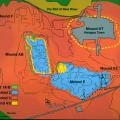
In addition to the overall objective of obtaining new information on the cultural and structural development of Harappa, other specific questions investigated include the development of civic organization and control, occupational specialization, and social stratification. >
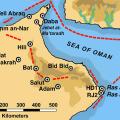
"In this paper," write the authors, "we present the preliminary results of a long-term and multifaceted study of the role of craft specialists and traders who were present in ancient Magan during the 5th-1st millennia BCE (Table 1), with a specific focus on beads found at sites in modern Oman, and … >
The author focuses primarily on economic interaction networks and specialised crafts to show how they can provide a window on the other changes that may have been occurring. >
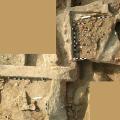
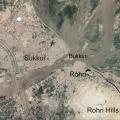
We know so little about so many Indus sites, including ones that are buried beneath modern cities and may never be discovered. One such potentially large settlement is Lakheen-Jo-Daro, sometimes also called Lakhan Jo Daro, bits of which have been found in and around the modern city of Sukkur, Sindh, on the Indus River, just across the monumental chert deposits in the Rohri Hills. >
A wide variety of faience ornaments including beads, bangles and jewelry have been retrieved from the major ancient cities of Mohenjo-daro, Harappa and Chanhudaro, located in Pakistan. >
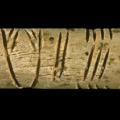
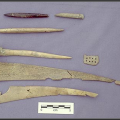
Dr. Heidi J. Miller discusses 18 previously unpublished ivory rods from Dr. George F. Dales's 1964–65 joint Pakistan Department of Archaeology/University of Pennsylvania season, excavated from a 20-meter square in the southwest corner of the HR mound. This is a large amount to have been discovered … >
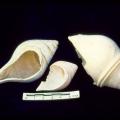
AIthough the presence of a specialized shell industry and the widespread use of shell are well documented at sites of the Indus Civilization (2500-1750 B.C.), the early stages of this industry were not known until recent excavations at the site of Mehrgarh, Pakistan. >
Study of the excavated material combined with radiocarbon dates has made it possible to present a detailed chronology for the Harappa site and a more precise breakdown of the types of artifacts and architectural traditions associated with each major occupational period. >