Home

Main navigation

  • home
  • slides
  • essays
  • articles
  • books
  • video
  • q & a
  • blog
Secondary menu
  • about us
    • scholars
    • privacy
    • support
    • image rights
    • credits
    • contact us
  • resources

Secondary menu

  • about us
    • scholars
    • privacy
    • support
    • image rights
    • credits
    • contact us
  • resources

Ancient Indus Valley Civilization Articles

370 peer-reviewed articles from leading journals about the latest discoveries about the ancient Indus civilization, its antecedents and contemporaries in the Persian Gulf and Mesopotamia, during the Bronze Age 3500-1700 BCE by the world's ancient Indus archaeologists and scholars.
Priest-Kings or Puritans? Childe and Willing Subordination in the Indus

Robin Coningham

An interesting series of reflections on how we have viewed the ancient Indus through the prism of whatever archaeological priorities or worldviews were in fashion then, and how the evidence, slowly, can push against these preconceptions. >

Mirrored signs. Administrative and scriptorial information in the Indus Civilization clay sealings

Dennys Frenez

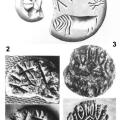
So much attention has been focused on seals, that we sometimes forget that sealings was their most prosaic and basic function: making impressions on clay or other humble materials to perform some sort of basic administrative functions. >

The Published Archaeobotanical Data from the Indus Civilisation, South Asia, c. 3200–1500 BC

Jennifer Bates

What did ancient Indus people eat? What kind of crops did they grow? What did they cook? How might these things differ by city, town and region? To even get close to answering these questions, one needs a "a systematic collation of all primary published macrobotanical data, regardless of their designation as ‘crop’, ‘fully domesticated’ or ‘wild/weedy’ species," writes author Jennifer Bates. >

Oilseeds, spices, fruits and flavour in the Indus Civilisation

Jennifer Bates

An excellent recent (2019) summary of what we know about ancient Indus foods that were, likely and speculatively, derived from plant resources, and what implications these diverse discoveries over the years have for our understanding of ancient Indus society. >

Indus Folklore: An Unknown Story on Some Harappan Objects

Gregory L. Possehl

There are at least 18 examples of a "human and tiger" motif in Indus glyptic art. This short paper by one of the most prolific writers on ancient Indus themes, the late Dr. Gregory Possehl, wonders how we might read this visual artifact. >

Indus and Mesopotamian Trade Networks: New Insights from Shell and Carnelian Artifacts

Jonathan Mark Kenoyer

A judicious review of the evidence for trade between the ancient Indus and Mesopotamia, with a focus on prestige objects like carnelian beads and shell bangles and the implications and questions we may draw from them about the nature of the connections between both civilizations. >

What Makes a Pot Harappan?

Heidi J. Miller

"When we speak of Harappan material style, we need to include the whole package of raw material, technological know-how as well as shape and pattern," writes Dr. Heidi J. Miller, who goes on to present "a preliminary study of what defines a Harappan phase ceramic assemblage by comparing the assemblages from the sites of Harappa in the Punjab, Mohenjo-daro and the smaller site of Chanhu-daro, both in Sindh, and illustrating what is shared amongst these contemporary occupations." >

The Prehistory of Sindh and Las Bela (Balochistan): Thirty years of surveys and excavations (1985-2014)

Paolo Biagi

It has really only been since the 1980s that a more comprehensive picture of the wide and deep roots of Indus civilization in the larger Sindh and Balochistan region have become apparent. Mehrgarh did not spring out of nowhere but was embedded in a region where fishing, shell collecting, flint mining and other crafts were present and flourishing at different times. >

Decorated Carnelian Beads from the Indus Civilization Site of Dholavira (Great Rann of Kachchha, Gujarat)

V. N. Prabhakar

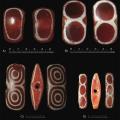
A detailed review of the carnelian beads found in Dholavira, among the most striking of all ancient Indus manufactured goods. >

Materializing Harappan identities: unity and diversity in the borderlands of the Indus Civilization

  • Excerpt from map of the Indus Civilization showing archaeological sites
Brad Chase

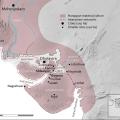
The authors take on the complex question of how Harappan or Indus culture made its presence felt in Gujarat from about the middle of the third millennium through the decline of Indus civilization six or seven hundred years later. How did Indus traditions as expressed in material culture and the manufacture of these objects relate to what we see in Indus cities like Mohenjo-daro and Harappa? >

Dilmun-Meluhhan Relations Revisited in Light of Observations on Early Dilmun Seal Production during the City IIa-c Period (c. 2050-1800 BC)

Eric Oldijam

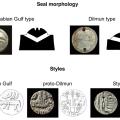
A fascinating article from the mammoth Walking with the Unicorn book that delves into the brief, intense life of ancient Indus-inspired seals in Dilmun (Bahrain) around 2000 BCE. The authors use the unique and extensive evidence from this Gulf civilization to to draw some important inferences about… >

The distribution and role of Harappan ‘headdress’ figurines and Harappan socio-political organisation

Jacek Wankowski

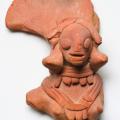
Another look at the "Mother Goddess" interpretation of female figurines from the ancient Indus Valley, in this case those remarkable ones with various elaborate headdresses. Once again, an author, this time in Australia, comes away unimpressed by this simplistic equation. >

Family Matters in Harappan Gujarat

Brad Chase

A convincing if speculative attempt to bring together a variety of insights from kinship theory and the peculiar nature of recently discovered material remains in Gujarat to offer a theory of how these so-called ‘Sorath’ and ‘Sindhi’ Harappan settlements were peopled. >

Mahiwala 1 (MW-1): a Mesolithic site in the Thal desert of Punjab (Pakistan)

Paolo Biagi

The authors write that "the discovery of a knapped stone assemblage with microlithic backed tools and geometrics represents a groundbreaking point for the prehistory of Punjab. It opens new research perspectives in a promising territory that had never been explored before, where surveys are undoubtedly to be continued in the future because of its great potential." >

Evaluating Potential Lapis Lazuli Sources for Ancient South Asia Using Sulfur Isotope Analysis

Randall Law

"Lazurite - the constituent of lapis lazuli that gives the rock its blue color - is a rare mineral in nature," writes Randall Law, and there is likely to have been only one source in the region during ancient times, the Badakhshan mines in Afghanistan. >

‘We are inheritors of a rural civilisation’: rural complexity and the ceramic economy in the Indus Civilisation in northwest India

Danika Parikh

The relationship between ancient Indus centers - which we know best and consider a hallmark of the civilization - and the vast rural "hinterland" that surrounded them is the subject of this lucid paper. >

New excavations at the Umm an-Nar site Ras al-Hadd HD-1, Sultanate of Oman (seasons 2016–2018): insights on cultural interaction and long-distance trade

Maurizio Cattani

"Recent discoveries of Indus and Indus related materials at sites in the interior, and a general reassessment of comparable materials throughout Oman, suggest a more complex model of interaction. . . these artefacts probably reflect the presence of small groups of Indus merchants and craftspeople integrated into local communities and directly involved with important socioeconomic activities." >

The Indus Civilization Trade with the Oman Peninsula

Dennys Frenez

A must-read paper. Dennys Frenez classifies and nicely illustrates recent finds in the Oman Peninsula connecting it to the Indus civilization in multiple ways. >

Looking beneath the Veneer Thoughts about Environmental and Cultural Diversity in the Indus Civilization

Cameron A. Petrie

"The recognition of variation and diversity [in the ancient Indus civilization] has encouraged a gradual, though not universally accepted, shift toward the interpretation that certain categories of Indus material acted as ‘a veneer… overlying diverse local and regional cultural expressions'," write the authors. >

Some Important Aspects of Technology and Craft Production in the Indus Civilization with Specific Reference to Gujarat

Kuldeep Bhan

It is really nice in a paper to be able to speak both of what is happening now, at the cutting-edge of bead and shell-making Indus craftsmanship and continuing discoveries, and be able to relate each tradition back to its earliest appearance in the subcontinent and elsewhere. >

Exploiting mangroves: Environmental changes and human interference along the northern coast of the Arabian Sea (Pakistan) during the Holocene

Paolo Biagi

This paper reviews the work done since the early 1970s east of Karachi along the Makran coast, containing what were once extensive mangrove areas (where salt and fresh water meet to create unique habitats). >

Private Person or Public Persona? Use and Significance of Standard Indus Seals as Markers of Formal Socio-Economic Identities

Dennys Frenez

This deeply investigative article published in Walking with the Unicorn (2018) takes on some of the most unusual facts about ancient Indus seals to surmise about their function in the Indus polity as a whole. >

Ceramic Analysis and the Indus Civilization. A Review

Alessandro Ceccarelli

"For archaeologists," write the authors, "pottery is one of the most significant sources of data, not only for the durability and abundance of ceramic artefacts in the archaeological record, but also for the vast range of information on ancient societies that can be inferred from its study." >

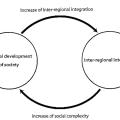
Development of the Inter-regional Interaction System in the Indus Valley and Beyond - A Hypothetical View towards the Formation of an Urban Society -

Akinori Uesugi

"Urban society is a highly complex system in terms of its institutions, hierarchy, integration, etc." writes the author. "A vast region is incorporated into one social system which is based on cities." >

The Murghabo-Bactrian Archaeological Complex and the Indus Script

Elisabeth C.L. During Caspers

An interesting article in which the author discusses the existence of Indus-type seals in the Gulf and Mesopotamian regions, their relationship to trade and other civilizations in the area, including the Central Asian Bronze Age civilization now better known as the BMAC (Bactrio-Margiana Archaeological Complex). After carefully reviewing the evidence for Indus settlers in ancient Mesopotamia, and their use Indus-type seals whose signs are ordered in ways not found within the Indus region proper, she discusses the relationships they may still have had with Indus peoples back home and the role of different kinds of writing in this relationship. >

Remote Sensing and Historical Morphodynamics of Alluvial Plains. The 1909 Indus Flood and the City of Dera Ghazi Khan (Province of Punjab, Pakistan)

Arnau Garcia

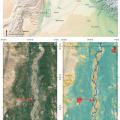
The second article of a pair with Mapping Archaeology While Mapping an Empire: Using Historical Maps to Reconstruct Ancient Settlement Landscapes in Modern India and Pakistan. This uses the theoretical techniques developed there with a real world example, the devastating Indus flood of 1909 that le… >

Metal Craft of Harappan Culture: A Cast Study at Binjor

Sanjay Kumar Manjul

An interesting paper about a recently excavated center of metallurgy in Bijnor, Rajasthan. >

Mapping Archaeology While Mapping an Empire: Using Historical Maps to Reconstruct Ancient Settlement Landscapes in Modern India and Pakistan

  • harappa asi map
Cameron A. Petrie

Science is slowly transforming ancient Indus studies, from DNA analysis of skeletons that point to migration and disease, to isotope analysis that reveals the distant origins of raw materials. One of the cleverest – and potentially rewarding i terms of increasing the number of ancient sites to investigate – must be the use of old maps. >

Toponyms, Directions and Tribal Names in the Indus Script

Iravatham Mahadevan

A recent paper by the late Iravatham Mahadevan and his collaborator M.V. Bhaskar looks at signs in the Indus script that can be related to physical features in the landscape, and how this might play out in terms of interpreting them. A number of interpretations seem to fit together nicely. >

Fish Symbolism and Fish Remains in Ancient South Asia

William R. Belcher

"Fish remains from archaeological sites have the capacity to offer a tremendous amount of information on social issues in addition to the more traditional goals of subsistence studies related to procurement strategies and seasonality," writes the author. >

Pagination

  • First page
  • Previous page
  • Page 1
  • Page 2
  • Page 3
  • Page 4
  • Page 5
  • Page 6
  • Page 7
  • Page 8
  • Page 9
  • …
  • Next page
  • Last page

follow us

Follow us on Facebook, Twitter and Instagram.
Videos on YouTube.
Occasional Newsletter.

Articles by Subject (48)
  • Agriculture
  • Animals
  • Archaeological History
  • Archaeologists
  • Architecture
  • Beads
  • Cemeteries and Burials
  • Ceramics
  • Crafts
  • Culture
  • Decline
  • Dilmun
  • Environment
  • Evolution
  • Excavations
  • Figurines
  • Fishing
  • Flint
  • Food
  • Games
  • Gender
  • Harappa
  • Kulli Culture
  • Manufacture
  • Mesolithic Period
  • Music
  • Nal
  • Natural Resources
  • Neolithic
  • New Discoveries
  • Ornaments
  • Pottery
  • Raw Materials
  • Religion
  • Rock Art
  • Script
  • Seals
  • Steatite
  • Stoneware
  • Technology
  • Textiles
  • Tools
  • Toys
  • Trade
  • Unicorn
  • Urbanism
  • Water
  • Writing

Q and A

Questions and Answers from our site visitors to Indus scholars like Iravatham Mahadevan, Richard H. Meadow, Shereen Ratnagar, Jane McIntosh, Asko Parpola and Rita P. Wright.

Articles by Place (54)
  • Afghanistan
  • Ahar Banas [Rajasthan]
  • Allahdino
  • Amri
  • Arabia
  • Bagasra
  • Balakot
  • Balathal
  • Balochistan
  • Binjor
  • BMAC
  • Central Asia
  • Chanhu-daro
  • Dholavira
  • Dilmun
  • Dilmun (Bahrain)
  • Farmana
  • Gujarat
  • Halil Rud
  • Harappa
  • Haryana
  • Iran
  • Kalibangan
  • Karanpura
  • Kashmir
  • Khambat
  • KPK (NWFP)
  • Lakhan Jo Daro
  • Lothal
  • Madhya Pradesh
  • Margiana
  • Mehrgarh
  • Mesopotamia
  • Mitathal
  • Mohenjo-daro
  • Mundigak
  • Oman
  • Oxus
  • Pak
  • Punjab
  • Rajasthan
  • Rakigarhi
  • Rohri Mines
  • Rojdi
  • Sanauli
  • Shahr-i Sokhta
  • Shikarpur
  • Shortugai
  • Sindh
  • Sonari
  • Sutkagen Dor
  • Tamil Nadu
  • Trade
  • Uttar Pradesh
Articles by Author (300)
  • F. A. Khan
  • Iqtedar Alam
  • Abe, Yoshinari
  • Adhikari, Ronojoy
  • Ajithprasad, P.
  • Al-Jahwari, Nasser S.
  • Ameri, Marta
  • Amundson, Ronald
  • Arbuckle, Benjamin S.
  • Aruz, Joan
  • Ashraf, Md. Izhar
  • Atturu, Deva
  • Baidya, Abu Saeed
  • Bakry, A.
  • Balakrishnan, R.
  • Balasubramaniam, Chitra
  • Balista, Claudio
  • Baqri, Syed Rafiqul Hassan
  • Barba, Federica
  • Basak, Shubjam
  • Bates, Jennifer
  • Beaubien, Harriet F.
  • Beaudry, Marilyn P.
  • Belcher, Wayne R.
  • Belcher, William R.
  • Betts, Alison
  • Bhan, Kuldeep
  • Bhaskar, M. V.
  • Bhattacharya, Ujjwal
  • Biagi, Paolo
  • Blevins, K. Elaine
  • Bolger, Diane
  • Bondioli, Luca
  • Bosch, David
  • Bosch, Leslie
  • Bryson, Reid A.
  • Burton, James H.
  • Buylaert, Jan-Pieter
  • Cable, Charlotte M.
  • Cárdenas, Marc
  • Carter, Alison
  • Carter, Andrew
  • Carter, R. A.
  • Carter, Savannah
  • Caspers, Elisabeth C.L. During
  • Cattani, Maurizio
  • Ceccarelli, Alessandro
  • Chakrabarti, Dilip K.
  • Chase, Brad
  • Chatterjee, Malavika
  • Chattopadhyay, Pranab K.
  • Choi, Jungwoo
  • Clark, J. Desmond
  • Clark, Sharri R.
  • Conesa, Francesc C.
  • Coningham, Robin
  • Coppa, Alfredo
  • Cork, Edward
  • Cortesi, E.
  • Cox, Brett
  • Craig, Oliver E.
  • Cremaschi, Mauro
  • Cubas, Miriam
  • Dales, George F.
  • Dangi, Vivek
  • Daniell, Rachel
  • Dave, Vasant
  • David-Cuny, Helene
  • Davis, Mary A.
  • Decaix, Alexia
  • Densmore, Alexander L.
  • Desset, Francois
  • Didier, Aurore
  • Dixit, Vaishnavi
  • Dixit, Yama
  • Douglas, Khaled A.
  • Dubova, Nadezhda A.
  • Dupree, Louis
  • Esposti, Michele Degli
  • Fantuzzi, Tiziano
  • Franco, Carlo
  • Franke, Ute
  • French, Charly A. I.
  • Frenez, Dennys
  • Fuller, Dorian Q.
  • Gadekar, Charusmita
  • Garbe, Lisa
  • Garcia, Arnau
  • García-Granero, Juan José
  • Garrett, Zenobie S.
  • Gasparotto, Giorgio
  • Ghauri, Zubair Shafi
  • Giesche, Alena
  • Giosan, Liviu
  • Girod, Alberto
  • Glascock, Michael D.
  • Good, Irene
  • Gray, Kelsey
  • Green, Adam S.
  • Jade d'Alpoim Guedes
  • Guha, Sudeshna
  • Guida, Giuseppe
  • Gupta, Ekta
  • Gupta, Sanjeev
  • Haerinck, Ernie
  • Haider, Romana
  • Haquet, Jerome F.
  • Hemphill, Brian E.
  • Henny, A. S.
  • Heron, Carl P.
  • Hesein, Mohammed
  • Heydari, M.
  • Higham, T.
  • Hobbs, Franklin
  • Hoddell, David A.
  • Hoffman, Brett C.
  • Hong, Jong Ha
  • Hritz, Carrie
  • Hussain, Nushrat
  • Jadhav, Nilesh
  • Jain, Mayank
  • Jain, Vikrant
  • James, Nathaniel
  • Jamison, Gregg M.
  • Jarrige, Jean-François
  • Jogelkar, P. P.
  • Joglekar, Hrishikesh
  • Jones, Penelope J.
  • Kamenov, George D.
  • Kashyap, Arunima
  • Kazi, M. Mukhtiar
  • Kennedy, K.A.R.
  • Kenoyer, Jonathan Mark
  • Khan, Aurangzeb
  • Kim, Yong Jun
  • Kimbrough, C. K.
  • Kingwell-Banham, Eleanor
  • Knox, J. Robert
  • Krigbaum, John
  • Krishnan, K.
  • Kumar, Manmohan
  • Lancelotti, Carla
  • Laursen, Steffen Terp
  • Law, Randall
  • Lazzari, A.
  • Leach, Alexandra
  • Lee, , W. J.
  • Lemmen, Carsten
  • Lentz, David L.
  • Lightfoot, E.
  • Lombardo, Giovanni
  • Lovell, Nancy
  • Lukacs, John R.
  • Mackay, Dorothy
  • Mackay, Ernest
  • Madella, Marco
  • Mahadevan, Iravatham
  • Mahajan, Sangeeta
  • Majid, Jaseera C.
  • Malik, Arun
  • Mandal, D.
  • Manjul, Arvin
  • Manjul, Sanjay Kumar
  • Manuel, Mark
  • Mariottini, Maurizio
  • Mark, Darren F.
  • Mason, Philippa J.
  • Mazuy, Arnaud
  • Meadow, Richard H.
  • Meiggs, David
  • Mery, Sophie
  • Michniak, Ryszard
  • Mille, Benoit
  • Miller, Heather M.L.
  • Miller, Heidi J.
  • Mishra, Vimal
  • Misra, V. D.
  • Misra, V. N.
  • Mitra, Debasis
  • Mohanty, R. K.
  • Moraleda-Cibrián, Nuria
  • Moulherat, Christophe
  • Mughal, M. Rafique
  • Mukhopadhyay, Bahata Ansumali
  • Muller, Wolfgang
  • Munshi, Avadreep
  • Murray, Andrew S.
  • Mushrif-Tripathy, V.
  • Mutin, Benjamin
  • Nakai, Izumi
  • Narasimhan, Vagheesh M
  • Nava, Allessia
  • Negrino, Fabio
  • Neumayer, Erwin
  • News, Dawn
  • Nisbet, Renato
  • T. C. O'Connell
  • Tamsin C. O'Connell
  • Oh, Chang Seok
  • Oldijam, Eric
  • Orengo, Hector A.
  • Otarola-Castillo, Erik
  • Pal, Dipak C.
  • Pal, J.N.
  • Pandey, Lalit
  • Panyam, Amrithavalli
  • Parikh, Danika
  • Parpola, Asko
  • Patel, Ambika
  • Patterson, Nick J
  • Paul, Debajyoti
  • Pendall, Elise
  • Petrie, Cameron A.
  • Pisan, Alessandra
  • Possehl, Gregory L.
  • Prabhakar, V. N.
  • Pracejus, Bernhard
  • Price, T. Douglas
  • Priori, Gianfranco
  • Quinn, P. S.
  • Quivron, Gonzague
  • Raczek, Teresa R.
  • Rahmstorf, Lorenz
  • Rajagopalan, Balaji
  • Rajesh, S.V.
  • Rao, Rajesh P. N.
  • Ratnagar, Shereen
  • Reade, Julian
  • Reddy, Seetha N.
  • Regert, Martine
  • Rizvi, Uzma Z.
  • Robinson, Andrew
  • Rogersdotter, Elke
  • Roux, P. le
  • Salvatori, Sandro
  • Sankhyan, A. R.
  • Schug, Gwen Robbins
  • Schug, Malcolm
  • Schuldenrein, Joseph
  • Sengupta, Shamashis
  • Sharma, Bhanu Prakash
  • Sharma, G.R.
  • Sher, G. M.
  • Shin, Dong Hoon
  • Shinde, Vasant
  • Shirataki, Junko
  • Shirvalkar, Prabodh
  • Sidoti, Giancarlo
  • Singh, Ajit
  • Singh, Ravindra N.
  • Sinha, Rajiv
  • Sinha, Sitabhra
  • Siviero, Anna
  • Smith, Monica L.
  • Solanki, Hiren
  • Sonawane, V. H.
  • Spataro, Michela
  • Spate, Michael
  • Starnini, Elisabetta
  • Strolin, Laura
  • Sucuoglu, Can
  • Sugandhi, Namita S.
  • Suryanarayan, Akshyeta
  • Tengberg, Margareta
  • Thirumalai, Kaustubh
  • Thomsen, Kristina J.
  • Thornton, Christopher P.
  • Tombret, Olivier
  • Tosi, M.
  • Toyoma, Kanac
  • Tufail, Kaiser
  • Turner, A. Keith
  • Uesugi, Akinori
  • Vahia, Mayank
  • Valentine, Benjamin
  • Varma, Supriya
  • Veesar, G. Mohiuddin
  • Verardi, Giovanni
  • Vermaak, Petrus S.
  • Vidale, Massimo
  • Villanueva, Joan
  • Villasana, Isabell
  • Vreeze, Michel de
  • Waele, An De
  • Waghmare, Pranjali
  • Walker, Joanna R.
  • Wankowski, Jacek
  • Weber, Steve
  • Weeks, Lloyd
  • Williams, Kimberly D.
  • Woo, Eun Jin
  • Wright, Rita P.
  • Xu, Huifang
  • Yadav, Nisha
  • Yadav, Yogesh
  • Yamahana, Kyoko
  • Yatoo, Mumtaz
  • Zahir, Muhammad
  • Zazzo, Antoine
  • Zhang, Guilin
© Harappa.com 1995-2026 31