Home

Main navigation

  • home
  • slides
  • essays
  • articles
  • books
  • video
  • q & a
  • blog
Secondary menu
  • about us
    • scholars
    • privacy
    • support
    • image rights
    • credits
    • contact us
  • resources

Secondary menu

  • about us
    • scholars
    • privacy
    • support
    • image rights
    • credits
    • contact us
  • resources

Ancient Indus Valley Civilization Articles

370 peer-reviewed articles from leading journals about the latest discoveries about the ancient Indus civilization, its antecedents and contemporaries in the Persian Gulf and Mesopotamia, during the Bronze Age 3500-1700 BCE by the world's ancient Indus archaeologists and scholars.
Beas Landscape and Settlement Survey: Harappan Sites at Dunyapur/Lodhran – Punjab, Pakistan

Rita P. Wright

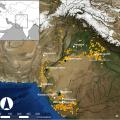
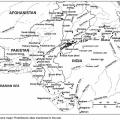
Often archaeology is all about digging deep, trying to get to the bottom layers on a site, intensively recording depths and detail. Sometimes it is about casting a wider net, in this case a larger area near an old bed of the Beas River in Punjab. >

Domestic food practice and vessel-use at Salūt-ST1, central Oman, during the Umm an-Nar period

Akshyeta Suryanarayan

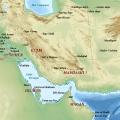
A Sherlock Holmes-style investigation into over four thousand year old pots to determine, as best as modern lipid residue analysis allows, the foodstuffs that they once held to draw a bigger and better picture of food practices on the Arabian Gulf during the so-called Umm an-Nar period (ca. 2700-2000 BCE). Many of these pots were imported ancient Indus Black-Slipped Jars. >

Lithic Blade Implements and their Role in the Harappan Chalcolithic Cultural Development in Gujarat

Charusmita Gadekar

Lithic (stone) tools were the machine tools of the Bronze Age. This very well-written article shows how "the study of stylistic difference and technological continuities and discontinuities observed in lithic assemblages at ancient sites can provide important new information regarding the spread and development of Harappan Civilization as well as about other regional Chalcolithic cultures." >

Markers and agencies of anisotropy in the Indus sign system

M. V. Bhaskar

"This paper reports a broad range of new observations about sign behaviour in relation to and independently of animal behaviour on Indus seal-impressions," writes the author. >

The Harappan ‘Veneer’ and the Forging of Urban Identity

Mary A. Davis

This thought-provoking paper explores the widespread similarity and standardization in material culture across the Indus Valley Civilization, termed by others as the ‘Harappan Veneer’. >

Who Were the ‘Massacre Victims’ at Mohenjo-daro? A Craniometric Investigation

Brian E. Hemphill

This 40 page paper presents an in-depth analysis aiming to elucidate the biological affiliations of individuals found in atypical burial contexts at Mohenjo-daro through craniometric studies. This is murky stuff - craniometric studies or "the measurement of the skull and facial structure" - becaus… >

Archaeological Field Research in Pakistan since Independence: An overview

M. Rafique Mughal

This 1990 article from the Deccan College Bulletin's Memorial volume for H.D. Sankalia, an eminent Indian archaeologist, is a summary in one place of the archaeological work done in Pakistan after 1947. Much of this is relevant to wider than national boundaries. >

Holocene people and sea-level changes along the northern coast of the Arabian Sea (Pakistan)

  • Siranda Lake, Distribution map of the radiocarbon dated sites
Paolo Biagi

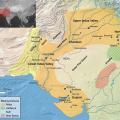
This paper develops a key theme relating to the origins of the ancient Indus civilization – the very different geographical reality in the Indus delta and the Arabian coast in the millennia preceding its rise. >

The Origins of the Indus Civilization

M. Rafique Mughal

As Dr. Rafique Mughal leads the first major excavation at the site of Ganweriwala in the Cholistan desert – an exceptionally exciting development in ancient Indus archaeology – it is well worth reviewing his earlier papers, many of which were published in Pakistani archaeological journals forty or more years ago. >

Fish Symbolism in Indus Valley Epigraphy and Protohistoric Accounts

Shamashis Sengupta

The writer, who teaches at CNRS/Université Paris-Saclay in France, has come up with a paper rich in historical and epigraphical associations that complexify and simplify thinking about one of the most important signs on Indus seals, "nearly ten percent of all textual matter." >

The Short-Horned Bull on the Indus Seals: a Symbol of the Families in the Western Trade?

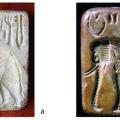
  •  flat square double sided seal
Massimo Vidale

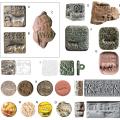
A superb, thought-provoking paper by one of the most imaginative and interesting of ancient Indus archaeologists, able to reconcile the bigger picture with data and suppositions that often fit together very nicely. They certainly do in this paper. >

The Amri Chalcolithic Phase in Sindh (Pakistan): What We know and What We Should Know

  • Tharro Hill terrace
Paolo Biagi

Very little is known about the so-called "Amri Phase," as this author refers to an apparently pre-Indus civilization site in Sindh that dates to the 4th millennium BCE. >

Animal movement on the hoof and on the cart and its implications for understanding exchange within the Indus Civilisation

  • Animals Indus Valley
Cameron A. Petrie

It seems to be an adage around the ancient Indus research that solving one mystery simply surfaces another. This is the case with this paper. It takes on the question of ground – land – transportation in ancient Indus times only to find that larger answers around transport remain fuzzy. We know tha… >

Semantic scope of Indus inscriptions comprising taxation, trade and craft licensing, commodity control and access control: archaeological and script-internal evidence

Bahata Ansumali Mukhopadhyay

The author brings together a great deal of information to argue that "inscribed stamp-seals were primarily used for enforcing certain rules involving taxation, trade/craft control, commodity control and access control," and in relating stamp seals and tablets, that "such tablets were possibly trade/craft/commodity-specific licenses issued to tax-collectors, traders, and artisans," (p. 1). >

Indus Valley: Early Commercial Connections with Central and Western Asia

Dennys Frenez

A must-read paper for those fascinated by the extensive trade networks that the ancient Indus civilization was integrated with. Infused with the latest research from the many regions in question, it summarizes and delves into the evidence of people, texts, animals, minerals and plants to seals and weights, pottery, stone, metal and ivory objects, statues, games and toys and more. >

Peaceful Harappans? Reviewing the evidence for the absence of warfare in the Indus Civilisation of north-west India and Pakistan (c. 2500-1900 BC)

Edward Cork

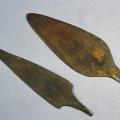
Whether or not the ancient Indus civilization was peaceful or not has intrigued a number of scholars and led to books like Jane McIntosh's A Peaceful Realm (2001). The apparent lack of weaponry and depictions of warfare, possibly ideas on the supposed egalitarianism of Indus civilization have led to a preponderance of this hypothesis. >

Lakheen-Jo-Daro, an Indus Civilization Settlement at Sukkur in Upper Sindh (Pakistan): A Scrap Copper Hoard and Human Figurine from a Dated Context

Paolo Biagi

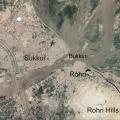
We know so little about so many Indus sites, including ones that are buried beneath modern cities and may never be discovered. One such potentially large settlement is Lakheen-Jo-Daro, sometimes also called Lakhan Jo Daro, bits of which have been found in and around the modern city of Sukkur, Sindh, on the Indus River, just across the monumental chert deposits in the Rohri Hills. >

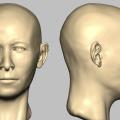
Craniofacial reconstruction of the Indus valley civilization individuals found at 4500-year-old Rakhigarhi cemetery

  • Craniofacial reconstruction of the Indus valley civilization individuals
Lee, W. J.

The first cranio-facial reconstructions of two bodies found in an Indus-era cemetery in Rakigarhi were published not too long ago; both subjects, known as 7.2 A1 BR02 and 7.2 A2 BR36 are shown above. >

Gonur Depe - City of Kings and Gods, and the Capital of Margush Country (Modern Turkmenistan)

Nadezhda A. Dubova

One of the most interesting trends to follow around ancient Indus studies is the increasing amount of research and knowledge of neighboring cultures and civilizations in time and place: the ancient Arabian Gulf, Mesopotamia, Central Asia (not to mention South and East India, even Southeast Asia). >

Painted Indus Script on Ceramics and Steatite: New Insights on Indus Script Calligraphy and Function

  • Inscribed Stoneware Bangles
Jonathan Mark Kenoyer

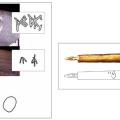
A careful look at one of the least studied forms of Indus writing. "The painting of script on pottery. Painting script requires a specially prepared brush that could have been the same as that used for decorating pottery, but would have been selected to have the appropriate size and shape for the size of the script being painted." >

Recurring summer and winter droughts from 4.2-3.97 thousand years ago in north India

Alena Giesche

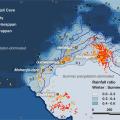
This highly technical and scientific paper brings together all the recent evidence from Dharamjali Cave in the Himalayas over a 230 year period around 2000 BCE, when the ancient Indus civilization was in decline, to show "that repeated intensely dry periods spanned multiple generations. The record highlights the deficits in winter and summer rainfall during the urban phase of the Indus Civilization, which prompted adaptation through flexible, self- reliant, and drought-resistant agricultural strategies." >

An Indus Scale

  • An Indus Scale
Sudeshna Guha

Chapter 5 from Sudeshna Guha's bestselling A History of India Through 75 Objects (2022), includes a little-known object described as a ‘measure of length’ by Ernest Mackay. >

Forgotten Islands of the Past: The Archaeology of the Northern Coast of the Arabian Sea

Paolo Biagi

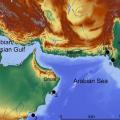
The author, who has been working in the larger region for decades exploring the long history of human habitation and industry going back tens of thousands of years, turns his attention to the geographic changes in the Indus delta region through the Bronze Age and what recent work shows us were the curious "islands" that once existed in lower Sindh (Dholavira, in Gujarat, is another example of such a later settlement). >

What Lay Beneath: Queen Puabi’s Garments and Her Passage to the Underworld

Rita P. Wright

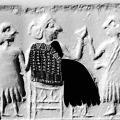
"The reconstruction of Puabi fully adorned provides insights into the fabric that lay beneath the sumptuous ornaments. The queen’s spectacular accessories, though important, have diverted our attention away from the cloth that lay beneath the eye-catching ornaments, which deteriorated (or de-materialized) long ago and so has been mostly invisible to us in the present day." >

Guabba, the Meluhhan Village in Mesopotamia

Petrus S. Vermaak

Until Dr. Vermaak's paper (2008), no one had connected the known existence of a Meluhhan village in the Girsu/Lagash area with Guabba; the availability of more texts since the first connections were made by scholars like Asko Parpola allowed him to both locate it more precisely and tease out a number of other references that give us some sense of what these people did and were known for. >

Mining Bronze Age Stone Resources: Some examples from the Caucasus (Georgia) and Sindh (Pakistan)

Paolo Biagi

Archaeologists often assume that metals like bronze replaced the need for stone tools, but is this really the case given the evidence in these two areas not to mention select Mediterranean regions? In the Indus region, what was the use of these tools given their limited presence in Mohenjo-daro and Harappa? >

Excavations at Chanhu-daro 1935-36

Ernest Mackay

The original article by Ernest Mackay on the excavations he led at a key ancient Indus site known for fine craftsmanship, with all 10 plates. >

Heterarchic Powers in the Ancient Indus Cities

Massimo Vidale

This thoughtful and enlightening paper starts with a clear statement of the writer's point-of-view: "On the other hand, to keep writing that Indus society in the 3rd millennium BC was uniform, acephalous, egalitarian and classless, that it was not a state, that its people rejected violence, elites … >

Indus zoomorphism and its avatars

M. V. Bhaskar

A technical paper which rewards the follower with valuable insights and serves, on a platter as it were, some complex puzzles in Indus iconography for further cogitation to the reader. >

Stone Beads in Oman during the 3rd to 2nd Millennia BCE. New Approaches to the Study of Trade and Technology

Jonathan Mark Kenoyer

"In this paper," write the authors, "we present the preliminary results of a long-term and multifaceted study of the role of craft specialists and traders who were present in ancient Magan during the 5th-1st millennia BCE (Table 1), with a specific focus on beads found at sites in modern Oman, and … >

Pagination

  • First page
  • Previous page
  • Page 1
  • Page 2
  • Page 3
  • Page 4
  • Page 5
  • Page 6
  • Page 7
  • Page 8
  • Page 9
  • …
  • Next page
  • Last page

follow us

Follow us on Facebook, Twitter and Instagram.
Videos on YouTube.
Occasional Newsletter.

Articles by Subject (48)
  • Agriculture
  • Animals
  • Archaeological History
  • Archaeologists
  • Architecture
  • Beads
  • Cemeteries and Burials
  • Ceramics
  • Crafts
  • Culture
  • Decline
  • Dilmun
  • Environment
  • Evolution
  • Excavations
  • Figurines
  • Fishing
  • Flint
  • Food
  • Games
  • Gender
  • Harappa
  • Kulli Culture
  • Manufacture
  • Mesolithic Period
  • Music
  • Nal
  • Natural Resources
  • Neolithic
  • New Discoveries
  • Ornaments
  • Pottery
  • Raw Materials
  • Religion
  • Rock Art
  • Script
  • Seals
  • Steatite
  • Stoneware
  • Technology
  • Textiles
  • Tools
  • Toys
  • Trade
  • Unicorn
  • Urbanism
  • Water
  • Writing

Q and A

Questions and Answers from our site visitors to Indus scholars like Iravatham Mahadevan, Richard H. Meadow, Shereen Ratnagar, Jane McIntosh, Asko Parpola and Rita P. Wright.

Articles by Place (54)
  • Afghanistan
  • Ahar Banas [Rajasthan]
  • Allahdino
  • Amri
  • Arabia
  • Bagasra
  • Balakot
  • Balathal
  • Balochistan
  • Binjor
  • BMAC
  • Central Asia
  • Chanhu-daro
  • Dholavira
  • Dilmun
  • Dilmun (Bahrain)
  • Farmana
  • Gujarat
  • Halil Rud
  • Harappa
  • Haryana
  • Iran
  • Kalibangan
  • Karanpura
  • Kashmir
  • Khambat
  • KPK (NWFP)
  • Lakhan Jo Daro
  • Lothal
  • Madhya Pradesh
  • Margiana
  • Mehrgarh
  • Mesopotamia
  • Mitathal
  • Mohenjo-daro
  • Mundigak
  • Oman
  • Oxus
  • Pak
  • Punjab
  • Rajasthan
  • Rakigarhi
  • Rohri Mines
  • Rojdi
  • Sanauli
  • Shahr-i Sokhta
  • Shikarpur
  • Shortugai
  • Sindh
  • Sonari
  • Sutkagen Dor
  • Tamil Nadu
  • Trade
  • Uttar Pradesh
Articles by Author (299)
  • F. A. Khan
  • Abe, Yoshinari
  • Adhikari, Ronojoy
  • Ajithprasad, P.
  • Al-Jahwari, Nasser S.
  • Ameri, Marta
  • Amundson, Ronald
  • Arbuckle, Benjamin S.
  • Aruz, Joan
  • Ashraf, Md. Izhar
  • Atturu, Deva
  • Baidya, Abu Saeed
  • Bakry, A.
  • Balakrishnan, R.
  • Balasubramaniam, Chitra
  • Balista, Claudio
  • Baqri, Syed Rafiqul Hassan
  • Barba, Federica
  • Basak, Shubjam
  • Bates, Jennifer
  • Beaubien, Harriet F.
  • Beaudry, Marilyn P.
  • Belcher, Wayne R.
  • Belcher, William R.
  • Betts, Alison
  • Bhan, Kuldeep
  • Bhaskar, M. V.
  • Bhattacharya, Ujjwal
  • Biagi, Paolo
  • Blevins, K. Elaine
  • Bolger, Diane
  • Bondioli, Luca
  • Bosch, David
  • Bosch, Leslie
  • Bryson, Reid A.
  • Burton, James H.
  • Buylaert, Jan-Pieter
  • Cable, Charlotte M.
  • Cárdenas, Marc
  • Carter, Alison
  • Carter, Andrew
  • Carter, R. A.
  • Carter, Savannah
  • Caspers, Elisabeth C.L. During
  • Cattani, Maurizio
  • Ceccarelli, Alessandro
  • Chakrabarti, Dilip K.
  • Chase, Brad
  • Chatterjee, Malavika
  • Chattopadhyay, Pranab K.
  • Choi, Jungwoo
  • Clark, J. Desmond
  • Clark, Sharri R.
  • Conesa, Francesc C.
  • Coningham, Robin
  • Coppa, Alfredo
  • Cork, Edward
  • Cortesi, E.
  • Cox, Brett
  • Craig, Oliver E.
  • Cremaschi, Mauro
  • Cubas, Miriam
  • Dales, George F.
  • Dangi, Vivek
  • Daniell, Rachel
  • Dave, Vasant
  • David-Cuny, Helene
  • Davis, Mary A.
  • Decaix, Alexia
  • Densmore, Alexander L.
  • Desset, Francois
  • Didier, Aurore
  • Dixit, Vaishnavi
  • Dixit, Yama
  • Douglas, Khaled A.
  • Dubova, Nadezhda A.
  • Dupree, Louis
  • Esposti, Michele Degli
  • Fantuzzi, Tiziano
  • Franco, Carlo
  • Franke, Ute
  • French, Charly A. I.
  • Frenez, Dennys
  • Fuller, Dorian Q.
  • Gadekar, Charusmita
  • Garbe, Lisa
  • Garcia, Arnau
  • García-Granero, Juan José
  • Garrett, Zenobie S.
  • Gasparotto, Giorgio
  • Ghauri, Zubair Shafi
  • Giesche, Alena
  • Giosan, Liviu
  • Girod, Alberto
  • Glascock, Michael D.
  • Good, Irene
  • Gray, Kelsey
  • Green, Adam S.
  • Jade d'Alpoim Guedes
  • Guha, Sudeshna
  • Guida, Giuseppe
  • Gupta, Ekta
  • Gupta, Sanjeev
  • Haerinck, Ernie
  • Haider, Romana
  • Haquet, Jerome F.
  • Hemphill, Brian E.
  • Henny, A. S.
  • Heron, Carl P.
  • Hesein, Mohammed
  • Heydari, M.
  • Higham, T.
  • Hobbs, Franklin
  • Hoddell, David A.
  • Hoffman, Brett C.
  • Hong, Jong Ha
  • Hritz, Carrie
  • Hussain, Nushrat
  • Jadhav, Nilesh
  • Jain, Mayank
  • Jain, Vikrant
  • James, Nathaniel
  • Jamison, Gregg M.
  • Jarrige, Jean-François
  • Jogelkar, P. P.
  • Joglekar, Hrishikesh
  • Jones, Penelope J.
  • Kamenov, George D.
  • Kashyap, Arunima
  • Kazi, M. Mukhtiar
  • Kennedy, K.A.R.
  • Kenoyer, Jonathan Mark
  • Khan, Aurangzeb
  • Kim, Yong Jun
  • Kimbrough, C. K.
  • Kingwell-Banham, Eleanor
  • Knox, J. Robert
  • Krigbaum, John
  • Krishnan, K.
  • Kumar, Manmohan
  • Lancelotti, Carla
  • Laursen, Steffen Terp
  • Law, Randall
  • Lazzari, A.
  • Leach, Alexandra
  • Lee, , W. J.
  • Lemmen, Carsten
  • Lentz, David L.
  • Lightfoot, E.
  • Lombardo, Giovanni
  • Lovell, Nancy
  • Lukacs, John R.
  • Mackay, Dorothy
  • Mackay, Ernest
  • Madella, Marco
  • Mahadevan, Iravatham
  • Mahajan, Sangeeta
  • Majid, Jaseera C.
  • Malik, Arun
  • Mandal, D.
  • Manjul, Arvin
  • Manjul, Sanjay Kumar
  • Manuel, Mark
  • Mariottini, Maurizio
  • Mark, Darren F.
  • Mason, Philippa J.
  • Mazuy, Arnaud
  • Meadow, Richard H.
  • Meiggs, David
  • Mery, Sophie
  • Michniak, Ryszard
  • Mille, Benoit
  • Miller, Heather M.L.
  • Miller, Heidi J.
  • Mishra, Vimal
  • Misra, V. D.
  • Misra, V. N.
  • Mitra, Debasis
  • Mohanty, R. K.
  • Moraleda-Cibrián, Nuria
  • Moulherat, Christophe
  • Mughal, M. Rafique
  • Mukhopadhyay, Bahata Ansumali
  • Muller, Wolfgang
  • Munshi, Avadreep
  • Murray, Andrew S.
  • Mushrif-Tripathy, V.
  • Mutin, Benjamin
  • Nakai, Izumi
  • Narasimhan, Vagheesh M
  • Nava, Allessia
  • Negrino, Fabio
  • Neumayer, Erwin
  • News, Dawn
  • Nisbet, Renato
  • T. C. O'Connell
  • Tamsin C. O'Connell
  • Oh, Chang Seok
  • Oldijam, Eric
  • Orengo, Hector A.
  • Otarola-Castillo, Erik
  • Pal, Dipak C.
  • Pal, J.N.
  • Pandey, Lalit
  • Panyam, Amrithavalli
  • Parikh, Danika
  • Parpola, Asko
  • Patel, Ambika
  • Patterson, Nick J
  • Paul, Debajyoti
  • Pendall, Elise
  • Petrie, Cameron A.
  • Pisan, Alessandra
  • Possehl, Gregory L.
  • Prabhakar, V. N.
  • Pracejus, Bernhard
  • Price, T. Douglas
  • Priori, Gianfranco
  • Quinn, P. S.
  • Quivron, Gonzague
  • Raczek, Teresa R.
  • Rahmstorf, Lorenz
  • Rajagopalan, Balaji
  • Rajesh, S.V.
  • Rao, Rajesh P. N.
  • Ratnagar, Shereen
  • Reade, Julian
  • Reddy, Seetha N.
  • Regert, Martine
  • Rizvi, Uzma Z.
  • Robinson, Andrew
  • Rogersdotter, Elke
  • Roux, P. le
  • Salvatori, Sandro
  • Sankhyan, A. R.
  • Schug, Gwen Robbins
  • Schug, Malcolm
  • Schuldenrein, Joseph
  • Sengupta, Shamashis
  • Sharma, Bhanu Prakash
  • Sharma, G.R.
  • Sher, G. M.
  • Shin, Dong Hoon
  • Shinde, Vasant
  • Shirataki, Junko
  • Shirvalkar, Prabodh
  • Sidoti, Giancarlo
  • Singh, Ajit
  • Singh, Ravindra N.
  • Sinha, Rajiv
  • Sinha, Sitabhra
  • Siviero, Anna
  • Smith, Monica L.
  • Solanki, Hiren
  • Sonawane, V. H.
  • Spataro, Michela
  • Spate, Michael
  • Starnini, Elisabetta
  • Strolin, Laura
  • Sucuoglu, Can
  • Sugandhi, Namita S.
  • Suryanarayan, Akshyeta
  • Tengberg, Margareta
  • Thirumalai, Kaustubh
  • Thomsen, Kristina J.
  • Thornton, Christopher P.
  • Tombret, Olivier
  • Tosi, M.
  • Toyoma, Kanac
  • Tufail, Kaiser
  • Turner, A. Keith
  • Uesugi, Akinori
  • Vahia, Mayank
  • Valentine, Benjamin
  • Varma, Supriya
  • Veesar, G. Mohiuddin
  • Verardi, Giovanni
  • Vermaak, Petrus S.
  • Vidale, Massimo
  • Villanueva, Joan
  • Villasana, Isabell
  • Vreeze, Michel de
  • Waele, An De
  • Waghmare, Pranjali
  • Walker, Joanna R.
  • Wankowski, Jacek
  • Weber, Steve
  • Weeks, Lloyd
  • Williams, Kimberly D.
  • Woo, Eun Jin
  • Wright, Rita P.
  • Xu, Huifang
  • Yadav, Nisha
  • Yadav, Yogesh
  • Yamahana, Kyoko
  • Yatoo, Mumtaz
  • Zahir, Muhammad
  • Zazzo, Antoine
  • Zhang, Guilin
© Harappa.com 1995-2026 31