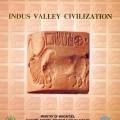
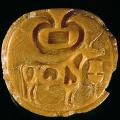
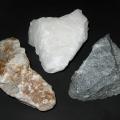
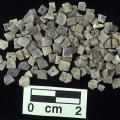
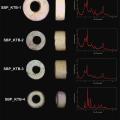
Steatite (soapstone) artifacts have been found at nearly every excavated Harappan period (2600-1900 BC) site and were the primary element used to make seals. >
This paper represents as introduction to the work of a contemporary soapstone-cutter living and working between Baluchistan and Sindh. Our interest in his person and profession ultimately resulted from the involvement of both the authors since 1982 in the Surface Evaluation Program carries out at M… >
"There was a frequent use of new, artificial materials during the Indus Integration Era, or Mature Harappan period (ca. 2600-1900 B.C.E.)," writes Heather Miller. "Looking more broadly, this seems a characteristic not only of the Indus, but of many of the Western Asian civilizations of the third and second millennia." >
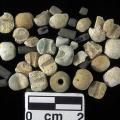
"Talcose stone was used primarily to make beads, seals and tokens, but also for inlay pieces, small figurines and sculptures. In contrast to faience, massive talc was not commonly used to produce either small vessels or bangles. Massive talc was also sometimes glazed, particularly the beads, usuall… >
It is really nice when an author posits a hypothesis, discusses why or why it may not be true, introduces another and then weighs them without necessarily strongly committing to either. In this case, Dr. Heather M. L. Miller tries to determine why ancient Indus craftspeople added steatite (or talc… >
An intriguing article in the way it creates multiple openings in thinking about ancient Indus society. The subject is a set of three of four beads found at a rural "Sorath Harappan" site (2300-1900 BCE) in Gujarat. >