Home

Main navigation

  • home
  • slides
  • essays
  • articles
  • books
  • video
  • q & a
  • blog
Secondary menu
  • about us
    • scholars
    • privacy
    • support
    • image rights
    • credits
    • contact us
  • resources

Secondary menu

  • about us
    • scholars
    • privacy
    • support
    • image rights
    • credits
    • contact us
  • resources

Ancient Indus Civilization Essays

25 essays by ancient Indus civilization archaeologists and scholars, from a comprehensive tour of Mohenjo-daro, to recent discoveries in Gujarat, various interpretations of the Indus script and interviews with archaeologists and scholars.

An Interview with Romila Thapar

Romila Thapar

An exclusive interview with Dr. Romila Thapar, one of India's most distinguished historians, author of numerous books on early Indian history, and winner of the US Library of Congress Kluge Prize for lifetime achievement. >

A Brief Introduction to the Ancient Indus Civilization

Harappa.com

The greater Indus region was home to the largest of the four ancient urban civilizations of Egypt, Mesopotamia, South Asia and China. It was not discovered until the 1920's. >

Inter-Regional Interaction and Urbanism in the Ancient Indus Valley

Randall Law

New! This over 800 page book on the Geologic Provenience Study of Harappa's Rock and Mineral Assemblage is presented in 12 sections, each with the PDFs of entire chapters, as well as figures, images and introductory comments for each chapter. New Introductory Paragraph by Randall Law, 2024 Presented in this section are the Table of Contents, introductory matters… >

Introduction to Around the Indus in 90 Slides

Jonathan Mark Kenoyer

The Indus Valley Civilization flourished in the vast river plains and adjacent regions in what are now Pakistan and western India. The earliest cities became integrated into an extensive urban culture around 4,600 years ago and continued to dominate the region for at least 700 years from 2600 to 1900 B.C. It was only in the 1920's that the buried cities and villages of the Indus valley were recognized by archaeologists as representing an undiscovered civilization. >

Intro to Around the Indus in 90 Slides 2

Richard H. Meadow

Modern archaeological excavations at the ancient Indus city of Harappa in Punjab, Pakistan have been going on since 1986. They are being conducted by HARP, the Harappa Archaeological Research Project. HARP is a joint undertaking of Harvard University, the University of Wisconsin-Madison, and New York University. The Principal Investigators are Dr. Richard H. Meadow (Projec… >

Deciphering the Indus Script

Asko Parpola

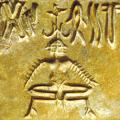
Generally recognized as the world's expert on the Indus script, Asko Parpola has been studying this undeciphered writing for over 40 years at the University of Helsinki in Finland. He is co-editor of collections of all seals and inscriptions in India and Pakistan. As Professor of Indology he has led a Finnish team of experts through numerous approaches to the puzzle of one … >

Introduction to Discovery at Harappa

Harappa.com

"The real heroes of this story of the discovery of the Indus civilization were such individuals–a discerning archaeologist like Sahni and a brilliant one like Banerji, who had within a few years of each other uncovered the relics entombed in Harappa and Mohenjo-daro respectively." >

Mohenjo-daro An Ancient Indus Valley Metropolis

Jonathan Mark Kenoyer

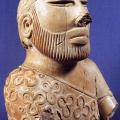
Mohenjo-daro is widely recognized as one of the most important early cities of South Asia and the Indus Civilization and yet most publications rarely provide more than a cursory overview of this important site. There are several different spellings of the site name and in this article we have chosen to use the most common form, Mohenjo-daro (the Mound of Mohen or Mohan), th… >

Gola Dhoro (Bagasra)

Kuldeep S. Bhan
P. Ajithprasad
V. H. Sonawane

This recently discovered site is offering many new facts about the ancient Indus civilization's growth and persistence in Gujarat. >

First Explorers: Charles Masson, 1829

Harappa.com

"A long march preceded our arrival at Haripah, through jangal of the closest description. East of the village was an abundance of luxuriant grass, where, along with many others, I went to allow my nag to graze. When I joined the camp I found it in front of the village and ruinous brick castle." >

The Indus Script

Iravatham Mahadevan
Introduction Iravatham Mahadevan is a National Fellow of the Indian Council of Historical Research, and has been working on the Indus script for over 40 years. His publications include The Indus Script: Texts, Concordance and Tables (1977). A Tamil speaker, he has used historical linguistics and statistical studies to examine the Dravidian components in Vedi… >

Recent Indus Discoveries and Highlights from Excavations at Harappa 1998-2000

Richard H. Meadow
Jonathan Mark Kenoyer

The Harappa Archaeological Research Project's excavations at Harappa have yielded new troves of information about ancient Indus life, craft production, and preceding cultures like the Ravi Phase. >

Early Developments of Art, Symbol, Technology in the Indus Valley Tradition

Richard H. Meadow
Jonathan Mark Kenoyer

Early Developments of Art, Symbol, Technology in the Indus Valley Tradition >

The Rohri Flint Quarries

Paolo Biagi

The largest archaeological site in the subcontinent goes back hundreds of thousands of years to some of the earliest uses of fire. William Blandford reported the presence of flint cores and flakes in the hills near Sukkur and Rohri on the Indus River in 1880. In 1939, the geologists De Terra and Paterson suggested that some of the flint tools resembled those found in Mohenj… >

The Archaeology of Southeastern Balochistan

Ute Franke-Vogt

An exciting look at the western side of the ancient Indus civilization, where new cultures and surprises await that indicate how well developed surrounding cultures to the major Indus areas were. Baluchistan is Pakistan's largest province (1). It is marked by a rugged, highly differentiated environment with many different habitats (2). The Makran Range in the south divi… >

An Interview with R. Balakrishnan

R. Balakrishnan

R. Balakrishnan is a retired Indian Administrative Service (I.A.S.) officer, was a close associate of Iravatham Mahadevan, and is the author of a number of books, including Journey of a Civilization Indus to Vagai (2019). >

An Interview with Shereen Ratnagar

Shereen Ratnagar

Dr. Shereen Ratnagar, one of India's most distinguished archaeologists, was interviewed in Bombay on December 18, 2018 and starts with her early life and career as an archaeologist and author of numerous important books on the ancient Indus civilization. >

An Interview with Iravatham Mahadevan

Iravatham Mahadevan

A wide-ranging interview with Iravatham Mahadevan [1930-2018] home on January 17, 1998 with Omar Khan. The interview, held at Mr. Mahadevan's home in Chennai lasted nearly two hours and covered the Brahmi script, the cult object, various signs, his response to Asko Parpola's work. A reflection on a decades-long pursuit of the key to Indus writing by the most important Indi… >

An Interview with Ahmed Hasan Dani

Ahmed Hasan Dani

An interview from January 6, 1998 with one of the subcontinent's most remarkable archaeologists covers his Indus excavations and objections to theories by good friends. An unusual perspective by the first Muslim to graduate from Benares Hindu University. Dr. Dani passed away 26 January 2009 (aged 88). Dr. Ahmed Hasan Dani was interviewed on January 6, 1998 by Webmaster Om… >

Sutkagen Dor: An Investigation of the Western-most Harappan Trading Post

Kaiser Tufail

About 60 kilometers north-west of Gwadar, close to the Makran Militia post at Suntsar, lie the ruins of an enigmatic settlement that goes by the present-day appellation of Sutkagen Dor (burnt mound). Dasht River which flows nearby, discharges into the Arabian Sea next to the Pak-Iran border. A 400-km long stretch of low sedimentary rock running east-west, known as the Makran C… >

Beas Landscape and Settlement Survey

Rita P. Wright
Joseph Shuldenrein
M. Rafique Mughal

Between 1992 and 1996 the Punjab Archaeological Survey (PAS), under the direction of the Government of Pakistan, Department of Archaeology, conducted a large-scale survey in order to identify all ancient settlements in the Punjab. Surface surveys at a small number of the settlements identified diagnostic artifacts that were contemporary with the Indus civilization. >

Archaeological Photography and the Creation of Histories in Colonial India

Sudeshna Guha

Archaeological and photographic representations are, even today, mostly perceived on very similar terms. They are considered as being self-revelatory, reckoned as comparatively objective recording techniques, and often summoned as witnesses for verifying knowledge formation processes. >

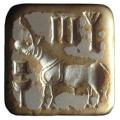
A Unicorn Seal

Geoffrey Cook

This Indus Seal was found between 1927 and 1931 during the initial excavations at Mohenjo-daro, an Indus Valley site in Sindh province, modern Pakistan. It was discovered by the British archaeologist Ernest Mackay. From the level that it was found, it was dated to roughly 2000 B.C.E., or the mature urban phase of the Harappan culture. The area where it was unearthe… >

TIFR Indus Script Research

Mayank Vahia
Nisha Yadav
Hrishikesh Joglekar

In November 2007 scientists at the Tata Institute of Fundamental Research (TIFR), one of India's most prestiguous scientific institutions, began publishing a series of papers on their analysis of ancient Indus script signs. Supported by a five-year grant from the Jamsetji Tata Trust, the researchers plan to approach issues around the ancient script with rigorous statistical … >

The Arrow Sign in the Indus Script

Iravatham Mahadevan

It was a warm and humid afternoon in August 1995. I was feeling tired and rather sleepy after a hard day's work in the library of the Directorate of Epigraphy at Mysore, where I was collecting material for my forthcoming book on Early Tamil Palaeography. I was also interested in looking at the earliest Kannada and Telugu inscriptions to explore whether they have any similariti… >

© Harappa.com 1995-2026 31