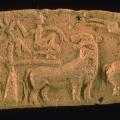
There are at least 18 examples of a "human and tiger" motif in Indus glyptic art. This short paper by one of the most prolific writers on ancient Indus themes, the late Dr. Gregory Possehl, wonders how we might read this visual artifact. >
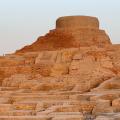
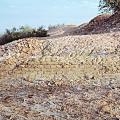
What was really going on at the so-called stupa mound in Mohenjo-daro? This important paper by Giovanni Verardi and Federica Barba challenges the long-standing interpretation of the so-called Stupa Mound at Mohenjo Daro, as a Buddhist stupa dating to the 2nd century AD. >
The first section focuses on theoretical issues, the definition of terms and various interpretive biases regarding "ritual" artifacts in the prehistoric period, while the second half examines the important "ritual" artifacts of the Upper Palaeolithic hunter~gatherer populations in South Asia and discuss future directions for research. >
Although some have their doubts about religious interpretations for what they call "esoteric archaeological finds,' nevertheless it is stated in this article that there is a very strong probability that the structure and the stone represent a shrine to the goddess, or female principle, 'Shakti,' which was built by the group of final upper palaeolithic hunter/gatherers who were living at the site of Baghor I. >
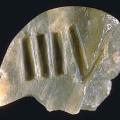
An overview of the types of artifacts that inform us about ancient Harappan measurement systems in order to gain insight into their concepts of order and cosmology. >