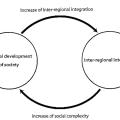
"Urban society is a highly complex system in terms of its institutions, hierarchy, integration, etc." writes the author. "A vast region is incorporated into one social system which is based on cities." >
"This research project focuses on the Ghaggar plains, which occupies the north-eastern corner of the Indus society, in order to understand the temporal change of craft production through time from the Indus urban period to the post-urban period in this region. As a part of the project, faience objects have been subjected to a series of scientific analyses to identify their raw materials and production technology" (p. 1) write the authors. >
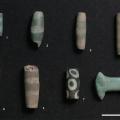
The first in-depth look at stone beads from Indus sites besides Harappa, in this case two just south of Rakigarhi. Stone beads include those made of steatite (the vast majority, about 91%), carnelian (8%), as well as jasper, agate, lapis luzuli, limestone and more. Steatite and carnelian beads are found at levels corresponding to all time periods. >
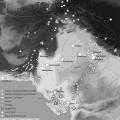
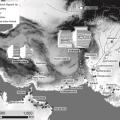
"This article examines the diachronic developments of the interregional relationship between the two regions based on the ceramic evidence both from the Greater Indus Valley and the Arabian peninsula. The examination of the ceramic evidence from the Greater Indus Valley, especially the diachronic d… >
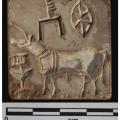
One way to understand the connections between ancient Indus sites, often separated by enormous distances, is to look ever more closely at some of their smallest artefacts – in this case unicorn seals, usually merely 5 cm square. >