Recent explorations in the peripheral regions east of the Indus valley have established the spread of Harappan culture to settlements in Kutch, Saurashtra, Rajasthan and Harayana, but there has been much speculation on the reasons behind this cultural expansion. >
Harappa Site Plan Until quite recently, the common view of the Indus Civilization has been as a phenomenon largely undifferentiated in space and time over more than 500,000 sq km and the 500 to 700 years of its existence (2600/2500-2000/1900 B.C.). With continuing archaeological work … >
Recent observations of artisans in Peshawar, Pakistan suggest that some techniques for making beads and other ornaments from lapis lazuli have not changed over the millennia. >
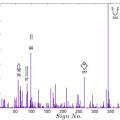
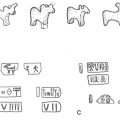
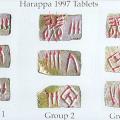
Building on previous statistical approaches, the application of tools like n-gram Markov chains to analyze the syntax of the Indus script and form the basis for the development of a stochastic grammar to explore the syntax of the Indus script in greater detail. >
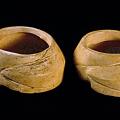
This paper examines a reconstruction of the techniques used by the ancient beadmakers for the production of 'steatite' beads in Mehrgarh (Pakistan) during the fifth century (BCE). Additionally, it includes an in-depth analysis of the methodologies and modern technologies employed in the comparative… >
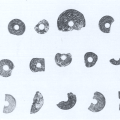
The analysis of beads from different periods and areas of Harappa have made it possible to define specific trade networks and the organization of production as well as changing patterns of interaction over the history of a site. >