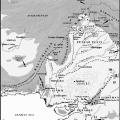
"It has become clear that Balochistan can neither be perceived as a border nor as a frontier; but rather as a core area with its own dynamics and characterised by regionally distinctive styles." >
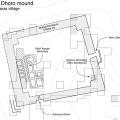
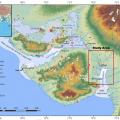
"A detailed analysis of the animal bone assemblage at Gola Dhoro here throws light on the expansion of the Indus civilisation into Gujarat. A square fort, imposed on a settlement of livestock herders in the later third millennium BC, was shown to have contained people who introduced a broader diet of meat and seafood, and new ways of preparing it. These social and dietary changes were coincident with a surge in craft and trade." >
A technical paper which rewards the follower with valuable insights and serves, on a platter as it were, some complex puzzles in Indus iconography for further cogitation to the reader. >
This 1990 article from the Deccan College Bulletin's Memorial volume for H.D. Sankalia, an eminent Indian archaeologist, is a summary in one place of the archaeological work done in Pakistan after 1947. Much of this is relevant to wider than national boundaries. >
Was the ‘dockyard’ at Lothal a ‘dockyard’ or not? An in-depth look at this question in a true multi-dimensional manner is long overdue. This study seeks to revisit the dockyard hypothesis by examining Lothal from a landscape perspective, using advanced techniques such as multi-sensor remote sensing, cloud computing, and digital elevation models. >
The paper's central argument is straightforward and important: the wheeled bullock cart of the Indus Valley was an indigenous invention, not a technology diffused from Mesopotamia or Central Asia, as earlier colonial-era scholars once assumed. >
In an ongoing attempt to understand how the now vanished people of the Indus culture ordered their society and to determine the sources of political, economic, military and ideological (religious) power in this remarkably extensive and urbanized state, the authors draw clues from the miscellaneous material they dig up and from the layout and architecture of the cities and settlements that were excavated. >
The origins of manufacturing debris recovered from different periods of occupation between 3300 BCE and 1700 BCE at Harappa can now be identified with a high degree of certainty thanks to geologic source provenance studies. >