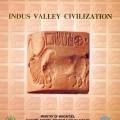
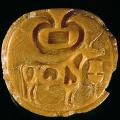
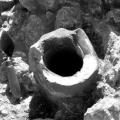
Steatite (soapstone) artifacts have been found at nearly every excavated Harappan period (2600-1900 BC) site and were the primary element used to make seals. >
Jean-Francois Jarrige (1940-2014) and his wife Catherine (b. 1942) were two of the most important archaeologists in the South Asian region, whose excavations at Mehrgarh, the site in Balochistan which predates the ancient Indus civilization by thousands of years, helped determine how far back the development of various traditions found in that and other regional civilizations actually reached. >
In November 2000 the authors conducted collaborative fieldwork to identify salt and mineral resources from the Salt Range in the Punjab, Pakistan used by the prehistoric site of Harappa over 200 kilometers away. >
"Geologically speaking," write the authors, "agate is not a particularly uncommon rock . . .. However, good agate – i.e, that which ancient lapidaries would have found suitable for beadmaking – is not widely available. Nodules of the size and quality required to make Harappan-style long-barrel carnelian beads are, in fact, extremely rare" (p. 177). >