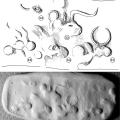
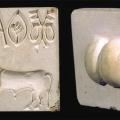
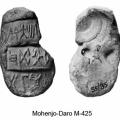
A detailed analysis of a rare white marble cylinder seal found at the recently discovered site of Jiroft in south-eastern Iran testifies to the multiple cultural and trade connections between the Indus civilization and its western neighbours. >
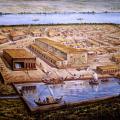
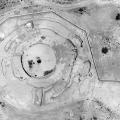
The full story of excavations at Lothal, including the 2008-2009 revisitation project which included satellite imagery and magnetic surveys indicating the presence of interesting structures for a future excavation project. The author, at the University of Bologna in Italy, wrote his thesis on the m… >
"The discovery of Indus seals manufactured with non-Indus raw materials, but with tools and techniques associated with Indus productions, further supports the idea that merchants and craftsmen from the greater Indus Valley were living and working at interior settlements in the Oman peninsula." >
An exceptionally interesting paper that traces the path of ivory carving from the ancient Indus civilization up north to Gonur Depe in southern Turkmenistan, north of Afghanistan. It shows how complicated it is to ascribe provenance of things to a place, or to some other more complex, and revealing… >
This deeply investigative article published in Walking with the Unicorn (2018) takes on some of the most unusual facts about ancient Indus seals to surmise about their function in the Indus polity as a whole. >
A must-read paper. Dennys Frenez classifies and nicely illustrates recent finds in the Oman Peninsula connecting it to the Indus civilization in multiple ways. >
"Recent discoveries of Indus and Indus related materials at sites in the interior, and a general reassessment of comparable materials throughout Oman, suggest a more complex model of interaction. . . these artefacts probably reflect the presence of small groups of Indus merchants and craftspeople integrated into local communities and directly involved with important socioeconomic activities." >
So much attention has been focused on seals, that we sometimes forget that sealings was their most prosaic and basic function: making impressions on clay or other humble materials to perform some sort of basic administrative functions. >
"A wide range of Indus artefacts have been found over the past forty years at many coastal and inland sites in the Oman peninsula, including utilitarian and ritual pottery, ornaments, seals, weights and, more recently, terracotta toys for children," write the authors. >