An examination of a variety of discovered artifacts which suggest a trade system within the region. Trade trends are marked and explained as the excavated items reflect shifts in the market. >
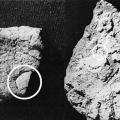
The evidence and theories surrounding three chert end-scrapers which were discovered on the surface of Mohenjo-Daro. Wear patterns as well traces of an organic substance found in the grooves offer insight into the original uses of the artifacts. >
The results of a three-day visit to the site in March 1984 by two experienced Indus archaeologists, the first such visit since Chanhu-daro was excavated in the 1930s by E.H. Mackay. >
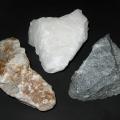
This paper represents as introduction to the work of a contemporary soapstone-cutter living and working between Baluchistan and Sindh. Our interest in his person and profession ultimately resulted from the involvement of both the authors since 1982 in the Surface Evaluation Program carries out at M… >
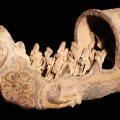
The Power of a Lost Ritual. An exceptional and controversial recent find in a private collection is analyzed by a leading Italian archaeologist in this fully illustrated complete online volume with many potential implications for understanding ancient Indus culture. >
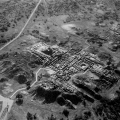
This paper studies the formation of craft activity areas in Mohenjodaro. Since 1981, one of the key lines of research carried out by German and Italian archaeologists at Moenjodaro has been the surface evaluation of the craft activity areas of the archaeological complex. >
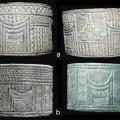
As part of his 1935-36 excavation report on Chanhudaro, Ernest Mackay has a section on "Paste Plaques and Cylinders," two types of objects that were made of the same material, and were found in large quantities and occurring together across the excavated area of Mound II. The material was "...white, porous...with a texture like a fine pumice but sufficiently friable to be scraped away easily with the finger nail." >
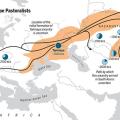
The recent (Sept. 2019), 95 scientist, massive DNA study that shows how migrants into India from the west and north contributed to local DNA and which aligns with recent analyses on Indo-European languages coming into the subcontinent from the northwest as well. >
"Correlating ancient textual sources with iconography and archaeological evidence in general is notoriously a controversial exercise, constantly carried out on endemically slippery grounds," writes the author at the very start. Then he launches into a formidable analysis that teases out a wide var… >