Home

Main navigation

  • home
  • slides
  • essays
  • articles
  • books
  • video
  • q & a
  • blog
Secondary menu
  • about us
    • scholars
    • privacy
    • support
    • image rights
    • credits
    • contact us
  • resources
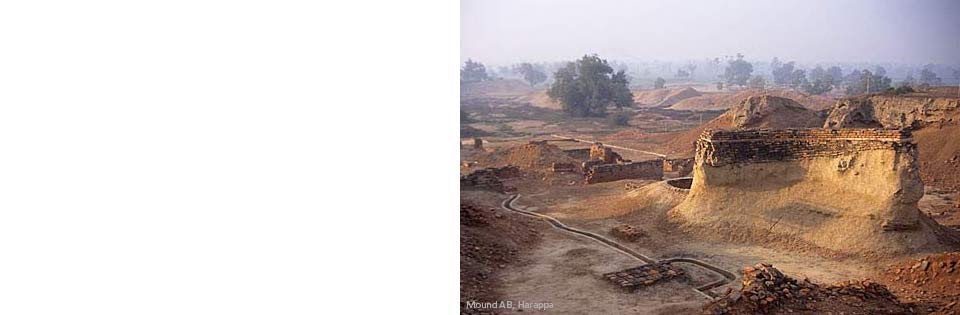
  • Mound AB

    Iravatham Mahadevan Indus Research Center, Chennai
    Richard H. Meadow Harvard University
    Asko Parpola University of Helsinki
    Shereen Ratnagar Jawaharlal Nehru University
    Rita P. Wright New York University
    Paolo Biagi Ca' Foscari University, Venice
    Dennys Frenez University of Bologna, Ravenna
    Jonathan Mark Kenoyer University of Wisconsin, Madison
    Randall Law University of Wisconsin, Madison
    Gwen Robbins Schug Appalachian State University
    Mayank Vahia TIFR | Nisha Yadav TIFR
    Massimo Vidale University of Padua
    Jane McIntosh Cambridge University
  • Mound AB
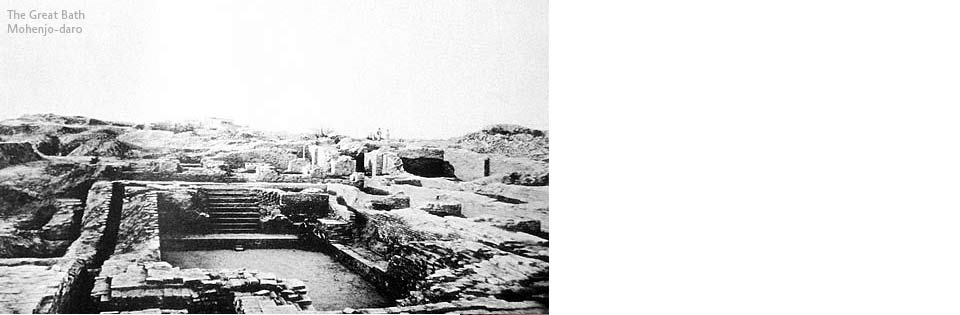
  • Mound AB
• • •

Secondary menu

  • about us
    • scholars
    • privacy
    • support
    • image rights
    • credits
    • contact us
  • resources

Ancient Indus Questions & Answers

Answers to questions from you and our Facebook page visitors by distinguished ancient Indus scholars and archaeologists.
69. Are there connections between the Ramayana epic and the Indus Valley Civilization?

Massimo Vidale
Mayank Vahia
Shereen Ratnagar

Three experts respond to a question from one of our users.

68. If Harappan civilisation spoke a Dravidian language, how old is this 'spoken' language?

Asko Parpola
Mayank Vahia
Shereen Ratnagar

Another answer from our panel of ancient Indus experts to a question posed by site visitors.

67. Is flint knapping around the Indus period similar or different to flint knapping in other Bronze age societies?

Massimo Vidale
Paolo Biagi

Another question from our site visitors answered by Indus scholars.

66. What were houses like in ancient Indus times?

Paolo Biagi
Shereen Ratnagar

"In a city like Mohenjo-daro, the excavators have said that the thick-walled houses could have taken an upper storey; there were several rooms and courtyards to a house, but whether each of these was the space for specific activities, we don’t know."

65. Why have Western and Indian experts studied the Harappan civilisation?

Asko Parpola
Massimo Vidale
Shereen Ratnagar

Among the more intriguing questions from site visitors, answered by three Indus archaeologists, from India, Italy and Finland.

64. Why are flint and fire so important to ancient societies?

Dennys Frenez
Paolo Biagi

Another question from site visitors answered by leading archaeologists.
63. Is there any evidence of trade with Egypt and Minoan Crete?

Dennys Frenez
Massimo Vidale
Mayank Vahia
Randall Law

Another question from site visitors answered by a panel of ancient Indus experts.

62. How old is the oldest ancient Indus writing?

Asko Parpola
Jonathan Mark Kenoyer
Massimo Vidale
Mayank Vahia
Nisha Yadav

Another question answered by expert ancient Indus scholars.

61. Is there any research going on in analysing DNA of human remains to identify their origins? If not why not?

Gwen Robbins Schug
Jonathan Mark Kenoyer
Massimo Vidale
Mayank Vahia
Paolo Biagi

Another answer to a question from you by our panel of leading ancient Indus archaeologists.
60. Who gave the same name "Mound of Dead" (Lothal & Mohenjo-daro) in different languages to these two places?

Dennys Frenez
Massimo Vidale
Mayank Vahia

Another answer to a question from you to our panel of leading Indus archaeologists.

59. Could the bearer sign in the Indus script also represent weighing (judgement) as in using a balance scale?

Dennys Frenez

Another answer to a question to our panel of a dozen leading ancient Indus archaeologists.

58. Why has the language of Harappa not been deciphered?

Asko Parpola
Jonathan Mark Kenoyer
Massimo Vidale
Nisha Yadav

What are the difficulties which makes it impossible to decipher the Harappan language? Aren't there any similarities with other languages?

Scholars answer another question from site visitors.

57. Have any ship wrecked Indus ships been discovered? There should have been many due to the extensive trade with Sumeria over many centuries.

Dennys Frenez
Jonathan Mark Kenoyer
Massimo Vidale
Paolo Biagi
Randall Law

Dennys Frenez

56. What has been the basis for determining the age of the Indus valley civilization by archeologists?

Jonathan Mark Kenoyer

Another question from site visitors answered by an ancient Indus civilization scholar, this time with a comprehensive timetable situation the ancient Indus civilization with others epochs.

55. What material was used to suspend the beads/pendants etc.?

Dennys Frenez
Jonathan Mark Kenoyer

Another answer to a question from you by our panel of leading Indus archaeologists.

54. What was used to bind bricks and is there any similarity with ancient brick structures elsewhere in India?

Jonathan Mark Kenoyer

Another answer to a question from you by our panel of leading Indus archaeologists.

53. What is meant by the "Sorath Harappan"?

Jonathan Mark Kenoyer
Massimo Vidale

Another answer to a question from you by our panel of leading Indus archaeologists.

52. When did the Indus Valley Civilization start?

Jonathan Mark Kenoyer
Mayank Vahia
Nisha Yadav
Paolo Biagi

Answer to question 52. from our panel of leading ancient Indus archaeologists.

51. What evidence do the experts think helps to explain the origin of the Indus Civilisation?

Jane McIntosh
Richard H. Meadow

Evolution or Revolution? Has recent research (that of the last 20 years ) given any new insights? Submitted by Gharial Abramnova from school student questions

50. Was there peace and egalitarianism in the ancient Indus?

Jane McIntosh

Having toured the ruins of the Egyptian civilization in Cairo, Mayan in Guatemala/Mexico, Inca in Peru, what intrigues me about the Indus Valley civilization is that it was prosperous, peace loving AND egalitarian. I don't believe there is other precidence of these elements in unison being maintained over millenia. Clearly this is something worth researching to find clues of how to create sustainability in today's world.

49. One unicorn horn or two?

Asko Parpola

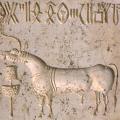
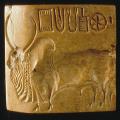
Is it a bull (according to a recent British Museum/BBC history of the World series) and not a unicorn? A bull with two horns always shown from the side? A mythical one-horn beast? What is his significance? Submitted by Gharial Abramnova from school student questions

48. A case has been made for the late Harappans being the Vedic Aryans. What is your view?

Iravatham Mahadevan
Shereen Ratnagar
Rita P. Wright

This case is being made on the basis of circumstantial evidence. Did the people of Indus Valley Civilization interact with people of the Rigveda? What is the relationship between the Indus Valley people and Vedic people? Submitted by Shubha Khandekar and others

47. What is this terracotta basin?

Richard H. Meadow

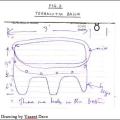
Another interesting artifact in the National Museum is a terracotta basin. It is rectangular in shape rounded at edges, about 3 feet long and 9 inches deep. It is integrated with six legs 6 inches high and is rimmed. It has holes along its lower circumference, probably to drain out liquid. Could it be a baby's bath tub? Was it used to wash raw stones prior to chipping away impurities in bead making process? Or was there any other use? Submitted with illustration by Vasant Dave

46. What are your comments on the recent claim by Brian Wells on the volumetric interpretation of some signs of the Indus script?

Article on volumetric interpretations. Submitted by Wim Borsboom

Asko Parpola
The groups of vertical strokes (but not all of them) stand for ones and groups of semicircles probably stand for tens. Beyond this, the identification of numerals in the Indus script is difficult and uncertain. The arguments adduced by Brian Wells for his volumetric interpretations do not convince me.

45. Were camels present in the Indus Civilization or not?

Jane McIntosh

Lothal by SR Rao (ASI of India, New Delhi, 1985) makes a passing mention of camels. However, in 'Harappan Terracottas' by DP Sharma (National Museum, New Delhi. 2003), the camel does not figure among 130 photos of animal figurines. If 'yes', were they single-humped Dromedary or double-humped Bactrian? Submitted by Vasant Dave

Pagination

  • Previous page
  • 2
  • Next page
Answers by Subject (21)
  • Agriculture
  • Animals
  • Archaeologists
  • Buildings
  • Clothing
  • Daily Life
  • Decline
  • Discoveries
  • Economy
  • Environment
  • Evolution
  • Food
  • Governance
  • Language
  • Medicine
  • Mysteries
  • People
  • Religion
  • Seals
  • Trade
  • Writing
Answers by Author (6)
  • Asko Parpola
  • Iravatham Mahadevan
  • Jane McIntosh
  • Richard H. Meadow
  • Rita P. Wright
  • Shereen Ratnagar
© Harappa.com 1995-2026 31