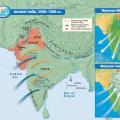
If we assume that some migration did take place from Indus valley to South India sometime around 2000 BC or so, then it could have been through the sea. Could it not be possible to get some remnants of ship break or some marine fossils to substantiate this fact? Submitted by Prakash
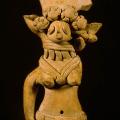
A stark contrast between the features of human figurines and masks of IVC period strikes me. Men have a narrow sloping forehead like a Neanderthal, whereas women exhibit a prominent vertical forehead with a much higher hairline. If my observation stands scrutiny, one possibility that comes to mind is that: Feminine beauty was exemplified by women of a race other than the one inhabiting the IVC. Somewhat like all Barbie dolls possess long limbs irrespective of which race they are supposed to represent. Does that hypothesis make sense? Submitted by Vasant Dave
This case is being made on the basis of circumstantial evidence. Did the people of Indus Valley Civilization interact with people of the Rigveda? What is the relationship between the Indus Valley people and Vedic people? Submitted by Shubha Khandekar and others
I was watching the 6 part BBC's 'Story of India' and had a thought about the abandonment of the Indus cities and migration eastward due to the failure of the monsoon. Could this failure of the monsoon be due to the eruption of the island of Theara north of Crete? The timing seems close. The ash cloud traversed Egypt, so it would have ended up in the Indian Ocean. Is there any evidence of ash deposits in the Indus river valley from the eruption? Is it possible the ash went too far south to show up and still affect the monsoon? Just curious if anyone has thought of this before.