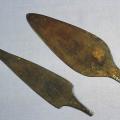
Last year I visited gallery of Harappan Civilization at the National Museum, New Delhi. Among the artifacts, I saw a small 'chillum' (hand-held twin pipe) similar to that 'sadhus' (wandering Hindu monks) use in smoking 'charas' (hand-made hashish) and 'ganja' (marijuana). Discussing the history of cannabis, the Wikipedia quotes that charred cannabis seeds were found in a 3rd millenium BC grave in Romania. Submitted with illustration by Vasant Dave
Trade between Indus Valley and Mesopotamia appears rather skewed in IVC's favour. IVC exported Gold jewelery, Ivory seals & boxes, Timber, Cotton textiles, Copper & bronze fish-hooks, Carnelian & precious stone beads, Live chicken, Shell & bone inlays, and even Water buffaloes. Mesopotamia exported only Silver, Tin and Copper ingots, Woollen textiles and Bitumen. Could it have been be sex trafficking from Ur, Dilmun and Magan to Sutkagen Dor, Sokhta Koh, Balakot and Allahdino?
Jane McIntosh
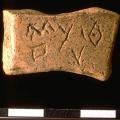
Decipherment of the Indus script would be helpful – if nothing else, it should conclusively settle the non-Aryan/Aryan dispute – but the amount of information this would yield is severely limited.
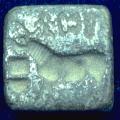
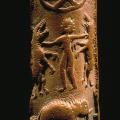
There is an image common to the Indus, Ancient Egyptian and Mesopotamian river cultures of a female deity standing with arms outstretched, holding two apparently deadly animals at bay. In the case of the Indus, the animals have been identified as 'tigers', in Ancient Egyptian and Mesopotamian they are crocodiles. What are the current theories on the iconography(ies) of these images; the reasons for their presence in three civilizations and what their presence might indicate in terms of the interrelationships between these cultures? Submitted by Ian Whitney
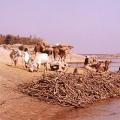
Lothal by SR Rao (ASI of India, New Delhi, 1985) makes a passing mention of camels. However, in 'Harappan Terracottas' by DP Sharma (National Museum, New Delhi. 2003), the camel does not figure among 130 photos of animal figurines. If 'yes', were they single-humped Dromedary or double-humped Bactrian? Submitted by Vasant Dave
What in your view are the most exciting, significant or illuminating insights gained? What avenues would you like to explore in future asssuming absolutely no practical or financial constraints whatsoever? Submitted by Paul Toth and Gharial Abramnova from school student questions
Having toured the ruins of the Egyptian civilization in Cairo, Mayan in Guatemala/Mexico, Inca in Peru, what intrigues me about the Indus Valley civilization is that it was prosperous, peace loving AND egalitarian. I don't believe there is other precidence of these elements in unison being maintained over millenia. Clearly this is something worth researching to find clues of how to create sustainability in today's world.
Harappan Civilisation is often characterised (for example by the Director of the British Museum on a Radio 4 series) or even idealised as peaceful and without warfare or conquest, (in comparison with all other First Civilisations) with its cities linked across vast regions and unified (variously) by trade and/or religion. Rulers have even been said to be priests or a theocracy. These interpretations are often presented as facts in books or articles for general consumption.