Home

Main navigation

  • home
  • slides
  • essays
  • articles
  • books
  • video
  • q & a
  • blog
Secondary menu
  • about us
    • scholars
    • privacy
    • support
    • image rights
    • credits
    • contact us
  • resources

Ancient Indus questions answered by Dr. Jonathan Mark Kenoyer, who teaches at the University of Wisconsin, Madison and is Co-Director of HARP (the Harappan Archaeological Research Project), author of Ancient Cities of the Indus Valley Civilization and The Ancient South Asian World. He has numerous articles on this website, and the slideshows Around the Indus in 90 Slides, and Around the Indus in 90 Slides 2 among others.

61. Is there any research going on in analysing DNA of human remains to identify their origins? If not why not?

Gwen Robbins Schug
Jonathan Mark Kenoyer
Massimo Vidale
Mayank Vahia
Paolo Biagi

Another answer to a question from you by our panel of leading ancient Indus archaeologists.

62. How old is the oldest ancient Indus writing?

Asko Parpola
Jonathan Mark Kenoyer
Massimo Vidale
Mayank Vahia
Nisha Yadav

Another question answered by expert ancient Indus scholars.

56. What has been the basis for determining the age of the Indus valley civilization by archeologists?

Jonathan Mark Kenoyer

Another question from site visitors answered by an ancient Indus civilization scholar, this time with a comprehensive timetable situation the ancient Indus civilization with others epochs.

77. Was the diet of the Indus valley inhabitants vegetarian or non-vegetarian?

Jonathan Mark Kenoyer
Massimo Vidale
Mayank Vahia

Did the Indus valley civilization people cultivate paddy or wheat? Was their diet vegan or vegetarian? 3 scholars reply.

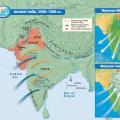
78. Was the abandonment of the cities and eastern migration tied to failure of the monsoon?

Jonathan Mark Kenoyer

I was watching the 6 part BBC's 'Story of India' and had a thought about the abandonment of the Indus cities and migration eastward due to the failure of the monsoon. Could this failure of the monsoon be due to the eruption of the island of Theara north of Crete? The timing seems close. The ash cloud traversed Egypt, so it would have ended up in the Indian Ocean. Is there any evidence of ash deposits in the Indus river valley from the eruption? Is it possible the ash went too far south to show up and still affect the monsoon? Just curious if anyone has thought of this before.

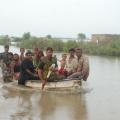
79. In what ways did the 2010 floods in Pakistan affected Indus sites?

Jonathan Mark Kenoyer

Asked by Jayanta Baksi, Lewes, UK

Jonathan Mark Kenoyer
The floods of 2010 in Pakistan did not impact the major Harappan sites since the Harappans tended to build their cities in areas that would not be flooded even with the most extreme floods. The site of Mohenjo-daro was protected by a massive embankment constructed by the Pakistan Government to protect the site from the river which was gradually eroding the edges of the settlement. In 2010 the floods came to the top of the embankment, but did not overflow into the areas of the site.

80. Were there any schools, universities or academies at Indus sites?

Asko Parpola
Jonathan Mark Kenoyer
Massimo Vidale

Massimo Vidale
We have no evidence, but they certainly had, because complex culture needs to transmitted by specialized institutions. The "Assembly hall" on the Citadel of Mohenjo-Daro might have been something similar, if the excavators were right.

Jonathan Mark Kenoyer
So far we have not found any buildings that could be interpreted as institutions of education. Indus peoples undoubtedly had ways to teach their children, but they were probably done in small houses that do not look any different from other houses.

81. Are there significant changes in flint mining techniques between prehistoric and Indus flint knappers?

Jonathan Mark Kenoyer
Paolo Biagi
Randall Law

Paolo Biagi

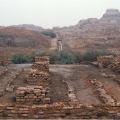
82. Have the remains of a marketplace or shop been found at any of the Indus sites?

Dennys Frenez
Jonathan Mark Kenoyer
Massimo Vidale
Randall Law
Rita P. Wright

Are there any structural remains in any of the Harappan sites to point to a marketplace or shop where goods were bought and sold? What do scholars have to say about the market system in those days, apart from the well-known theory of goods being stored in a storehouse and taken by boats for trade?


Asked by Biswajeet Rath

Meluhha: the Indus Civilization and Its Contacts with Mesopotamia

Dr. Jonathan Mark Kenoyer
56:00
Jonathan Mark Kenoyer

A lecture by Dr. Jonathan Mark Kenoyer which examines and analyzes a variety of artifacts from the Indus Valley people . >

Pagination

  • Page 1
  • Page 2
  • Page 3
  • Next page
  • Last page
Answers by Author (6)
  • Asko Parpola
  • Iravatham Mahadevan
  • Jane McIntosh
  • Richard H. Meadow
  • Rita P. Wright
  • Shereen Ratnagar
© Harappa.com 1995-2026 31