Home

Main navigation

  • home
  • slides
  • essays
  • articles
  • books
  • video
  • q & a
  • blog
Secondary menu
  • about us
    • scholars
    • privacy
    • support
    • image rights
    • credits
    • contact us
  • resources

Ancient Indus questions answered by Randall Law. Dr. Randall William Law II, University of Wisconsin, Madison, has been studying the natural resources and networks spawned by the need for resources in Indus cities like Harappa and Mohenjo-daro. He has numerous articles on this website.

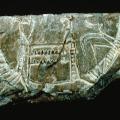
57. Have any ship wrecked Indus ships been discovered? There should have been many due to the extensive trade with Sumeria over many centuries.

Dennys Frenez
Jonathan Mark Kenoyer
Massimo Vidale
Paolo Biagi
Randall Law

Dennys Frenez

63. Is there any evidence of trade with Egypt and Minoan Crete?

Dennys Frenez
Massimo Vidale
Mayank Vahia
Randall Law

Another question from site visitors answered by a panel of ancient Indus experts.

81. Are there significant changes in flint mining techniques between prehistoric and Indus flint knappers?

Jonathan Mark Kenoyer
Paolo Biagi
Randall Law

Paolo Biagi

82. Have the remains of a marketplace or shop been found at any of the Indus sites?

Dennys Frenez
Jonathan Mark Kenoyer
Massimo Vidale
Randall Law
Rita P. Wright

Are there any structural remains in any of the Harappan sites to point to a marketplace or shop where goods were bought and sold? What do scholars have to say about the market system in those days, apart from the well-known theory of goods being stored in a storehouse and taken by boats for trade?

Asked by Biswajeet Rath

88. What role do you think the Rohri flint mines played in the Indus civilization?

Massimo Vidale
Paolo Biagi
Randall Law
Rita P. Wright

Randall Law

90. Have recent excavations provided more clues to the so called "Granaries"? What was their purpose?

Massimo Vidale
Randall Law
Rita P. Wright

Massimo Vidale
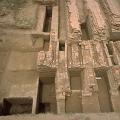
Prof. J. M. Kenoyer, who has recently investigated the Granary at Harappa, is the best person to answer these questions. My impression is that the evidence for the "Granaries" identification is quite flimsy; the type of dig made in the past, simply, was not accurate enough for such an identification, and the various theories so far proposed are pure conjectures. One of these is that the large compartmented building of Harappa was a weaving plant; I like the idea, but at present it is just another guess.

Answers by Author (6)
  • Asko Parpola
  • Iravatham Mahadevan
  • Jane McIntosh
  • Richard H. Meadow
  • Rita P. Wright
  • Shereen Ratnagar
© Harappa.com 1995-2026 31