Home

Main navigation

  • home
  • slides
  • essays
  • articles
  • books
  • video
  • q & a
  • blog
Secondary menu
  • about us
    • scholars
    • privacy
    • support
    • image rights
    • credits
    • contact us
  • resources

Questions about the government, administration and political structure in the ancient Indian and Indus Valley cultures.

14. Why were the Citadel walls so high?

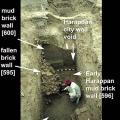
  • Harappa Wall Excavations
Richard H. Meadow

Why were there (terracotta) balls on the Citadel wall in Mohenjo-Daro? Have any more statues been found or anything like a temple? Have you found out any more information on the Indus leaders or their names? Submitted by Gharial Abramnova from school student questions


15. How peaceful was Harappan Civilization?

Iravatham Mahadevan
Jane McIntosh
Richard H. Meadow
Shereen Ratnagar

Harappan Civilisation is often characterised (for example by the Director of the British Museum on a Radio 4 series) or even idealised as peaceful and without warfare or conquest, (in comparison with all other First Civilisations) with its cities linked across vast regions and unified (variously) by trade and/or religion. Rulers have even been said to be priests or a theocracy. These interpretations are often presented as facts in books or articles for general consumption.

8. Was the Indus trade effort centralised?

Jane McIntosh

The people of the Indus valley seem to have exported many more goods than they seem to have imported. Moreover, imported items like silver (found mainly in Harappa and Mohenjodaro) did not seem to have been distributed beyond the main cities suggesting that there was little demand for the goods in the smaller centres. Does this suggest that, if, as has been suggested, the Indus people took the initiative for the trade, this was a centralised effort that profited only the cities? Submitted by Apoorva Bhandari

17. What is your considered opinion on how and why the Indus valley civilization came to an end?

Jane McIntosh
Richard H. Meadow
Shereen Ratnagar
Rita P. Wright

Submitted by Manzoor

Jane McIntosh
I don't think that there was a single cause of the Indus civilization's end; rather it was the cumulative effect of a number of factors:

33. What was the Indus administrative machinery like?

Rita P. Wright

I would like to know something about the nature of the administrative machinery, their irrigation patterns and nature of society...though i am fully aware that the type of sources we have to analyse these things are minimal.

50. Was there peace and egalitarianism in the ancient Indus?

Jane McIntosh

Having toured the ruins of the Egyptian civilization in Cairo, Mayan in Guatemala/Mexico, Inca in Peru, what intrigues me about the Indus Valley civilization is that it was prosperous, peace loving AND egalitarian. I don't believe there is other precidence of these elements in unison being maintained over millenia. Clearly this is something worth researching to find clues of how to create sustainability in today's world.

80. Were there any schools, universities or academies at Indus sites?

Asko Parpola
Jonathan Mark Kenoyer
Massimo Vidale

Massimo Vidale
We have no evidence, but they certainly had, because complex culture needs to transmitted by specialized institutions. The "Assembly hall" on the Citadel of Mohenjo-Daro might have been something similar, if the excavators were right.

Jonathan Mark Kenoyer
So far we have not found any buildings that could be interpreted as institutions of education. Indus peoples undoubtedly had ways to teach their children, but they were probably done in small houses that do not look any different from other houses.

92. What do we know of Ancient Indus government?

Gwen Robbins Schug
Massimo Vidale

Surely for a civilization to be so strong, it would need some sort of system of government. Yet I have heard very little evidence of a ruling party or even so much as a hierarchy or caste system within the civilization?

© Harappa.com 1995-2026 31