Home

Main navigation

  • home
  • slides
  • essays
  • articles
  • books
  • video
  • q & a
  • blog
Secondary menu
  • about us
    • scholars
    • privacy
    • support
    • image rights
    • credits
    • contact us
  • resources

Questions about daily life and culture in the ancient Indus Valley civilization - including topics of social hierarchy, recreational activities and food.

50. Was there peace and egalitarianism in the ancient Indus?

Jane McIntosh

Having toured the ruins of the Egyptian civilization in Cairo, Mayan in Guatemala/Mexico, Inca in Peru, what intrigues me about the Indus Valley civilization is that it was prosperous, peace loving AND egalitarian. I don't believe there is other precidence of these elements in unison being maintained over millenia. Clearly this is something worth researching to find clues of how to create sustainability in today's world.

5. What do we know of festivals during the Indus period?

Iravatham Mahadevan

I have a question to Dr Iravatham Mahadevan. Do festivals like PONGAL (TN) or ONAM (Kerala) carry some of those aspects from Indus Valley memory? Because they are not rooted in Religion and origins are obscured from known memory. Submitted by Prakash

Iravatham Mahadevan
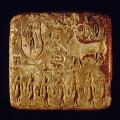
The Harappans would have celebrated some festivals. There are seals and sealings showing religious sacrifices, processions etc. but there is no evidence to connect them with the South Indian festival you mention.

13. What kinds of things did the Indus people eat?

Jane McIntosh
Richard H. Meadow

What is known about the food habits of the Indus Valley people? Have any cooking utensils/equipment, charred remains of food or agricultural implements been found? Wheat kind of bread was their staple, perhaps baked in ovens or cooked over fire? Did they grow lentils - one of the key elements of sub-continental food? Submitted by Colleen

16. What did the Indus people wear and what material were their clothes made of?

Jane McIntosh
Richard H. Meadow

Submitted by Gharial Abramnova from school student questions

23. What single connection between the ancient Indus civilization and modern Tamil culture is the most impressive to you?

Iravatham Mahadevan

Iravatham Mahadevan

32. What did the Harappa people eat? From what flowers/minerals did they get their pigments from?

Rita P. Wright

Submitted by Giuseppe

Rita Wright
The Harappans in the urban period had a varied diet principally based on wheat, barley, millets and cattle, sheep and goat. In my book, Ancient Indus: Urbanism, Economy and Society, there are two chapters that list these different foods. These are Chapters 6 and 7. My answer is based on the result of the research of Steven Weber our paleobotanist sometimes called archaeobotanist.
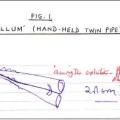
28. Was drug-smoking prevalent in the Indus Valley Civilization?

Jane McIntosh
Richard H. Meadow

Last year I visited gallery of Harappan Civilization at the National Museum, New Delhi. Among the artifacts, I saw a small 'chillum' (hand-held twin pipe) similar to that 'sadhus' (wandering Hindu monks) use in smoking 'charas' (hand-made hashish) and 'ganja' (marijuana). Discussing the history of cannabis, the Wikipedia quotes that charred cannabis seeds were found in a 3rd millenium BC grave in Romania. Submitted with illustration by Vasant Dave

45. Were camels present in the Indus Civilization or not?

Jane McIntosh

Lothal by SR Rao (ASI of India, New Delhi, 1985) makes a passing mention of camels. However, in 'Harappan Terracottas' by DP Sharma (National Museum, New Delhi. 2003), the camel does not figure among 130 photos of animal figurines. If 'yes', were they single-humped Dromedary or double-humped Bactrian? Submitted by Vasant Dave

47. What is this terracotta basin?

Richard H. Meadow

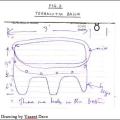
Another interesting artifact in the National Museum is a terracotta basin. It is rectangular in shape rounded at edges, about 3 feet long and 9 inches deep. It is integrated with six legs 6 inches high and is rimmed. It has holes along its lower circumference, probably to drain out liquid. Could it be a baby's bath tub? Was it used to wash raw stones prior to chipping away impurities in bead making process? Or was there any other use? Submitted with illustration by Vasant Dave

© Harappa.com 1995-2026 31