Home

Main navigation

  • home
  • slides
  • essays
  • articles
  • books
  • video
  • q & a
  • blog
Secondary menu
  • about us
    • scholars
    • privacy
    • support
    • image rights
    • credits
    • contact us
  • resources

Ancient Indus questions answered by Dr. Richard H. Meadow, Peabody Museum, Harvard University, and author of Harappa Excavation Reports 1986-1990 and South Asian Archaeology 1989. He has numerous articles on this website, and slideshows like Intro to Around the Indus in 90 Slides 2, Mystery at Mound F, Harappa, Harappa 2000-2001, Harappa Excavations 1995-2001, and the illustrated essays Recent Indus Discoveries and Highlights from Excavations at Harappa 1998-2000 and Early Developments of Art, Symbol, Technology in the Indus Valley Tradition.

27. How did Harappans measure value?

Asko Parpola
Iravatham Mahadevan
Richard H. Meadow

How did they "pay"? I have often wondered how this took place in practice, assuming there was no currency as we understand it. How were luxury / prestige items such as gold and gemstone jewelery obtained by those who had access to them. How did ordinary people trade and obtain necessities and adornments, eg pots, cloth, food, bangles and everyday jewelery? What was the role of the rulers?

17. What is your considered opinion on how and why the Indus valley civilization came to an end?

Jane McIntosh
Richard H. Meadow
Shereen Ratnagar
Rita P. Wright

Submitted by Manzoor

Jane McIntosh
I don't think that there was a single cause of the Indus civilization's end; rather it was the cumulative effect of a number of factors:

28. Was drug-smoking prevalent in the Indus Valley Civilization?

Jane McIntosh
Richard H. Meadow

Last year I visited gallery of Harappan Civilization at the National Museum, New Delhi. Among the artifacts, I saw a small 'chillum' (hand-held twin pipe) similar to that 'sadhus' (wandering Hindu monks) use in smoking 'charas' (hand-made hashish) and 'ganja' (marijuana). Discussing the history of cannabis, the Wikipedia quotes that charred cannabis seeds were found in a 3rd millenium BC grave in Romania. Submitted with illustration by Vasant Dave

4. What kind of evidence has been used to argue that the Indus Valley Civilization was a matriarchy?

Richard H. Meadow

"I'd like the experts to confirm or refute that the Indus Valley civilization was a matriarchy following the scientific definition given by Heide Goettner-Abendroth in Modern Matriarchal Studies: Definitions, Scope and Topicality." Asked by Sede Decana Método DeRose and Luciano

2. Is there any connection between the peacock of immortality of the Harappan burial urns and the peacocks later found on Roman urns?

Richard H. Meadow

Richard Meadow

42. What is current thinking on the female diety with outstretched arms in the ancient Indus, Egyptian and Mesopotamian cultures?

Iravatham Mahadevan
Jane McIntosh
Richard H. Meadow
Rita P. Wright

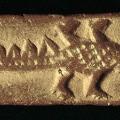
There is an image common to the Indus, Ancient Egyptian and Mesopotamian river cultures of a female deity standing with arms outstretched, holding two apparently deadly animals at bay. In the case of the Indus, the animals have been identified as 'tigers', in Ancient Egyptian and Mesopotamian they are crocodiles. What are the current theories on the iconography(ies) of these images; the reasons for their presence in three civilizations and what their presence might indicate in terms of the interrelationships between these cultures? Submitted by Ian Whitney

31. What is the best thing that could happen to ancient Indus studies?

Iravatham Mahadevan
Jane McIntosh
Richard H. Meadow
Shereen Ratnagar
Rita P. Wright

Jane McIntosh
Decipherment of the Indus script would be helpful – if nothing else, it should conclusively settle the non-Aryan/Aryan dispute – but the amount of information this would yield is severely limited.

20. What can you say about the relationship of Harappan civilization to distant earlier cities?

Richard H. Meadow

We can say that the bulk of the development of the Harappan civilization happened in the Indus Valley itself. What can you comment about their relationship with other cities in Anatolia after the discovery of the city of Catal Huyuk by the English archaeologist James Mellaart in 1958. Is Catal Huyuk a more primitive precursor of this civilization or they parallel developments? Submitted by Martin Piattini Velthuis

37. If you had to place money on where a future Rosetta stone with inscriptions in the ancient Indus language and another language might be found, where would you bet?

Iravatham Mahadevan
Jane McIntosh
Richard H. Meadow
Shereen Ratnagar
Rita P. Wright

Jane McIntosh

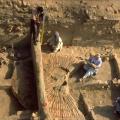
14. Why were the Citadel walls so high?

  • Harappa Wall Excavations
Richard H. Meadow

Why were there (terracotta) balls on the Citadel wall in Mohenjo-Daro? Have any more statues been found or anything like a temple? Have you found out any more information on the Indus leaders or their names? Submitted by Gharial Abramnova from school student questions

Pagination

  • Page 1
  • Page 2
  • Page 3
  • Next page
  • Last page
Answers by Author (6)
  • Asko Parpola
  • Iravatham Mahadevan
  • Jane McIntosh
  • Richard H. Meadow
  • Rita P. Wright
  • Shereen Ratnagar
© Harappa.com 1995-2026 31