Home

Main navigation

  • home
  • slides
  • essays
  • articles
  • books
  • video
  • q & a
  • blog
Secondary menu
  • about us
    • scholars
    • privacy
    • support
    • image rights
    • credits
    • contact us
  • resources

Questions about ancient Indus seals and tablets (including inscriptions, iconographic depictions).

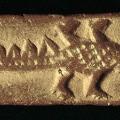
43. How does the dolphin appear in Indus iconography?

Richard H. Meadow

Is there any sign of the blind dolphin of the Indus?

Richard Meadow
I do not think the Indus dolphin appears in the iconography, although I stand to be corrected. The gharial or Indus crocodile does appear depicted on iconography of the Indus period, primarily on moulded "tablets" or "tokens".

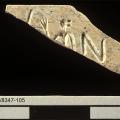
3. Can we see a close-up of the "trident and bun" seal fragment?

Richard H. Meadow

The seal fragment H98-3505/8347-105 is number H-1676 A in CISI-3 appearing on pages 235 (B+W) and 365 (Color) in Parpola, Asko, B.M. Pande, and Pitteri Koskikallio (2010) Corpus of Indus Seals and Inscriptions, Volume 3: New material, untraced objects, and collections outside India and Pakistan, Part 1: Mohenjo-daro and Harappa. Helsinki: Suomalainen Tiedeakatemia.

72. Were seals also used as art objects and were they influenced by Sumerian seals?

Asko Parpola
Dennys Frenez
Mayank Vahia
Nisha Yadav

"There can be no doubt that some Indus seals are fine artistic achievements. Probably one of the main functions of the seal's iconographic motifs, and the quality of their carving, was to convey the status of the seal owner."

73. Are all the images of Indus seals available on the web for free download?

Asko Parpola
Massimo Vidale

Would it not be good idea to publish them so many people can see them and try their conclusions?

93. Why do some people call Harappan civilization the "steatite civilization"?

Dennys Frenez
Jonathan Mark Kenoyer
Massimo Vidale
Nisha Yadav

And what exactly is steatite?

Dennys Frenez, Jonathan Mark Kenoyer, Nisha Yadav and Massimo Vidale respond.

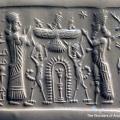
42. What is current thinking on the female diety with outstretched arms in the ancient Indus, Egyptian and Mesopotamian cultures?

Iravatham Mahadevan
Jane McIntosh
Richard H. Meadow
Rita P. Wright

There is an image common to the Indus, Ancient Egyptian and Mesopotamian river cultures of a female deity standing with arms outstretched, holding two apparently deadly animals at bay. In the case of the Indus, the animals have been identified as 'tigers', in Ancient Egyptian and Mesopotamian they are crocodiles. What are the current theories on the iconography(ies) of these images; the reasons for their presence in three civilizations and what their presence might indicate in terms of the interrelationships between these cultures? Submitted by Ian Whitney

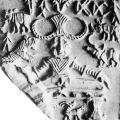
10. How common is the Yogi figure (possibly a proto-shiva figure) across the various Indus sites?

Jane McIntosh
Richard H. Meadow
Shereen Ratnagar

What and how much is known about it?

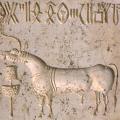
49. One unicorn horn or two?

Asko Parpola

Is it a bull (according to a recent British Museum/BBC history of the World series) and not a unicorn? A bull with two horns always shown from the side? A mythical one-horn beast? What is his significance? Submitted by Gharial Abramnova from school student questions

© Harappa.com 1995-2026 31