Home

Main navigation

  • home
  • slides
  • essays
  • articles
  • books
  • video
  • q & a
  • blog
Secondary menu
  • about us
    • scholars
    • privacy
    • support
    • image rights
    • credits
    • contact us
  • resources
  • Mound AB

    Iravatham Mahadevan Indus Research Center, Chennai
    Richard H. Meadow Harvard University
    Asko Parpola University of Helsinki
    Shereen Ratnagar Jawaharlal Nehru University
    Rita P. Wright New York University
    Paolo Biagi Ca' Foscari University, Venice
    Dennys Frenez University of Bologna, Ravenna
    Jonathan Mark Kenoyer University of Wisconsin, Madison
    Randall Law University of Wisconsin, Madison
    Gwen Robbins Schug Appalachian State University
    Mayank Vahia TIFR | Nisha Yadav TIFR
    Massimo Vidale University of Padua
    Jane McIntosh Cambridge University
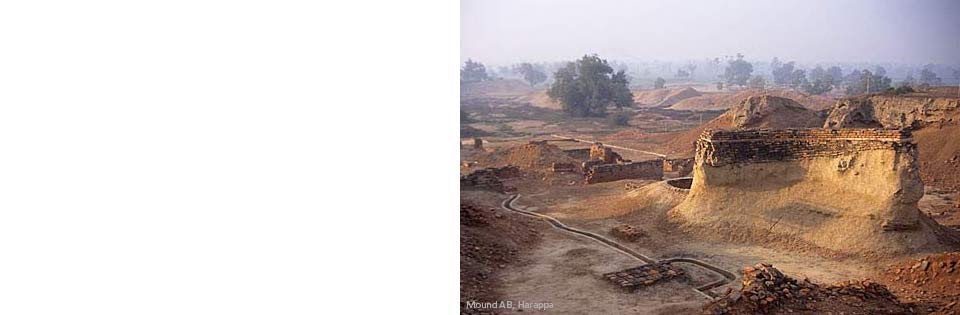
  • Mound AB
  • Mound AB
• • •

Secondary menu

  • about us
    • scholars
    • privacy
    • support
    • image rights
    • credits
    • contact us
  • resources

Ancient Indus Questions & Answers

Answers to questions from you and our Facebook page visitors by distinguished ancient Indus scholars and archaeologists.
44. Who is excavating in the ancient Indus area right now, and where and can students participate?

Richard H. Meadow
Shereen Ratnagar
Rita P. Wright

Submitted bu Ane À Ailes

43. How does the dolphin appear in Indus iconography?

Richard H. Meadow

Is there any sign of the blind dolphin of the Indus?

Richard Meadow
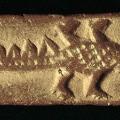
I do not think the Indus dolphin appears in the iconography, although I stand to be corrected. The gharial or Indus crocodile does appear depicted on iconography of the Indus period, primarily on moulded "tablets" or "tokens".

42. What is current thinking on the female diety with outstretched arms in the ancient Indus, Egyptian and Mesopotamian cultures?

Iravatham Mahadevan
Jane McIntosh
Richard H. Meadow
Rita P. Wright

There is an image common to the Indus, Ancient Egyptian and Mesopotamian river cultures of a female deity standing with arms outstretched, holding two apparently deadly animals at bay. In the case of the Indus, the animals have been identified as 'tigers', in Ancient Egyptian and Mesopotamian they are crocodiles. What are the current theories on the iconography(ies) of these images; the reasons for their presence in three civilizations and what their presence might indicate in terms of the interrelationships between these cultures? Submitted by Ian Whitney

41. Is there new evidence to further support the 'min' (star/fish) decipherment theory?

Iravatham Mahadevan

Submitted by Richard Sproat

40. Are there any connections between irrigation systems in South India and the IVC?

Iravatham Mahadevan

I would also like the experts to throw some light on the irrigation systems prevalent in South India, especially in Kerala till the middle of this century, where system of open channels linking ponds were prevelant. Ponds again were small types for domestic use and bigger ones for agriculture in addition to deep wells for drinking water and the entire system was integrated part of the village life which appears common with what existed in Harappa and IVC.
Submitted by Prakash Pk

39. Have we found any 'writing instruments' that could have been used to paint or etch materials?

Iravatham Mahadevan

As Iravatham Mahadevan points out, archaeological evidence makes it inconceivable that IVC's large, well-administered and sophisticated trading society would have functioned without effective long-distance communication. Unlike the clay tablets of Mesopotamia, no written records were discovered from Indus Valley sites except seals. The people of IVC might have written on cotton cloth, leaves, bark or hide which would have decayed by now, leaving no trace.

38. How does the use of Mitra-Varuna mythology reconcile with syncretic interpretations?

How does Asko Parpola's use of Mitra-Varuna mythology in a syncretic manner between Harappan, BMAC and Indo-Iranian religion and the resulting interpretation of Indus seals reconcile with the following?

1. Possible greater presence of this mythology Indo-European religion. If so, won't it imply more eastern homeland for Indo-European (contrary to other available evidences) and also won't it imply a continuous and deeper time-scaled exchange between these three groups?

37. If you had to place money on where a future Rosetta stone with inscriptions in the ancient Indus language and another language might be found, where would you bet?

Iravatham Mahadevan
Jane McIntosh
Richard H. Meadow
Shereen Ratnagar
Rita P. Wright

Jane McIntosh

36. Are there still many unread ancient Mesopotamian texts in archives that if researched properly, might cast light on the Indus civilization?

Asko Parpola
Yes, there are still many unread cuneiform texts in the museums. [The ancient Indus trade village in Mesopotamia of] Guabba could be identified from one such text.

35. Being the largest bronze age civilization, in what extent did the IVC impose their customs and culture on neighbouring cultures such as the ancient Middle East?

Rita P. Wright

Or is there any indication of war between these populations?

Rita Wright

There are Mesopotamian texts from the Akkadian period (2350 – 2200 BC) that speak about battles in which the people of Meluhha were involved. This seems kind of far fetched since the battles took place in what today is eastern Iran. There is very little evidence for warfare in the Indus, as you probably know, but still they appear to have thought they were engaged in battles with the Indus or for political reasons they found it useful to say so.

34. Where were ancient Indus agricultural fields located?

  • harappa fields
Rita P. Wright

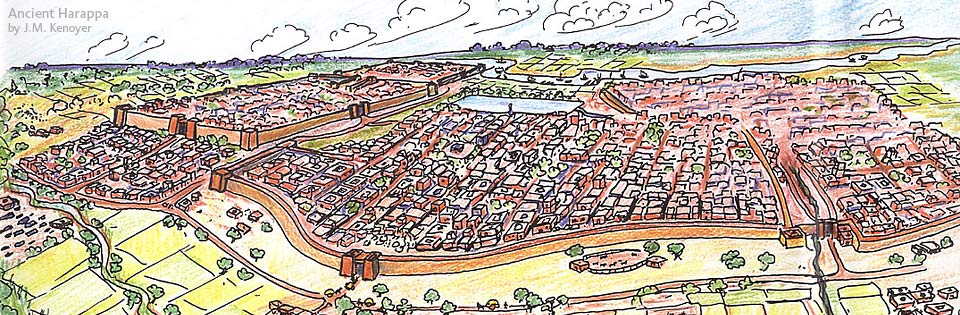
We keep reading that agriculture was prevalent in the Indus Valley Civilisation. But when I read about the planning of the settlements, I was confused as to where exactly the fields were located. Were they outside the walled settlements? Or were they located somewhere within the Lower Town? Submitted by Rizowana Hussaini

33. What was the Indus administrative machinery like?

Rita P. Wright

I would like to know something about the nature of the administrative machinery, their irrigation patterns and nature of society...though i am fully aware that the type of sources we have to analyse these things are minimal.

32. What did the Harappa people eat? From what flowers/minerals did they get their pigments from?

Rita P. Wright

Submitted by Giuseppe

Rita Wright
The Harappans in the urban period had a varied diet principally based on wheat, barley, millets and cattle, sheep and goat. In my book, Ancient Indus: Urbanism, Economy and Society, there are two chapters that list these different foods. These are Chapters 6 and 7. My answer is based on the result of the research of Steven Weber our paleobotanist sometimes called archaeobotanist.

31. What is the best thing that could happen to ancient Indus studies?

Iravatham Mahadevan
Jane McIntosh
Richard H. Meadow
Shereen Ratnagar
Rita P. Wright

Jane McIntosh
Decipherment of the Indus script would be helpful – if nothing else, it should conclusively settle the non-Aryan/Aryan dispute – but the amount of information this would yield is severely limited.

30. Was there something mysterious that provided balance to Mesopotamian-IVC trade?

Jane McIntosh
Shereen Ratnagar
Rita P. Wright

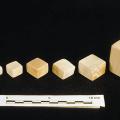
Trade between Indus Valley and Mesopotamia appears rather skewed in IVC's favour. IVC exported Gold jewelery, Ivory seals & boxes, Timber, Cotton textiles, Copper & bronze fish-hooks, Carnelian & precious stone beads, Live chicken, Shell & bone inlays, and even Water buffaloes. Mesopotamia exported only Silver, Tin and Copper ingots, Woollen textiles and Bitumen. Could it have been be sex trafficking from Ur, Dilmun and Magan to Sutkagen Dor, Sokhta Koh, Balakot and Allahdino?

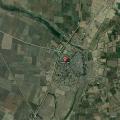
29. Can we say anything about the town Vataman near Lothal?

I have read in Dr. Parpola's papers that Vata and Aman are two very significant words in the Harappan language. I also noticed that there is a small town named Vataman approximately 15 km east of Harappan site of Lothal in Gujarat. Could this be of any significance?
Submitted by Rajendra. Editor’s note: I have verified that there is indeed a village called ‘Vataman’ east of Lothal.

28. Was drug-smoking prevalent in the Indus Valley Civilization?

Jane McIntosh
Richard H. Meadow

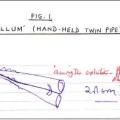
Last year I visited gallery of Harappan Civilization at the National Museum, New Delhi. Among the artifacts, I saw a small 'chillum' (hand-held twin pipe) similar to that 'sadhus' (wandering Hindu monks) use in smoking 'charas' (hand-made hashish) and 'ganja' (marijuana). Discussing the history of cannabis, the Wikipedia quotes that charred cannabis seeds were found in a 3rd millenium BC grave in Romania. Submitted with illustration by Vasant Dave

27. How did Harappans measure value?

Asko Parpola
Iravatham Mahadevan
Richard H. Meadow

How did they "pay"? I have often wondered how this took place in practice, assuming there was no currency as we understand it. How were luxury / prestige items such as gold and gemstone jewelery obtained by those who had access to them. How did ordinary people trade and obtain necessities and adornments, eg pots, cloth, food, bangles and everyday jewelery? What was the role of the rulers?

26. What is the evidence for specific religious practices in the IVC?

Iravatham Mahadevan

1. Are there any findings which can possibly hint to the origin of Tantra in the IVC?
2. Which religions where practiced in the IVC and are there indications that the IVC had atheistic influences (esp. Samkhya)?
3. Are there any new discoveries about the Shiva/Cerunnos seals and is it right to suppose that it is depicting Shiva sitting in a Yôga pose?
Submitted by Christoph Dressel

25. Was feminine beauty exemplified by a race different than the one inhabiting the IVC?

Jane McIntosh
Shereen Ratnagar
Rita P. Wright

A stark contrast between the features of human figurines and masks of IVC period strikes me. Men have a narrow sloping forehead like a Neanderthal, whereas women exhibit a prominent vertical forehead with a much higher hairline. If my observation stands scrutiny, one possibility that comes to mind is that: Feminine beauty was exemplified by women of a race other than the one inhabiting the IVC. Somewhat like all Barbie dolls possess long limbs irrespective of which race they are supposed to represent. Does that hypothesis make sense? Submitted by Vasant Dave

24. Do we have any evidence of a migration from the Indus to South India?

Iravatham Mahadevan
Richard H. Meadow

If we assume that some migration did take place from Indus valley to South India sometime around 2000 BC or so, then it could have been through the sea. Could it not be possible to get some remnants of ship break or some marine fossils to substantiate this fact? Submitted by Prakash

23. What single connection between the ancient Indus civilization and modern Tamil culture is the most impressive to you?

Iravatham Mahadevan

Iravatham Mahadevan

22. Is there any evidence showing any connection to the Vedic Gods, such as Mithr (Mihr, Mehr, Mir)?

Iravatham Mahadevan
Shereen Ratnagar

Submitted by Steve

Shereen Ratnagar
No way of knowing—but the Vedas are centuries later. I do not find much attraction in theories that conjure up Brahmanical deities, even later Puranic deities, in connection with Harappan images. We require a modicum of “chronological discipline”(—let us choose a better term for this in our discussions).

21. How did ancient Indus traders navigate without a compass?

Since iron was not yet discovered in the Bronze Age, the Meluhhan, the Mesopotamian and the Egyptian ships did not have mariner's compass at their disposal.
Therefore, did those ships traverse long distances on the sea by referring the North Star alone? Does it mean that their sailing period was restricted only to night time and clear weather when the North Star was visible? Submitted by Vasant Dave

20. What can you say about the relationship of Harappan civilization to distant earlier cities?

Richard H. Meadow

We can say that the bulk of the development of the Harappan civilization happened in the Indus Valley itself. What can you comment about their relationship with other cities in Anatolia after the discovery of the city of Catal Huyuk by the English archaeologist James Mellaart in 1958. Is Catal Huyuk a more primitive precursor of this civilization or they parallel developments? Submitted by Martin Piattini Velthuis

Pagination

  • Previous page
  • 3
  • Next page
Answers by Subject (21)
  • Agriculture
  • Animals
  • Archaeologists
  • Buildings
  • Clothing
  • Daily Life
  • Decline
  • Discoveries
  • Economy
  • Environment
  • Evolution
  • Food
  • Governance
  • Language
  • Medicine
  • Mysteries
  • People
  • Religion
  • Seals
  • Trade
  • Writing
Answers by Author (6)
  • Asko Parpola
  • Iravatham Mahadevan
  • Jane McIntosh
  • Richard H. Meadow
  • Rita P. Wright
  • Shereen Ratnagar
© Harappa.com 1995-2026 31