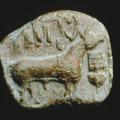
Or were there any mediators in Iran (which had a civilization in ancient periods which was located in the southwestern part of fertile cresent region)? As you know, the Rosetta Stone was issued by Ptolemy \/ - which was due to interactions between the Greeks and Egyptians. This interaction started with settling of Ionians and Cretans as per by Herodotus. Could it be that these mediators would have used both the cuneiform and Indus valley script? What are the possibilities of finding a bilingual according to you? Submitted by Arthur Evans
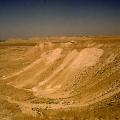
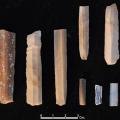
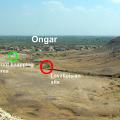
Why (as far as I know) was all the chert obtained from the Rohri Hills and distributed everywhere else? What does this tell us about the nature of the Harappan economy and society? Submitted by Gharial Abramnova from school student questions
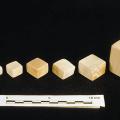
How did they "pay"? I have often wondered how this took place in practice, assuming there was no currency as we understand it. How were luxury / prestige items such as gold and gemstone jewelery obtained by those who had access to them. How did ordinary people trade and obtain necessities and adornments, eg pots, cloth, food, bangles and everyday jewelery? What was the role of the rulers?
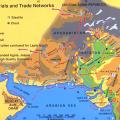
Are there any structural remains in any of the Harappan sites to point to a marketplace or shop where goods were bought and sold? What do scholars have to say about the market system in those days, apart from the well-known theory of goods being stored in a storehouse and taken by boats for trade?