Home

Main navigation

  • home
  • slides
  • essays
  • articles
  • books
  • video
  • q & a
  • blog
Secondary menu
  • about us
    • scholars
    • privacy
    • support
    • image rights
    • credits
    • contact us
  • resources
  • Mound AB

    Iravatham Mahadevan Indus Research Center, Chennai
    Richard H. Meadow Harvard University
    Asko Parpola University of Helsinki
    Shereen Ratnagar Jawaharlal Nehru University
    Rita P. Wright New York University
    Paolo Biagi Ca' Foscari University, Venice
    Dennys Frenez University of Bologna, Ravenna
    Jonathan Mark Kenoyer University of Wisconsin, Madison
    Randall Law University of Wisconsin, Madison
    Gwen Robbins Schug Appalachian State University
    Mayank Vahia TIFR | Nisha Yadav TIFR
    Massimo Vidale University of Padua
    Jane McIntosh Cambridge University
  • Mound AB
  • Mound AB
• • •

Secondary menu

  • about us
    • scholars
    • privacy
    • support
    • image rights
    • credits
    • contact us
  • resources

Ancient Indus Questions & Answers

Answers to questions from you and our Facebook page visitors by distinguished ancient Indus scholars and archaeologists.
19. What have been the most interesting findings about the Harappan Civilization during the last two decades?

Iravatham Mahadevan
Jane McIntosh
Richard H. Meadow
Shereen Ratnagar
Rita P. Wright

What in your view are the most exciting, significant or illuminating insights gained? What avenues would you like to explore in future asssuming absolutely no practical or financial constraints whatsoever? Submitted by Paul Toth and Gharial Abramnova from school student questions

18. Why did the Harappans go to such extraordinary lengths and distance to obtain raw materials such as copper?

Jane McIntosh
Richard H. Meadow
Shereen Ratnagar
Rita P. Wright

Why (as far as I know) was all the chert obtained from the Rohri Hills and distributed everywhere else? What does this tell us about the nature of the Harappan economy and society? Submitted by Gharial Abramnova from school student questions

17. What is your considered opinion on how and why the Indus valley civilization came to an end?

Jane McIntosh
Richard H. Meadow
Shereen Ratnagar
Rita P. Wright

Submitted by Manzoor

Jane McIntosh
I don't think that there was a single cause of the Indus civilization's end; rather it was the cumulative effect of a number of factors:

16. What did the Indus people wear and what material were their clothes made of?

Jane McIntosh
Richard H. Meadow

Submitted by Gharial Abramnova from school student questions

15. How peaceful was Harappan Civilization?

Iravatham Mahadevan
Jane McIntosh
Richard H. Meadow
Shereen Ratnagar

Harappan Civilisation is often characterised (for example by the Director of the British Museum on a Radio 4 series) or even idealised as peaceful and without warfare or conquest, (in comparison with all other First Civilisations) with its cities linked across vast regions and unified (variously) by trade and/or religion. Rulers have even been said to be priests or a theocracy. These interpretations are often presented as facts in books or articles for general consumption.

14. Why were the Citadel walls so high?

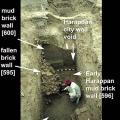
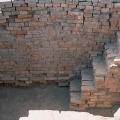
  • Harappa Wall Excavations
Richard H. Meadow

Why were there (terracotta) balls on the Citadel wall in Mohenjo-Daro? Have any more statues been found or anything like a temple? Have you found out any more information on the Indus leaders or their names? Submitted by Gharial Abramnova from school student questions

13. What kinds of things did the Indus people eat?

Jane McIntosh
Richard H. Meadow

What is known about the food habits of the Indus Valley people? Have any cooking utensils/equipment, charred remains of food or agricultural implements been found? Wheat kind of bread was their staple, perhaps baked in ovens or cooked over fire? Did they grow lentils - one of the key elements of sub-continental food? Submitted by Colleen

12. Was the trade relationship between the Harappans and the Mesopotamians a direct one?

Iravatham Mahadevan
Jane McIntosh
Richard H. Meadow
Shereen Ratnagar
Rita P. Wright

Or were there any mediators in Iran (which had a civilization in ancient periods which was located in the southwestern part of fertile cresent region)? As you know, the Rosetta Stone was issued by Ptolemy \/ - which was due to interactions between the Greeks and Egyptians. This interaction started with settling of Ionians and Cretans as per by Herodotus. Could it be that these mediators would have used both the cuneiform and Indus valley script? What are the possibilities of finding a bilingual according to you? Submitted by Arthur Evans

11. Was IVC and Mesopotamian trade the longest distance trade of the Bronze Age?

It is known that some of Indus Seals found in Mesotopamia. Are those seals found in a single city or variety of Sumer cities? Is there any known another example for 2000 kms distance of a trade network in Bronze Age? Submitted by Taner Tas

10. How common is the Yogi figure (possibly a proto-shiva figure) across the various Indus sites?

Jane McIntosh
Richard H. Meadow
Shereen Ratnagar

What and how much is known about it?

9. Have any artifacts been found with discernible ancient fingerprints?

Jane McIntosh

Or ever two distinct artifacts with the same sets of fingerprints on them? Is there anyone studying indus valley artifacts with this approach and is there anything we can tell from it? Submitted by Ezb

Jane McIntosh
I am not aware of any studies specifically dealing with fingerprints on Harappan pottery. Kenoyer notes that some of the Ravi-period (pre-Harappan) beads at Harappa were decorated with finger marks.

8. Was the Indus trade effort centralised?

Jane McIntosh

The people of the Indus valley seem to have exported many more goods than they seem to have imported. Moreover, imported items like silver (found mainly in Harappa and Mohenjodaro) did not seem to have been distributed beyond the main cities suggesting that there was little demand for the goods in the smaller centres. Does this suggest that, if, as has been suggested, the Indus people took the initiative for the trade, this was a centralised effort that profited only the cities? Submitted by Apoorva Bhandari

7. How does the decline of the civilization relate to food and housing?

Rita P. Wright

I would like to know if the valley was green and fertile at that time... and if the cultivation of sugar cane, a highly aggressive culture, and the use of timber to construct led to environmental degradation of the area which then became dry and hostile.

6. Is there any connection between Elam of Mesopotamia and the Indus Valley civilization?

Iravatham Mahadevan

The Elamites are said to be Tamilians and so are the Indus Valley people. Were the people of common ethnic origin? Further the word Dravidians is supposed be derived from the word Tamilian? Is this true? Submitted by Anil. Editor’s note: In general, could you please explain the distinction between ethnicity and language and the extent to which they can be expected to overlap.

5. What do we know of festivals during the Indus period?

Iravatham Mahadevan

I have a question to Dr Iravatham Mahadevan. Do festivals like PONGAL (TN) or ONAM (Kerala) carry some of those aspects from Indus Valley memory? Because they are not rooted in Religion and origins are obscured from known memory. Submitted by Prakash

Iravatham Mahadevan
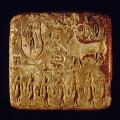
The Harappans would have celebrated some festivals. There are seals and sealings showing religious sacrifices, processions etc. but there is no evidence to connect them with the South Indian festival you mention.

4. What kind of evidence has been used to argue that the Indus Valley Civilization was a matriarchy?

Richard H. Meadow

"I'd like the experts to confirm or refute that the Indus Valley civilization was a matriarchy following the scientific definition given by Heide Goettner-Abendroth in Modern Matriarchal Studies: Definitions, Scope and Topicality." Asked by Sede Decana Método DeRose and Luciano

3. Can we see a close-up of the "trident and bun" seal fragment?

Richard H. Meadow

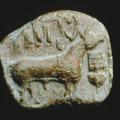
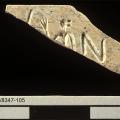
The seal fragment H98-3505/8347-105 is number H-1676 A in CISI-3 appearing on pages 235 (B+W) and 365 (Color) in Parpola, Asko, B.M. Pande, and Pitteri Koskikallio (2010) Corpus of Indus Seals and Inscriptions, Volume 3: New material, untraced objects, and collections outside India and Pakistan, Part 1: Mohenjo-daro and Harappa. Helsinki: Suomalainen Tiedeakatemia.

2. Is there any connection between the peacock of immortality of the Harappan burial urns and the peacocks later found on Roman urns?

Richard H. Meadow

Richard Meadow

1. What happened after 1800 BCE?

Asko Parpola

I would like to draw some comments about the nature of the transformation that took place after 1800 BC, the spread of the Harappan culture over different parts of the subcontinent and their linkages with some of the Megalithic cultures of South India, non-Harappan Chalcolithic cultures and Vedic cultures. Submittted by Narottam Vinit

Pagination

  • Previous page
  • 4
Answers by Subject (21)
  • Agriculture
  • Animals
  • Archaeologists
  • Buildings
  • Clothing
  • Daily Life
  • Decline
  • Discoveries
  • Economy
  • Environment
  • Evolution
  • Food
  • Governance
  • Language
  • Medicine
  • Mysteries
  • People
  • Religion
  • Seals
  • Trade
  • Writing
Answers by Author (6)
  • Asko Parpola
  • Iravatham Mahadevan
  • Jane McIntosh
  • Richard H. Meadow
  • Rita P. Wright
  • Shereen Ratnagar
© Harappa.com 1995-2026 31