Home

Main navigation

  • home
  • slides
  • essays
  • articles
  • books
  • video
  • q & a
  • blog
Secondary menu
  • about us
    • scholars
    • privacy
    • support
    • image rights
    • credits
    • contact us
  • resources

Secondary menu

  • about us
    • scholars
    • privacy
    • support
    • image rights
    • credits
    • contact us
  • resources

Ancient Indus Civilization Blog

354 posts, also carried on our Facebook page, about the ancient Indus Valley civilization, including important news, research and occasional visits to museums with ancient Indus artifacts.

Around the Indus in Pakistan

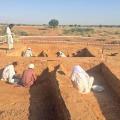
Recent news includes the opening of a Rediscovering Harappa: through the five elements (water, earth, fire, air, ether) Exhibition at the Lahore Museum on November 21st, and the apparent discovery of Indus artifacts from 2600 BCE in Sikander South near Dera Ismail Khan. >

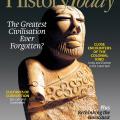
The Greatest Civilization Ever Forgotten?

Out now in UK - History Today - main feature by Andrew Robinson on the greatness of the civilisation western media forgets about http://www.historytoday.com/magazine >

Granary Excavations Reveal New Facts

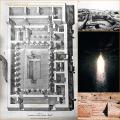
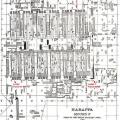
  • Plan view of the so-called "granary" or "parallel-wall structure" on Mound F at Harappa indicating areas of HARP excavations conducted in 1997 and 1999. Note that the structural remains surrounding the "granary" are, for the most part, later than the original "granary" structure.

Excavations at the "Granary," Harappa, Trenches 41 exposed new facts about this most puzzling of structures. Built apparently at one time, and more than once reconstructed on the foundations of a previous structure, there is absolutely no sign of grain in the rooms or hollow areas between them. >

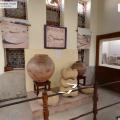
Visit Harappa Museum in 3D with Google Viewer

Google has come up with a 3D Viewer that lets you visit the Harappa Museum and parts of the site online. >

Dholavira's Stone Architecture

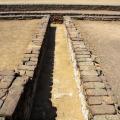
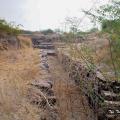
The great Ancient Indus city of Dholavira features some of the best preserved stone architecture from the ancient Indus period. Traveller Jitaditya Narzary recounts in detail his visit to the site and gives an inside look at this beautiful site and the history it reveals. >

Men of Harappa B

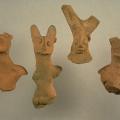
Male figurines are sometimes also identified by secondary sex characteristics such as beards. Occasionally, male figurines wear a headdress with two upward and/or outward projections like horns. Similar figures with horned headdresses are found in the iconography of seals, tablets, and pottery. It is possible that these represent composite figures with anthropomorphic and animal attributes or the appropriation of animal attributes in the form of a headdress. In addition to different postures, male figurines also exhibit a variety of hairstyles. Both male and female figurines may have hair swe… >

Three-sided Terracotta Seal

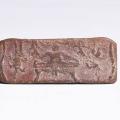
This beautiful three-sided terracotta sealing from 2000 BCE depicts a male cult figure seated in a yogic posture on a throne, a bull-like animal, and five characters in the Indus script. Today, the seal resides in the Ashmolean Museum at the University of Oxford. See also Long Indus Seals. >

Ancient Pots

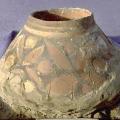
  • During the pre-Indus Ravi phase, is one of the earliest examples of the intersecting circle motif in the Indus region.

Collection of Ravi Phase pottery featuring several pieces with a variety of detail and colors. >

Dogs of the Ancient Indus Valley

  • Some texts from ancient Mesopotamia mention imports received from the land of "Meluhha", widely considered a reference to the Indus Civilization. Among these imports, according to some interpretations, is a colored dog. A number of dog figurines have been found at Harappa and at other Indus sites. The collars found on dog figurines probably signify domestication, unlike the collars on the rhinoceros or the large feline figurines. Approximate dimensions (W x H(L) x D): 1.9 x 5.3 x 3.3 cm.

A number of dog figurines have been found at Harappa and at other Indus sites. The collars found on dog figurines probably signify domestication, unlike the collars on the rhinoceros or the large feline figurines. >

An Ancient Indus Die

A cubical die with 1 to 6 dots was found in rubble during excavations at Harappa. Many such dice were also found at Mohenjo-daro. John Marshall writes: "That dicing was a common game at Mohenjo-daro is proved by the number of pieces that have been found. In all cases they are made of pottery and are usually cubical, ranging in size from 1.2 by 1.2 by 1.2 inches to 1.5 by 1.5 by 15 inches. . .. The dice of Mohenjo-daro are not marked in the same way as to-day, i.e. so that the sum of the points on any two opposite sides amounts to seven. Instead of that, 1 is opposite 2, 3 opposite 4, and 5 op… >

Deity Seal

  • Mohenjo-daro seal

Deity seal from Mohenjo-daro. E.J.H. Mackay writes of what he calls a "deity, seated in what may be a yogi attitude" where, in this case, "the stool is omitted, however, and the figure is apparently seated upon the ground. The headdress consists of two horn-like objects between which there appears to be a spike of flowers. A pigtail hangs down one side of the head which has one face only, in profile, facing to the right. Unfortunately this seal is badly broken, but enough remains to show that the figure was surrounded by pictographs arranged in a somewhat haphazard fashion." (Further Excavati… >

Ancient Female Figures and Flower Headdresses

Figurine with flower headdress from Harappa and a reconstructed headdress in gold found with a serving girl found with Queen Puabi at the royal burials at Ur in Mesopotamia ca. 2600 BCE. Note the carnelian beads around her neck whose only source at the time was the ancient Indus civilization. More at the video lecture Meluhha: the Indus Civilization and Its Contacts with Mesopotamia by Dr. Jonathan Mark Kenoyer. >

Spotted Dog Figurine from Chanhu-daro

Figurine of a cheeky spotted dog from Chanhu-daro shows the personality Indus craftsmen could imbue a 7 cm sized figurine with. From the Museum of Fine Arts, Boston collection based on the 1935 US-led excavations at Chanhu-daro, Sindh. More at Museum of Fine Arts (Boston). For more painted animals and Chanhu-daro craftsmanship, see also an Intricately Painted Jar featuring a peacock motif. >

Urban Construction of Mohenjo-daro

  • Mohenjo-daro

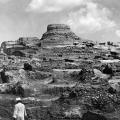
A rarely seen image of deep diggings at Mohenjo-daro in 1950 gives some sense of the density of urban construction in the city. This is in the citadel area, with the so-called Great Granary or large hall in the background, "gradually engulfed by a clutter of later Indus buildings," although we do not know the stratigraphic relationship between these buildings and the large hall. This is close to the Great Bath, off-screen to the left. The two circular structures are wells. (From F.A. Khan, The Indus Valley and Early Iran, 1964, Plate III) >

Jewelry from Mohenjo-daro

  • Many of the terra cotta bangles were originally painted with black or red designs. Such ornaments are found in the thousands and may have been worn, broken and discarded much as glass bangles are used today throughout the subcontinent.

Includes long carnelian beads and necklace, fired steatite beads and gold objects, terra cotta bangles and detail in red, white and green, metal bangles and gold and agate ornaments. See also Carnelian Beads and Ornaments and Jewelry. >

Pagination

  • First page
  • Previous page
  • …
  • Page 10
  • Page 11
  • Page 12
  • Page 13
  • Page 14
  • Page 15
  • Page 16
  • Page 17
  • …
  • Next page
  • Last page

Blog Posts by Subject (16)
  • Animals
  • Art
  • Children
  • City Life
  • Conferences
  • Crafts and Industry
  • Evolution
  • Excavations
  • Food
  • Homes
  • Media
  • Museums
  • Mysteries
  • News
  • People
  • Seals

follow us

Follow us on Facebook, Twitter and Instagram.
Videos on YouTube.
Occasional Newsletter.

donate

A 31 year-old non-profit serving 30,000 people a day.

© Harappa.com 1995-2026 31