Home

Main navigation

  • home
  • slides
  • essays
  • articles
  • books
  • video
  • q & a
  • blog
Secondary menu
  • about us
    • scholars
    • privacy
    • support
    • image rights
    • credits
    • contact us
  • resources

Homes

Posts about ancient Indus Valley Civilization homes and houses.

The Great Bath of Mohenjo-daro C

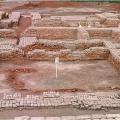
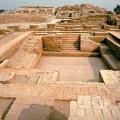
The "great bath" is without doubt the earliest public water tank in the ancient world. The tank itself measures approximately 12 meters north-south and 7 meters wide, with a maximum depth of 2.4 meters. Two wide staircases lead down into the tank from the north and south and small sockets at the edges of the stairs are thought to have held wooden planks or treads. At the foot of the stairs is a small ledge with a brick edging that extends the entire width of the pool. People coming down the stairs could move along this ledge without actually stepping into the pool itself. The floor of the … >

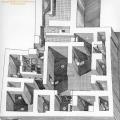
What Was an Ancient Indus House Like?

John Marshall writes of House 8, an "average upper class house" in the HR section of Mohenjo-daro: "To the right of the porter's lodge [5] a short passage led to the central courtyard of the house (18), which was open to the sky and provided light and air to the rooms grouped about it on both the ground and upper floors. And here, let me say parenthetically, that the principle of the open courtyard encompassed by chambers was just as fundamental to house-planning at Mohenjo-daro as it was throughout the rest of the prehistoric and historic Asia, and as it has continued to be in India until th… >

A College in Mohenjo-daro?

"Between the Buddhist stupa, with its surrounding monastic buildings, and the Great Bath, a considerable stretch of ground which sloped upwards to the east presented interesting possibilities . . ." >

Harappan Water Well

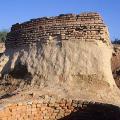
One of only eight wells, public and private, that have thus far been discovered at Harappa. Most of the water used by the population probably came from the adjacent Ravi River. The curved wall was probably a large drain used during the latter stages of ancient Harappa, around 2,000 B.C.E. See also Mohenjo-daro: City of Wells. >

First Street of Mohenjo-daro: Revisited

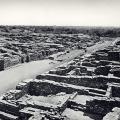
John Marshall writes of what he called First Street, "The northern part of this street, 145 feet in length, had been dug by Mr. Hargreaves in 1925-6, the rest of the street, some 300 feet in length, was completely exposed by me down to the Intermediate level, the work involving the removal from the street itself of a 10 ft. thick layer of closely packed debris ... The width of the street averages 30 feet and it is the only street so far excavated at Mohenjo-daro that could have been used for wheeled traffic, if wheeled traffic was permitted inside the town. No actual traces of wheeled vehicle… >

Corbelled Arch Drain

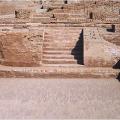
The corbelled arch drain from the great bath in Mohenjo-daro is large enough to walk into. It has a small ledge on either side of the actual drain channel. See also Mohenjo-daro: City of Wells. >

The First Latrines

It is often said that the ancient Indus people invented latrines, as these examples from Harappa and Mohenjo-daro suggest. Mark Kenoyer writes "Many urban dwellers may have walked outside the city wall to the nearby fields to relive themselves, as is commonly done today throughout much of Asia. But many houses had latrines that were distinct from the bathing areas. The early excavators at Harappa and Mohenjo-daro did not pay mch attention to this essential feature of the Indus cities, but current excavations at Harappa are finding what appear to be latrines in almost every house. The commodes… >

Mystery of the Pillared Hall

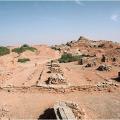
What was the large pillared hall at Mohenjo-daro used for? The hall was approximately 27.5 meters square (90 feet square) with twenty square brick pillars arranged in four rows, only two of which are still preserved. Strips of paved floors sloped from south to north and each strip of flooring had row of bricks set on edge along both sides. The cross wall in the foreground was built later and divided the hall into smaller rooms. Its purpose remains an enigma. >

Imagining Life in Lothal

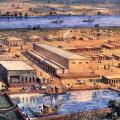
A reimagining of life in Lothal 4,000 years ago, satellite images of the town in context of today's landscape, and the discoverer, S. R. Rao's drawings of the town plan, bead factory and warehouse. "While exploring the Sabarmati estuary an ancient mound presently known as Lothal was discovered in November, 1954," wrote S. R. Rao. "The excavation conducted here during the following seven years has brought to light the existence of a flourishing port-city of the Indus Civilization with an excellent brick-built dock and nearly laid-out streets. One comes across at Lothal the same regimentation i… >

The Great Bath of Mohenjo-daro B

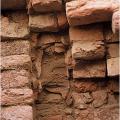
1. The Great Bath at Mohenjo-daro, looking north. The side walls of the roughly 12 by 7 meter tank were constructed with finely fitted bricks and a thick layer of bitumen (natural tar) was laid along the sides of the tank to keep water from seeping through the walls and up into the superstructure. 2.Lower ledge inside the Great Bath, southern edge, looking east. At the foot of the stairs is a small ledge with a brick edging that extends the entire width of the pool. People coming down the stairs could move along this ledge without actually stepping into the pool itself. Small sockets at th… >

Pagination

  • Page 1
  • Page 2
  • Page 3
  • Page 4
  • Next page
  • Last page
Blog Posts by Subject (16)
  • Animals
  • Art
  • Children
  • City Life
  • Conferences
  • Crafts and Industry
  • Evolution
  • Excavations
  • Food
  • Homes
  • Media
  • Museums
  • Mysteries
  • News
  • People
  • Seals
© Harappa.com 1995-2026 31