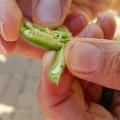
An article by Andrew Lawler discusses how archaeologist Arunima Kashyap and Steve Weber at the Washington State University determined that curries - using garlic, ginger and turmeric - were prevalent in the Indus civilization. This was done by analyzing finds from Farmana and Harappa, using starch grain analysis and other methods. >
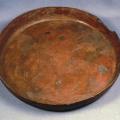
"The Harappans are referred to as a Bronze Age culture," writes Vasant Shinde, "and they used copper and bronze to manufacture axes, adzes, knives, fish hooks, chisels, pots and pans and jewelry in form of bangles, beads, or diadem strips. The Harappans seem to have preferred pure copper, which was manufactured into objects by beating the metal sheets into the required shape. Copper alloying was a common aspect of metallurgy with contemporaneous civilizations, but only 30% of the 177 copper artifacts from Harappa and Mohenjo Daro demonstrated tin, arsenic, nickel or lead alloying, of which ti… >
Latest research on archaeological sites of the ancient Indus Civilisation, which stretched across what is now Pakistan and northwest India during the Bronze Age, has revealed that domesticated rice farming in South Asia began far earlier than previously believed. >
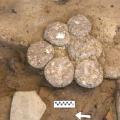
An exciting find, not only because this is the first foodstuff preserved in such excellent condition, but also for the continuity with today, is this Times of India article on multi-grain, high-protein laddos found at the 4MSR site in Rajasthan on the border with Pakistan. >
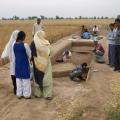
An audio interview with Dr. Jonathan Mark Kenoyer with Wisconsin Public Radio explores his work and discoveries at Harappa, where stone tools suggest the area was inhabited as early as 10,000 BCE. An fine hour of highlights and key finds around crops, animals and culture and evidence for the earliest curries and writing. >