Home

Main navigation

  • home
  • slides
  • essays
  • articles
  • books
  • video
  • q & a
  • blog
Secondary menu
  • about us
    • scholars
    • privacy
    • support
    • image rights
    • credits
    • contact us
  • resources

Secondary menu

  • about us
    • scholars
    • privacy
    • support
    • image rights
    • credits
    • contact us
  • resources

Ancient Indus Civilization Blog

354 posts, also carried on our Facebook page, about the ancient Indus Valley civilization, including important news, research and occasional visits to museums with ancient Indus artifacts.
Deity Strangling Tigers Tablet

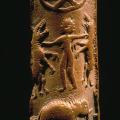
Planoconvex molded tablet from Harappa showing a deity battling two tigers. "The thick jungles of the Indus Valley were full of tigers and leopards, so it is not surprising that the image of a ferocious feline is a recurring motif in ritual narratives on seals as well as molded tablets... The figure strangling the two tigers may represent a female, as a pronounced breast can be seen in profile. Earlier discoveries of this motif on seals from Mohenjo-daro definitely show a male figure, and most scholars have assumed some connection with the carved seals from Mesopotamia that illustrate episode… >

An Indus Boat Seal

  • An Indus Boat Seal

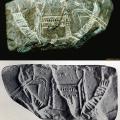
An unfired steatite seal and sealing of a boat found at Mohenjo-daro. A close and insightful reading by Ernest J.H. Mackay reads "Seal 30 ... was found in two pieces. It is rectangular in shape and incomplete motif on the back consists of roughly scratched lines that cross one another... The face is nearly complete and it clearly bears a representation of a ship, the first of its kind to be found one a seal from Mohenjo-daro... Why representations of boats and ships are so rare it is difficult to explain, as it is more than probable that the river Indus was largely used for traffic of all kin… >

The Pleiades Seal

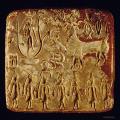
This seal from Mohenjo-daro contains, perhaps more compactly than any other, what we can tell of ancient Indus beliefs and traditions. Several script signs are interspersed with the figures along the top of the seal and a single sign is placed at the base of the tree. This scene may represent a special ritual sacrifice to a deity with seven figures in procession. The seal has a grooved and perforated boss and the edges are worn and rounded from repeated use. It shows a deity with horned headdress and bangles on both arms, standing in a pipal (sacred fig) tree and looking down on a kneeling… >

The First Indus Women, 1924

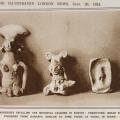
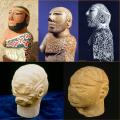
The first Indus women surfaced in the Illustrated London News on September 20, 1924. John Marshall was announcing the discovery of a civilization in India far earlier than Western archaeologists had surmised and these Harappan figurines were earlier than any others. Similar figurines from more recent discoveries at Harappa are also shown below, with captions. These are typical of female figurines from Harappa and Mohenjo-daro. Why do you think there might be so many more female than male figurines? See also Embodying Indus Life: Terra Cotta Figurines of Harappa. >

Mystery Platforms

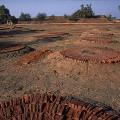
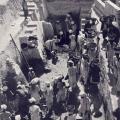
What about the platforms? Another perplexing Indus mystery concerns the so-called workingmen's platforms at Harappa, next to the "granary" whose purpose also eludes us. Photographs from the excavations by the Harappa Archaeological Research Project following M.S. Vats work in the 1920's and 1930's led to at least one interesting clue. Additionally, the direction of the bricks suggests water was used here. What do you think? See also Mystery at Mound F. >

First Street of Mohenjo-daro: Revisited

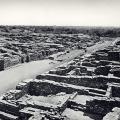
John Marshall writes of what he called First Street, "The northern part of this street, 145 feet in length, had been dug by Mr. Hargreaves in 1925-6, the rest of the street, some 300 feet in length, was completely exposed by me down to the Intermediate level, the work involving the removal from the street itself of a 10 ft. thick layer of closely packed debris ... The width of the street averages 30 feet and it is the only street so far excavated at Mohenjo-daro that could have been used for wheeled traffic, if wheeled traffic was permitted inside the town. No actual traces of wheeled vehicle… >

What's Up with the Granary?

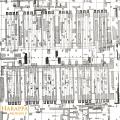
What was the so-called granary used for? There are twelve rooms in this 50 by 40 meter building. It was built on a giant mud-brick platform between 2200 and 2300 BCE, but there is an earlier building under at least one section. Between the rooms are sleeper walls. Excavations in 1998-2000 of this area led to no discovery of grain or pots. At Harappa this structure is next to the equally mysterious "workingmen's platforms" where we think some sort of labor involving water took place (but no traces of indigo dye are found). At Mohenjo-daro, this structure is next to the Great Bath. What purpose… >

Ancient Indus Dice

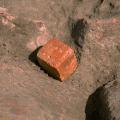
A cubical die with 1 to 6 dots was found in rubble during excavations at Harappa between 1995 and 2001. Many dice were also found at Mohenjo-daro, and John Marshall writes: "That dicing was a common game at Mohenjo-daro is proved by the number of pieces that have been found. In all cases they are made of pottery and are usually cubical, ranging in size from 1.2 by 1.2 by 1.2 inches to 1.5 by 1.5 by 15 inches ... The dice of Mohenjo-daro are not marked in the same way as to-day, i.e. so that the sum of the points on any two opposite sides amounts to seven. Instead of that, 1 is opposite 2, 3 o… >

The First Seal

The first seal, found at Harappa before 1872. Included in The British Museum's A History of the World in 100 Objects, a nice podcast of the chapter on this black stone unicorn seal is available for free at bbc.co.uk (Episode 16, Indus seal). Sir Alexander Cunningham, who led the first excavations there in 1872-73 and published news of the seal, wrote 50 years before we understood that the Indus civilization had existed: "The most curious object discovered at Harappa is a seal, ... The seal is a smooth black stone without polish. On it is engraved very deeply a bull, without a hump, looking to… >

An Ancient Indus Plate

  • Copper and bronze plates were probably used exclusively by wealthy upper class city dwellers.

Ancient Indus food, drink and cooking vessels would likely not be out of place in South Asia today, so familiar are the designs and materials A copper/bronze plate from Mohenjo-daro, terra cotta cooking pots from Nausharo (2200-2300 BCE), a stone (fuchsite) drinking vessel from Mohenjo-daro, and a copper/bronze cooking pot from Harappa. >

Ancient Indus Chronology vs. Other Ancient Civilizations

Whether or not the recent new pushing back ancient Chinese civilization thousands of years is true or not, it is likely that the origins of all ancient civilizations will be pushed back in the years to come. We know very little about possible antecedent cultures, whether in Rakigarhi, Balochistan, southwestern Iran or northern China. >

What Were the Cones?

Decorated terra cotta cones are found at both Mohenjo-daro and Harappa, but no one knows what they may have been used for. Some scholars suggest that they were hung on a string as a plumb-bob for use by masons and carpenters. Others feel that they may have been toys or possibly used for writing. No traces of ink have been found on the tips, but many of the tips are worn smooth or chipped. What do you think they may have been used for? >

The Male Dancer, Harappa

It might be nice to step into the new year with the figure of a dancer, for dancing is something - there is every indication from the dancing girl to this - that the ancient Indus people took very seriously. >

Possible Indus Crown

Not yet absolutely clear that this is an ancient Indus-style crown, but the chances are pretty good with find first reported in August. Reports on follow-up excavations in December by A.K. Pandey of the Archaeological Survey of India suggest it really could be from ancient Indus times, though final stratigraphy is awaited. The fact that the crown includes faience and carnelian, two typical ancient Indus precious materials, is promising. The August story can be found at Archaeology News Network. Read also the December report 4,000-Year-Old Copper Crown in India and a seal example of a … >

Humped Bull Figurine

Humped bull figurine from Mohenjo-daro with molded head that is twisted to the side, and a mold used to make the head. The legs were made separated rather than being joined together. Hand formed body and attached head. Eyes are carved with appliqué pupils as on the large hollow bull figurines. Material (Figurine and mold): terra cotta. Figurine – Dimensions: 5.23 cm height, 8.59 cm length, 2.92 cm width Mohenjo-daro, MD 832. Mold – Dimensions: 4.4 cm height, 3.7 cm length, 3.2 cm width. Mohenjo-daro, MD 1634. See also Seal with Two-Horned Zebu Bull. >

Pagination

  • First page
  • Previous page
  • …
  • Page 12
  • Page 13
  • Page 14
  • Page 15
  • Page 16
  • Page 17
  • Page 18
  • Page 19
  • …
  • Next page
  • Last page

Blog Posts by Subject (16)
  • Animals
  • Art
  • Children
  • City Life
  • Conferences
  • Crafts and Industry
  • Evolution
  • Excavations
  • Food
  • Homes
  • Media
  • Museums
  • Mysteries
  • News
  • People
  • Seals

follow us

Follow us on Facebook, Twitter and Instagram.
Videos on YouTube.
Occasional Newsletter.

donate

A 31 year-old non-profit serving 30,000 people a day.

© Harappa.com 1995-2026 31