
Home

Main navigation

  • home
  • slides
  • essays
  • articles
  • books
  • video
  • q & a
  • blog
Secondary menu
  • about us
    • scholars
    • privacy
    • support
    • image rights
    • credits
    • contact us
  • resources

Ancient Pots

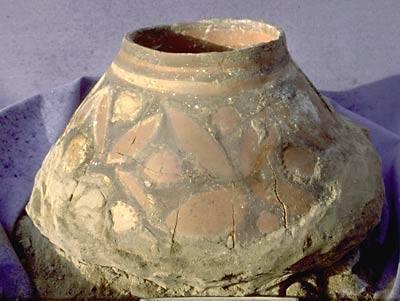
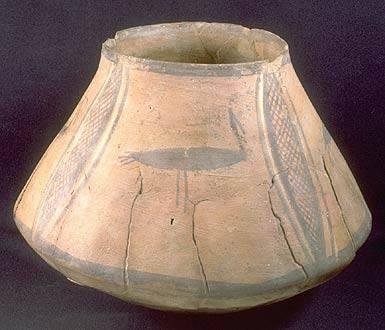
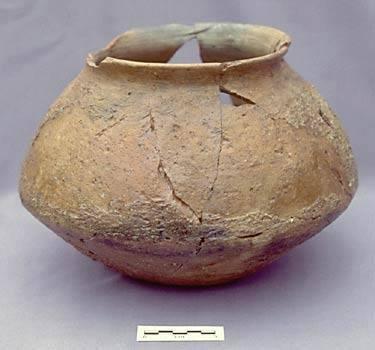
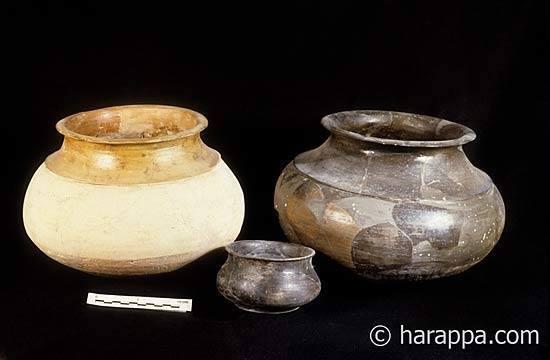
  • During the pre-Indus Ravi phase, is one of the earliest examples of the intersecting circle motif in the Indus region. This Ravi Phase hand-built pot with polychrome design was found next to the one with intersecting circles (previous slide). The net and bird motifs are found at other sites to the northwest in Bannu district, but they do not continue n into the later Kot Diji and Harappa Phases. Cooking pots during the Ravi Phase were made in large globular shapes that had a low center of gravity to keep them from tipping over when filled with food. In order to protect the fine clay from cracking due to the heat of the fire, the exterior was covered with a slurry of coarse sandy clay mixed with calcium carbonate nodules and some pebbles. One vessel has red slip on the neck and rim, while the other is fired grey-black. A small black fired bowl is seen in the foreground. Period III, Harappan, 2300-2200 BCE
    During the pre-Indus Ravi phase, is one of the earliest examples of the intersecting circle motif in the Indus region. This Ravi Phase hand-built pot with polychrome design was found next to the one with intersecting circles (previous slide). The net and bird motifs are found at other sites to the northwest in Bannu district, but they do not continue n into the later Kot Diji and Harappa Phases. Cooking pots during the Ravi Phase were made in large globular shapes that had a low center of gravity to keep them from tipping over when filled with food. In order to protect the fine clay from cracking due to the heat of the fire, the exterior was covered with a slurry of coarse sandy clay mixed with calcium carbonate nodules and some pebbles. One vessel has red slip on the neck and rim, while the other is fired grey-black. A small black fired bowl is seen in the foreground. Period III, Harappan, 2300-2200 BCE

Collection of Ravi Phase pottery featuring several pieces with a variety of detail and colors.

Image 1. Dating to c. 3100 BC, this hand-built pot with polychrome decoration is one of the earliest examples of intersecting circle motif in the Indus valley region. This motif along with others, such as the fish scale and pipal leaf designs, continue to be employed into the later Kot Diji and Harappa Phases.

Image 2. The second pot, found next to the first one, has a net and bird motif that did not continue into later main Indus phases.

Image 3. A Ravi Phase cooking pot.

Image 4. Ledge shouldered cooking pots with low neck and flaring rim from Nausharo in Balochistan.

See also Interaction Networks of the Ravi Phase and Ravi Phase Pottery Fragments

Art

Blog Posts by Subject (16)
  • Animals
  • Art
  • Children
  • City Life
  • Conferences
  • Crafts and Industry
  • Evolution
  • Excavations
  • Food
  • Homes
  • Media
  • Museums
  • Mysteries
  • News
  • People
  • Seals
© Harappa.com 1995-2026 31