Home

Main navigation

  • home
  • slides
  • essays
  • articles
  • books
  • video
  • q & a
  • blog
Secondary menu
  • about us
    • scholars
    • privacy
    • support
    • image rights
    • credits
    • contact us
  • resources

Secondary menu

  • about us
    • scholars
    • privacy
    • support
    • image rights
    • credits
    • contact us
  • resources

Ancient Indus Civilization Blog

354 posts, also carried on our Facebook page, about the ancient Indus Valley civilization, including important news, research and occasional visits to museums with ancient Indus artifacts.
The Great Jar of Chanhu-daro

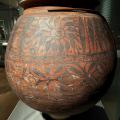
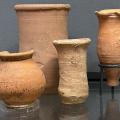
"Jar painted with birds. 2600-1900 BC, Terracotta with red slip and black painted decoration," is what the unvarnished description at the Museum of Fine Arts (MoFA), Boston reads; in truth this is one of the largest and most richly painted ancient Indus pots ever found. >

New! Unearthing the Mysteries of Harappa 1923-24

We are delighted to publish a new set of over 50 photographs from Daya Ram Sahni's second season at Harappa in 1923-24, before he or anyone knew about the ancient Indus civilization. Unearthing the Mysteries of Harappa is unique contribution to Indus archaeology curated by Dr. Nadine Zubair with contemporary commentary by Dr. Jonathan Mark Kenoyer. >

Carnelian and Gold Pendant

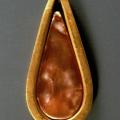
"Numerous inlaid shapes, such as droplets or circles, have been found at both Mohenjo-daro and Harappa," writes Dr. Mark Kenoyer, "but we did not know how these were incorporated into ornaments until we discovered a complete pendant at Harappa in 1987." >

Faience Shell Bangle

"Faience bangle made in the shape of a shell bangle or the stylized 'womb' motif, Harappa," writes Dr. Mark Kenoyer describing this exceptional piece. >

A Toponym in Chanhu-daro?

Can potential place-names in Indus inscriptions be isolated? Dr. Asko Parpola, in by far best single book on the subject, Decipering the Indus Script, after discussing how place names survive in people's names in Dravidian-speaking South India today, where "the name of the ancestral village often forms the first element of a person's proper name," continues by saying that "a similar survival of Harappan place-names in the Greater Indus Valley is not at all unlikely (§ 9.4). >

Chanhu-daro in Boston

The Museum of Fine Arts (MoFA) in Boston, USA has the largest collection of Indus artifacts outside India and Pakistan. MoFA collaborated with the American School of Indic and Iranian Studies in 1935-36 to excavate Chanhu-daro in Sindh, Pakistan, then British India. This mysterious, small and sophisticated craft manufacturing town about 80 miles south of Mohenjo-daro was discovered by N. G. Majumdar in 1931. He and the leader of the Chanhu-daro excavations Ernest J.H. Mackay had both worked at Mohenjo-daro earlier in the decade, so one can only imagine how thrilled they were to find another p… >

Queen Puabi of Ur's Burial Shroud

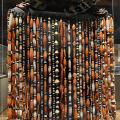
It is ironic that what is possibly one of the most spectacular examples of Indus craftsmanship and artistry was found not at Mohenjo-daro or Harappa, or even in the subcontinent, but in ancient Mesopotamia. >

Happy New Year 2023

As we come to the end - or is it the beginning? have we been here before? - of COVID, we look forward to another full year at Harappa.com. This includes the complete photographs from the 2nd season at Harappa 1923-24. >

Happy New Year 2022

As we start our 27th year on the web, Happy New Year to all our visitors and supporters around the world. The past year was particularly eventful: to celebrate the centennial of excavations at Harappa we opened a new section starting with the first discoveries by Daya Ram Sahni at the site in January 1921. In the coming year we will continue to explore the images from subsequent Archaeological Survey of India seasons at the site, 1921-1940, with the original words of the archaeologists who did the work. We also added numerous videos to our newly active YouTube channel, with many more prese… >

Ram @ Guimet

"The abundance of animal figurines at the major [Indus] urban centers suggests that they were commonly used in household and public rituals," writes Mark Kenoyer (Ancient Cities, p. 118). "All major domestic and wild animals are represented by terracotta figurines, but only a few animals were made in stone or faience. Two fragmentary stone sculptures of a seated ram were recovered from excavations at Mohenjo-daro," he continues; one was a faience amulet with a hole drilled through it, and there was also a larger sandstone of a seated ram [Image 3]. Ernest Mackay too noted how "model anima… >

Uniqueness of Ancient Indus Weight System

An exceptionally interesting, data-driven paper that suggests much was unique about the ancient Indus weight system: "To determine how different units of weight emerged in different regions, researchers compared all the weight systems in use between Western Europe and the Indus Valley from 3,000-1,000 BC." >

Mohenjo-daro Indian State Railways Brochure

An Indian State Railways brochure advertising Mohenjo-daro from approximately 1935. With the full text of the brochure (figures, captions charts and images): "Until quite recently, India's wonderful and varied history seemed to spring straight out of nothingness—like the warriors that sprang full-armed from the dragon's teeth sown by Cadmus." >

Major Ancient Indus Online Conference at Cambridge University

The ground-breaking Two Rains Project centered at Cambridge University is presenting a 7 event conference across 7 weeks online. >

The Indus Civilization: 100 Years of Discovery

An audio interview with Dr. Jonathan Mark Kenoyer with Wisconsin Public Radio explores his work and discoveries at Harappa, where stone tools suggest the area was inhabited as early as 10,000 BCE. An fine hour of highlights and key finds around crops, animals and culture and evidence for the earliest curries and writing. >

Ancient Indus Laddoos

An exciting find, not only because this is the first foodstuff preserved in such excellent condition, but also for the continuity with today, is this Times of India article on multi-grain, high-protein laddos found at the 4MSR site in Rajasthan on the border with Pakistan. >

Pagination

  • First page
  • Previous page
  • Page 1
  • Page 2
  • Page 3
  • Page 4
  • Page 5
  • Page 6
  • Page 7
  • Page 8
  • …
  • Next page
  • Last page

Blog Posts by Subject (16)
  • Animals
  • Art
  • Children
  • City Life
  • Conferences
  • Crafts and Industry
  • Evolution
  • Excavations
  • Food
  • Homes
  • Media
  • Museums
  • Mysteries
  • News
  • People
  • Seals

follow us

Follow us on Facebook, Twitter and Instagram.
Videos on YouTube.
Occasional Newsletter.

donate

A 31 year-old non-profit serving 30,000 people a day.

© Harappa.com 1995-2026 31