Home

Main navigation

  • home
  • slides
  • essays
  • articles
  • books
  • video
  • q & a
  • blog
Secondary menu
  • about us
    • scholars
    • privacy
    • support
    • image rights
    • credits
    • contact us
  • resources

Secondary menu

  • about us
    • scholars
    • privacy
    • support
    • image rights
    • credits
    • contact us
  • resources

Ancient Indus Civilization Blog

359 posts, also carried on our Facebook page, about the ancient Indus Valley civilization, including important news, research and occasional visits to museums with ancient Indus artifacts.
Glimpses of Ganweriwala

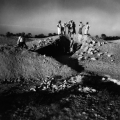
The least excavated of the five large known ancient Indus cities – Mohenjo-daro and Dholavira, Harappa and Rakigarhi – is Ganweriwala, discovered in the late 1980s by Rafique Mughal. Deep in the desert, far from towns and close to the Indian border, it is hardly written about. >

An Indus Monkey Figurine

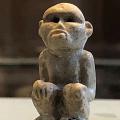
Of all the objects in the National Museum of Pakistan's Indus Gallery in Karachi, none quite so grabs your attention with its innate character as this tiny faience monkey from Mohenjo-daro. >

At the National Museum, Delhi

On a recent visit to Delhi, I found myself free for two hours and made my way in a rickshaw from Jama Masjid to the National Museum. It was a Sunday afternoon. After paying the entrance fee and breathlessly arriving at the Harappan Civilisation doorway, I found that it was closed for renovations! Momentarily dispirited, it turned out that there was another entrance and much of the gallery was still open – disaster averted. >

The Rhinoceros in Indus Times

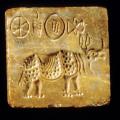
In the excellent new book The Story of India's Unicorns (Marg, 2018), which is all about the rhinoceros in the subcontinent, Shibani Bose writes in the section Evidence from Indus Sites that what "needs to be explained is the presence, and in cases like Kalibangan, the profusion of rhinoceros remains at some of the major urban sites of the civilization. >

Prisoners of War?

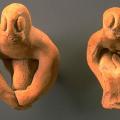
Shereen Ratnagar, in her brand new book The Magic in the Image Women in Clay at Mohenjo-daro and Harappa (soon to be reviewed here) offers an interesting conjecture around a set of male figurines found at the two iconic Indus sites. >

Iravatham Mahadevan Passes Away

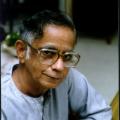
Iravatham Mahadevan, India's leading expert on the Indus script, and Padmashri award winner (2009), sadly passed away on Monday in Chennai. He was 89. His contributions towards the understanding of early Indian and Tamil scripts were unparalleled; he was also an extremely generous contributor to Harappa.com, one whose scholarship was widely recognized internationally. >

Happy New Year 2018

Happy New Year from all of us working Harappa.com: Ilona Aronovsky, Nadine Zubair (Editors), Vasant Dave (Community), Jeff Turner (Programming). With a lot to come in 2018 . . .. >

The Ghaggar-Hakra Paleochannel Controversy

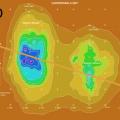
One of the nice thing about archaeology is the surprises. Surprises like finding the Ghaggar-Hakra aka Sarasvati River according to some was not flowing in any big way during the Indus period (3500 BCE-1800 BCE). >

The British Museum's New Ancient Indus Exhibit

Photographs of the new Indus section and an exclusive interview with Curator Daniela de Simone on how it all came together. >

Chanhiyun Jo Daro [Chanhu-daro] at the Met (II)

It may be hard to imagine that the best places to see artefacts of the ancient town of Chanhiyun Jo Daro [Chanhu Daro] are along the eastern seaboard of the United States. The Museum of Fine Arts in Boston and the Metropolitan Museum of Art in New York have a number of pieces from a US-funded team the worked at the site in 1935-36, led by Mohenjo daro excavator E.J.H. Mackay [see Dorothy Mackay, Finds at Chanhu-daro]. The Museum of Fine Arts in Boston lent some items to the Metropolitan which I was fortunate enough to see in the fall of 2016 [A Visit to the Met I]. It is over 7,000 miles… >

Long Seal M-1271 and the City Sign

This is pure speculation, but in looking at this long seal from Mohenjo-daro [M-1271], and seal signs from Mesopotamia which we know the meaning of, it could just be that some of the Indus signs are also names of places or of particular cities. >

Bridget Allchin (1927-2017)

Bridget Allchin, a pioneering woman archaeologist of South Asia, recently passed away. The Guardian has a fine summary of her remarkable career. >

Ancient Indus Weights

"The weights are precisely made, well polished and systematic (though unfortunately not inscribed with any Indus characters, which would have helped scholars to decipher the script's numerical system)." >

The Dilmun Bioarchaeology Project

A really nice and well-written blog entry about the analysis of bones and other material from ancient Dilmun [Bahrain], before we even knew where the civilization lay. >

Toys and Civilization

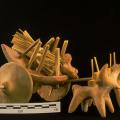
"The most important crafts were in the fields of textiles, ceramic manufacturing, stone carving, household artefacts such as razors, bowls, cups, vases and spindles, and the production of jewelry, statuettes, figurines and children's toys, some of which were mechanical in function." >

Pagination

  • First page
  • Previous page
  • Page 1
  • Page 2
  • Page 3
  • Page 4
  • Page 5
  • Page 6
  • Page 7
  • Page 8
  • …
  • Next page
  • Last page

Blog Posts by Subject (16)
  • Animals
  • Art
  • Children
  • City Life
  • Conferences
  • Crafts and Industry
  • Evolution
  • Excavations
  • Food
  • Homes
  • Media
  • Museums
  • Mysteries
  • News
  • People
  • Seals

follow us

Follow us on Facebook, Twitter and Instagram.
Videos on YouTube.
Occasional Newsletter.

donate

A 31 year-old non-profit serving 30,000 people a day.

© Harappa.com 1995-2026 31