Home

Main navigation

  • home
  • slides
  • essays
  • articles
  • books
  • video
  • q & a
  • blog
Secondary menu
  • about us
    • scholars
    • privacy
    • support
    • image rights
    • credits
    • contact us
  • resources

Secondary menu

  • about us
    • scholars
    • privacy
    • support
    • image rights
    • credits
    • contact us
  • resources

Ancient Indus Civilization Blog

354 posts, also carried on our Facebook page, about the ancient Indus Valley civilization, including important news, research and occasional visits to museums with ancient Indus artifacts.
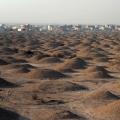
Looking for Dilmun

"I have a feeling that people do not 'discover lost civilizations'; but rather that, when the time is ripe, lost civilizations reveal themselves, using for the purpose whatever resources and people are to hand." >

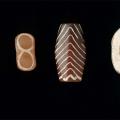
Etched Carnelian Beads

In 1933, Ernest Mackay wrote about his meeting with a craftsman named Sahebdino in Sehwan (Sindh) who showed him how to etch carnelian. >

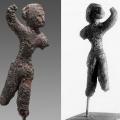
Male Indus Spear Thrower or Dancer

Jonathan Mark Kenoyer writes of this stunning figurine: "We also see the bun hairstyle on the miniature bronze sculpture of a male spear-thrower or dancer. Traces of eyes and nose are present. The hair is arranged in a bun on the back of the head . . ." >

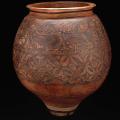
Chanhu-daro Jar Painted with Birds

One of the finest ancient Indus painted jars ever found, excavated at Chanhu-daro during the 1935-36 season led by Ernest MacKay, who wrote that "a circle motif takes a prominent place, and in vessels of this kind, about half the painted area is usually occupied by this pattern." >

Annals of the Careless Gravedigger

"The clearest example of the disregard with which gravediggers treated recent burials is the example of burials 194a and 194b. This burial is of a young woman and her infant, along with 32 pottery vessels that were carefully arranged along the edges of the burial pit . . .." >

A Free Complete Indus Font Package Available

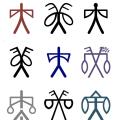
Four thousand years in the making, a free Indus script font package in scalable vector graphics for use in Word and other programs is now available. Over 1,800 signs represent the best Indus concordance by the longtime scholar Dr. Asko Parpola, engineered by the National Fund for Mohenjodaro. >

An Indus Monkey

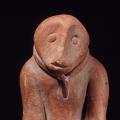
Monkey from Chanhuyin Jo Daro [Chanhudaro] "Pet monkeys were also probably a common sight in the bazaars or neighborhood markets," writes Mark Kenoyer. "Figurines of monkeys were were made of terracotta or glazed faience depicting one or more monkeys in various amorous of acrobatic poses. All the monkey figurines are of the short-tailed rhesus or macaque species, but the kong-tailed langurs would have been known to the Indus people living in Gujarat and the northern Punjab, because this species is quite common throughout these regions today. The fact that they did not make any figures of t… >

An Indus Sign Place Name?

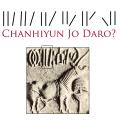
"Following these criteria, at least one Harappan toponym can be isolated with a fair amount of confidence. Altogether 70 Indus insciptions have been recovered from Chanhujo-daro. Eleven of them contain the sign [shown], which is not known from any of the other thousands of Indus inscriptions found at other sites," writes Asko Parpola. >

Springtime in Chanhiyun Jo Daro [Chanhu-daro] Sindh!

In the coming months we will feature posts on the site known as Chanhudaro, in Nawabshah, Sindh. This is one of the most interesting and highly-sophisticated "small towns" of the ancient Indus Valley. Since 2015, a French-Pakistani joint archaeological mission has started excavating the site. >

An Awesome Indus Exhibition Catalogue (free!)

Rediscovering Harappa | Through the Five Elements, A Special Exhibition at the Lahore Museum is an awesome catalogue that speaks to the process of coming to grips with Indus artefacts at the Lahore Museum in 2016. >

Should We Bury Mohenjodaro Again?

Senior archaeologists, including J.M. Kenoyer, Michael Jansen and Aurore Didier debate how to preserve this great site. Rebury? What do you think? >

The Mohenjodaro 1973 Conference

As the first Mohenjodaro Conference in 44 years just ended, it is worth looking back at the last one in 1973, when many of the same themes and concerns were raised. In hindsight, there is some evidence of impact, even if the situation at the site has continued to deteriorate and the basic issues of waterlogging, salinity and enroachment remain as acute as ever. >

Maurizio Tosi (1944-2017)

A leading figure in Italian archaeology and Co-Director of the Italy Oman international research program studying the beginnings of navigation and long-distance trade in the Indian Ocean died at the age of 72 yesterday in Ravenna, Italy. >

Indus River Fishing and Fishmongers: A Look Back

These postcards from the early 1900s and albumen photographs from the 1860s give us a glimpse into some of the fishing technologies and practices that were in use at the time. Combining information from multiple sources, including archival images and narratives, enables us to draw conclusions about what the material culture and social practices of the people of the Indus Valley might have been like. 1. The first postcard is from the early 1900s, probably around 1905 in Sindh Province. The fishermen are getting read to swim out into the water using a "boatless" technology which involves fl… >

Conference on Mohenjodaro & Indus Valley Civilization

A major conference on Mohenjodaro is opening today in Mohenjodaro, with leading scholars from around the world, including many who contribute to Harappa.com. >

Pagination

  • First page
  • Previous page
  • …
  • Page 2
  • Page 3
  • Page 4
  • Page 5
  • Page 6
  • Page 7
  • Page 8
  • Page 9
  • …
  • Next page
  • Last page

Blog Posts by Subject (16)
  • Animals
  • Art
  • Children
  • City Life
  • Conferences
  • Crafts and Industry
  • Evolution
  • Excavations
  • Food
  • Homes
  • Media
  • Museums
  • Mysteries
  • News
  • People
  • Seals

follow us

Follow us on Facebook, Twitter and Instagram.
Videos on YouTube.
Occasional Newsletter.

donate

A 31 year-old non-profit serving 30,000 people a day.

© Harappa.com 1995-2026 31