Home

Main navigation

  • home
  • slides
  • essays
  • articles
  • books
  • video
  • q & a
  • blog
Secondary menu
  • about us
    • scholars
    • privacy
    • support
    • image rights
    • credits
    • contact us
  • resources

Ancient Indus questions answered by Dr. Richard H. Meadow, Peabody Museum, Harvard University, and author of Harappa Excavation Reports 1986-1990 and South Asian Archaeology 1989. He has numerous articles on this website, and slideshows like Intro to Around the Indus in 90 Slides 2, Mystery at Mound F, Harappa, Harappa 2000-2001, Harappa Excavations 1995-2001, and the illustrated essays Recent Indus Discoveries and Highlights from Excavations at Harappa 1998-2000 and Early Developments of Art, Symbol, Technology in the Indus Valley Tradition.

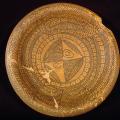
2. Is there any connection between the peacock of immortality of the Harappan burial urns and the peacocks later found on Roman urns?

Richard H. Meadow

Richard Meadow

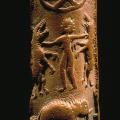
42. What is current thinking on the female diety with outstretched arms in the ancient Indus, Egyptian and Mesopotamian cultures?

Iravatham Mahadevan
Jane McIntosh
Richard H. Meadow
Rita P. Wright

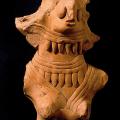
There is an image common to the Indus, Ancient Egyptian and Mesopotamian river cultures of a female deity standing with arms outstretched, holding two apparently deadly animals at bay. In the case of the Indus, the animals have been identified as 'tigers', in Ancient Egyptian and Mesopotamian they are crocodiles. What are the current theories on the iconography(ies) of these images; the reasons for their presence in three civilizations and what their presence might indicate in terms of the interrelationships between these cultures? Submitted by Ian Whitney

31. What is the best thing that could happen to ancient Indus studies?

Iravatham Mahadevan
Jane McIntosh
Richard H. Meadow
Shereen Ratnagar
Rita P. Wright

Jane McIntosh
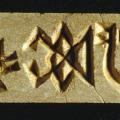
Decipherment of the Indus script would be helpful – if nothing else, it should conclusively settle the non-Aryan/Aryan dispute – but the amount of information this would yield is severely limited.

20. What can you say about the relationship of Harappan civilization to distant earlier cities?

Richard H. Meadow

We can say that the bulk of the development of the Harappan civilization happened in the Indus Valley itself. What can you comment about their relationship with other cities in Anatolia after the discovery of the city of Catal Huyuk by the English archaeologist James Mellaart in 1958. Is Catal Huyuk a more primitive precursor of this civilization or they parallel developments? Submitted by Martin Piattini Velthuis

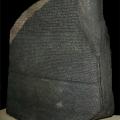
37. If you had to place money on where a future Rosetta stone with inscriptions in the ancient Indus language and another language might be found, where would you bet?

Iravatham Mahadevan
Jane McIntosh
Richard H. Meadow
Shereen Ratnagar
Rita P. Wright

Jane McIntosh

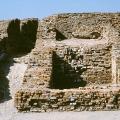
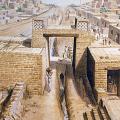
14. Why were the Citadel walls so high?

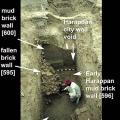
  • Harappa Wall Excavations
Richard H. Meadow

Why were there (terracotta) balls on the Citadel wall in Mohenjo-Daro? Have any more statues been found or anything like a temple? Have you found out any more information on the Indus leaders or their names? Submitted by Gharial Abramnova from school student questions

47. What is this terracotta basin?

Richard H. Meadow

Another interesting artifact in the National Museum is a terracotta basin. It is rectangular in shape rounded at edges, about 3 feet long and 9 inches deep. It is integrated with six legs 6 inches high and is rimmed. It has holes along its lower circumference, probably to drain out liquid. Could it be a baby's bath tub? Was it used to wash raw stones prior to chipping away impurities in bead making process? Or was there any other use? Submitted with illustration by Vasant Dave

19. What have been the most interesting findings about the Harappan Civilization during the last two decades?

Iravatham Mahadevan
Jane McIntosh
Richard H. Meadow
Shereen Ratnagar
Rita P. Wright

What in your view are the most exciting, significant or illuminating insights gained? What avenues would you like to explore in future asssuming absolutely no practical or financial constraints whatsoever? Submitted by Paul Toth and Gharial Abramnova from school student questions

43. How does the dolphin appear in Indus iconography?

Richard H. Meadow

Is there any sign of the blind dolphin of the Indus?

Richard Meadow
I do not think the Indus dolphin appears in the iconography, although I stand to be corrected. The gharial or Indus crocodile does appear depicted on iconography of the Indus period, primarily on moulded "tablets" or "tokens".

15. How peaceful was Harappan Civilization?

Iravatham Mahadevan
Jane McIntosh
Richard H. Meadow
Shereen Ratnagar

Harappan Civilisation is often characterised (for example by the Director of the British Museum on a Radio 4 series) or even idealised as peaceful and without warfare or conquest, (in comparison with all other First Civilisations) with its cities linked across vast regions and unified (variously) by trade and/or religion. Rulers have even been said to be priests or a theocracy. These interpretations are often presented as facts in books or articles for general consumption.

Pagination

  • Page 1
  • Page 2
  • Page 3
  • Next page
  • Last page
Answers by Author (6)
  • Asko Parpola
  • Iravatham Mahadevan
  • Jane McIntosh
  • Richard H. Meadow
  • Rita P. Wright
  • Shereen Ratnagar
© Harappa.com 1995-2026 31