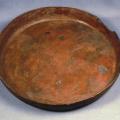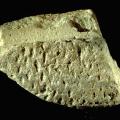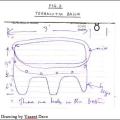
Another interesting artifact in the National Museum is a terracotta basin. It is rectangular in shape rounded at edges, about 3 feet long and 9 inches deep. It is integrated with six legs 6 inches high and is rimmed. It has holes along its lower circumference, probably to drain out liquid. Could it be a baby's bath tub? Was it used to wash raw stones prior to chipping away impurities in bead making process? Or was there any other use? Submitted with illustration by Vasant Dave

Ancient Indus questions answered by Dr. Richard H. Meadow, Peabody Museum, Harvard University, and author of Harappa Excavation Reports 1986-1990 and South Asian Archaeology 1989. He has numerous articles on this website, and slideshows like Intro to Around the Indus in 90 Slides 2, Mystery at Mound F, Harappa, Harappa 2000-2001, Harappa Excavations 1995-2001, and the illustrated essays Recent Indus Discoveries and Highlights from Excavations at Harappa 1998-2000 and Early Developments of Art, Symbol, Technology in the Indus Valley Tradition.