Home

Main navigation

  • home
  • slides
  • essays
  • articles
  • books
  • video
  • q & a
  • blog
Secondary menu
  • about us
    • scholars
    • privacy
    • support
    • image rights
    • credits
    • contact us
  • resources

HARP (Harappa Archaeological Research Project) a group of scholars from a variety of fields dedicated to advancing the study of the ancient Indus Valley civilization.

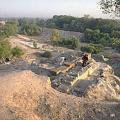
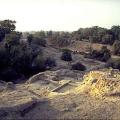
Circular platform and the "Granary" area , Harappa

Overview of Trench 43 in 2000 looking north, showing the HARP-exposed circular platform in the foreground and the "granary" area in the background. Note the wall voids to the west, south, and east of the circular platform (see also image 86) >

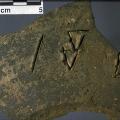
Terracotta bead

Terracotta bead with molded script (H2000-4494/9881-01) found in Trench 43. >

Ravi phase stone beads

Many broken and unfinished stone beads of carnelian (red-orange) and amazonite (blue-green) were found in the floor levels associated with the Ravi phase pits and hearths. (See also slide 119.) >

Mound AB, Trench 39N bead debris

This plan shows concentrations of bead manufacturing debris on several superimposed Ravi phase floor levels that indicate the positions of actual work areas. >

Kot Diji Charcoal Dating

At the bottom of the Kot Diji phase storage vessel was a broken lid and charcoal that was used for dating the fill inside the pot. There is a 91 percent chance that the date obtained from this charcoal falls between 2602 and 2445 radiocarbon years B… >

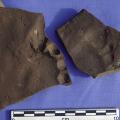
Enigmatic sandstone objects

Fragments of a grooved red sandstone object or objects were found in the upper disturbed levels of Mound AB, Trench 39N. Similar fragments were recovered in the excavations by Rai Bahadur Daya Ram Sahni in 1921-22, but so far none of them fit to… >

Trench 11 excavations

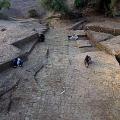
The Trench 11 area showing the perimeter wall (on the left), the curtain wall, and the Period 3C drain that cut deeply into the Period 3B deposits (see the labeled plan in 72). The sediments outside of the perimeter wall are hard packed ashy debris… >

Broken Harappa phase ringstone

To the Northeast of the area shown in Image 449, the remains of a broken ringstone were found in the upper fill just to the North of the northern wall of a room. (See plan in 85.) This is reminiscent of the broken ringstones found on Mound AB (6… >

Ravi Phase Motifs

Whereas many other motifs of the Ravi Phase (Period 1) disappear in the later Kot Diji Phase (Period 2), the intersecting circle and fish scale motifs continued to be used, but they came to be executed in black paint on a red slip. In this image the… >

Steatite beads

Steatite beads from the Early Harappan Periods at Harappa. On the right are many different styles of Ravi Phase beads (circa 3300-2800 BC). Note the blue green glazed bead in the center and the row of unfired beads in the second to the bottom row. T… >

Pagination

  • First page
  • Previous page
  • …
  • Page 15
  • Page 16
  • Page 17
  • Page 18
  • Page 19
  • Page 20
  • Page 21
  • Page 22
  • Page 23
  • …
  • Next page
  • Last page
© Harappa.com 1995-2026 31