Home

Main navigation

  • home
  • slides
  • essays
  • articles
  • books
  • video
  • q & a
  • blog
Secondary menu
  • about us
    • scholars
    • privacy
    • support
    • image rights
    • credits
    • contact us
  • resources

Harappa Archaeological Research Project

HARP (Harappa Archaeological Research Project) a group of scholars from a variety of fields dedicated to advancing the study of the ancient Indus Valley civilization.

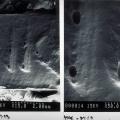
Electron microscope analysis

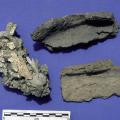
  • Electron microscope analysis

For the second group of tablets the leading edge of the incision is more rounded and there are grooves along the wide slope of the cutting angle. The third type of tool is equally distinct. When combined with tablets found in earlier years there are… >

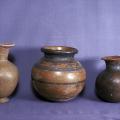
Three vessels

  • Three vessels

Three vessels of the Late Harappan Cemetery H period (after 1900 BCE). In the center is a small painted globular pot from a burial group. These forms and their surface treatments are quite distinct from the characteristics of the preceding Harappan … >

Harappa Mound E

  • Harappa Mound E

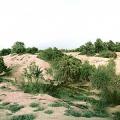
Panoramic view of Mound E with modern Harappa town at the far left. In the center are excavation areas from 1987-1990. At the right is the area of Trench 54, excavated in 2000, that exposes the earliest levels of the ancient Harappan Period city. >

Different types of beads

  • Different types of beads

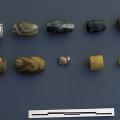
The ancient Harappans went to great efforts to obtain exotic colored stones for making beads of different shapes and sizes. >

Faience cloven hoof

  • Faience cloven hoof

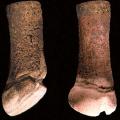
Tiny cloven hoof made of two-color faience probably from a composite figurine. This cloven hoof could represent any number of animals, but the most common in the Harappan artistic repertoire are cattle and water buffalo (H2000-4440/2121-90, Mound E,… >

Terra cotta tablet

  • Terra cotta tablet

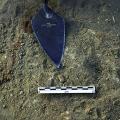
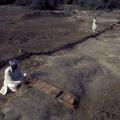
Terra cotta tablet in situ (at tip of trowel) in Trench 54 South. >

Broken canisters

  • Broken canisters harappa

Broken canisters, often with glassy vitrified surfaces, were found throughout the Trench 54 South workshop debris. Lumps of frothy faience slag with embedded fragments of bone were also quite common in the debris. >

Brick drains

  • Brick drains

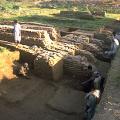
Baked brick drains and possible doorways were missed by brick robbers in Trench 57 West. The massive mud brick platforms may have served as foundations for houses. >

Clearing outside the southeast corner of the "granary"

  • Clearing outside the southeast corner of the granary

Clearing outside the southeast corner of the "granary" revealed the underlying mud-brick platform and the top of the baked brick revetment. >

Excavations along the northeast perimeter of Mound F

  • Excavations along the northeast perimeter of Mound F

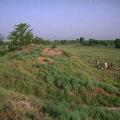
Excavations along the northeast perimeter of Mound F (Trench 41NE) identified traces of a massive mud-brick wall that protected the interior settlement (to the left) from floods and unwanted visitors. This perimeter wall of Mound F was buried under … >

Pagination

  • First page
  • Previous page
  • …
  • Page 16
  • Page 17
  • Page 18
  • Page 19
  • Page 20
  • Page 21
  • Page 22
  • Page 23
  • Page 24
  • …
  • Next page
  • Last page
Unicorn Seal, Mohenjo-daro
© Harappa.com 1995-2026 31