HARP (Harappa Archaeological Research Project) a group of scholars from a variety of fields dedicated to advancing the study of the ancient Indus Valley civilization.
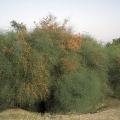
The new green shoots of the thorny wild caper trees of Sindh and Punjab can be crushed with alkaline salts to create a paint-like substance that will bleach white lines on carnelian when heated to the proper temperature. >
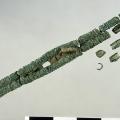
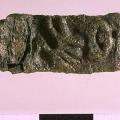
This unique discovery of a coiled copper-alloy wire necklace (H2000/2242-01) has traces of fibers preserved on the inside. Recent studies indicate that the fibers are from the wild silk moth, Antheraea mylitta, commonly called "Tussar" silk today (I… >
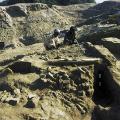
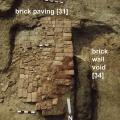
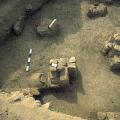
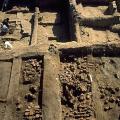
The excavations of the lower slope area of Trench 54 South revealed a robbed brick wall void filled with rubble (foreground) and a room filled with manufacturing debris from faience and steatite working. >
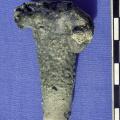
A glazed terra cotta kiln setter with bone fused onto the splayed surface appears to have been an important part of the firing process in the Trench 54 South faience workshop. >
In Trench 57 West, excavations in 2001 revealed a large paving of backed bricks that may have been part of a courtyard or room originally bordered by massive baked brick walls. >
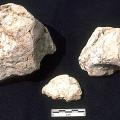
Large lumps of a bluish grey paste that may have been used to make faience objects. Faience is made by melting quartz rock and then regrinding the glassy frit to make a paste that is then fired once again. Indus faience is sometimes multicolored (se… >
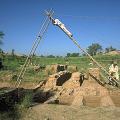
Continued excavations in 2000 focused on the northern area of Trench 43. Here too were found fallen walls and well preserved living floors. Note the Period 3C circular platform in the background at a considerably lower level. >