Home

Main navigation

  • home
  • slides
  • essays
  • articles
  • books
  • video
  • q & a
  • blog
Secondary menu
  • about us
    • scholars
    • privacy
    • support
    • image rights
    • credits
    • contact us
  • resources

HARP (Harappa Archaeological Research Project) a group of scholars from a variety of fields dedicated to advancing the study of the ancient Indus Valley civilization.

Ravi Phase beads

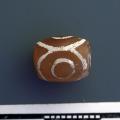
These beads from the Ravi Phase (3300-2800 BCE) at Harappa have been made from carnelian and amazonite (right hand bead). The raw material used to make these beads was brought to the site from source areas probably in Gujarat, over 900 km to the sou… >

Sealing find

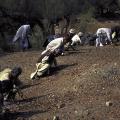
One of the most exciting discoveries of the 1998 excavation season was finding a seal impression or sealing in a hearth of the Early Harappan Period (Kot Diji Phase, circa 2800 BCE). Here William Belcher is seen photographing the important discovery… >

"Granary area"

Limited excavations in the granary area at Harappa starting in 1997 (Trench 41 area) and 1999 have begun a new examination of this important building, first excavated in the 1920s. Although referred to as a granary, this characterization by earlier … >

Bead Pot

Initial probing to determine the contents of this small pot (79) from Trench 38, Late Harappan Period, revealed the presence of carnelian and faience beads. >

Early levels of the Harappan city

After surface collections, the Trench 54 area of Mound E was selected for excavations because it allowed the exposure of a large area of the earliest levels of the ancient Harappan Period city, dating to approximately 2600-2450 BC. >

Faience tablet or standard

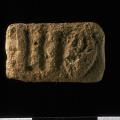
This unique mold-made faience tablet or standard (H2000-4483/2342-01) was found in the eroded levels west of the tablet workshop in Trench 54. On one side is a short inscription under a rectangular box filled with 24 dots. The reverse has a narrativ… >

Steatite bead blanks

A high concentration of tiny steatite bead blanks was found on an ashy floor near the kiln dump in Trench 54. Each (modern) bamboo piece is pointing at one bead. >

Mark Kenoyer photographing

J. Mark Kenoyer using the bamboo ladder to get an overview of the excavation area in Trench 54 South. Photography is done using digital, film, and video cameras. >

Glazing faience

In order to glaze faience it must be fired at approximately 940 degrees Celsius for several hours. The red color of the glowing faience barely visible inside the canister indicates that this temperature has been reached. This was confirmed by using … >

Overview of the Harappa "granary" area

Overview of the "granary" area looking towards the southeast. The walls have been partly restored for conservation purposes by the Department of Archaeology and Museums, Government of Pakistan. >

Pagination

  • First page
  • Previous page
  • …
  • Page 18
  • Page 19
  • Page 20
  • Page 21
  • Page 22
  • Page 23
  • Page 24
  • Page 25
  • Page 26
  • …
  • Next page
  • Last page
© Harappa.com 1995-2026 31