Home

Main navigation

  • home
  • slides
  • essays
  • articles
  • books
  • video
  • q & a
  • blog
Secondary menu
  • about us
    • scholars
    • privacy
    • support
    • image rights
    • credits
    • contact us
  • resources

HARP (Harappa Archaeological Research Project) a group of scholars from a variety of fields dedicated to advancing the study of the ancient Indus Valley civilization.

Plan of Mound E perimeter wall segment

Plan view of the portion of perimeter wall [250] excavated in 2001. The pattern of the bricks suggests a complicated series of additions to the inside of the structure that are not yet well understood. There may have been a gateway at the northweste… >

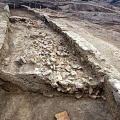
Harappa Trench 39S

Looking up from the bottom of Trench 39S one can see habitation levels spanning over 500 years from approximately 3300 BCE at the bottom to 2800 BCE at the top. The white arrow pointing north is lying at the edge of a large storage pit dug into natu… >

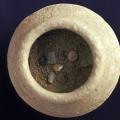
Terra cotta necklace find

Conservators very carefully excavate and consolidate a necklace of terra cotta beads found in the Ravi Phase levels at Harappa in 1998. On the left is Arif Husain of Karachi University assisting Elizabeth Robertson of the Smithsonian Institution. >

Inscribed sherds

Many sherds inscribed after firing have single geometric signs. This collection of Early Harappan sherds from Periods 1 and 2 (c. 3300-2800 BCE) show a range of geometric signs that are roughly similar to later signs in the Indus script. >

City Wall

The curving line of the mud brick city wall at the eastern edge of Mound E rose high above the level of an ancient street that followed the exterior of the wall. A small apron or divider wall made of mud bricks was set right in the middle of the str… >

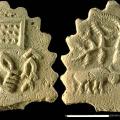
Dish or lid

Late Harappan Period dish or lid with perforation at edge for hanging or attaching to large jar. It shows a Blackbuck antelope with trefoil design made of combined circle-and-dot motifs, possibly representing stars. It is associated with burial pott… >

Faqir in Sindh

This man is wearing prayer beads made of carnelian around his neck. >

Copper razor

A copper razor (H2000/2164-01) was found in the debris layers at the edge of the kiln dump in Trench 54. Wrapped with fibers, pseudomorphs and impressions of which are preserved in the in the corroded copper, this type of curved razor may have been … >

Two gold beads

These two gold bead were originally part of the same ornament. Thin gold foil was placed over the outside of a sandy core around a copper tube (H2000-4382/2087-02, Mound E, Trench 54). >

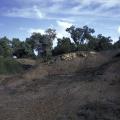
Trench 54 looking south

Overview of Trench 54 looking south to the slope on the far side where the steatite and faience workshop was discovered. >

Pagination

  • First page
  • Previous page
  • …
  • Page 9
  • Page 10
  • Page 11
  • Page 12
  • Page 13
  • Page 14
  • Page 15
  • Page 16
  • Page 17
  • …
  • Next page
  • Last page
© Harappa.com 1995-2026 31