HARP (Harappa Archaeological Research Project) a group of scholars from a variety of fields dedicated to advancing the study of the ancient Indus Valley civilization.
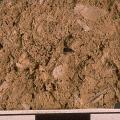
A large concentration of straw impressions was found in one part of the floor next to the platform, but there is no evidence of chaff from processing grain as was suggested by earlier excavators (Trench 43). >
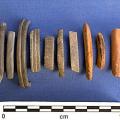
Kot Diji phase terracotta bangles include many styles and incised and painted decorations. Grey bangles were produced in kilns with a reducing atmosphere and red bangles were fired in an oxidizing atmosphere. >
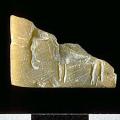
Obverse of an unfinished elephant seal (H2000-4474/8994-01) in steatite from the Kot Diji phase levels at Harappa. This is the earliest seal with an elephant motif known from the region and may have been a prototype for later Indus seals. >
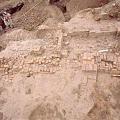
The brick wall may have been the foundation for a wooden superstructure and the white tags show where wooden posts were fixed. The doorway and threshold are located on the right side of the photograph above the scale. >
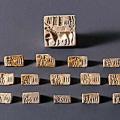
An additional six copies of these tablets, again all with the same inscriptions, were found elsewhere in the debris outside of perimeter wall [250] including two near the group of 16 and two in debris between the perimeter and curtain walls. Here al… >
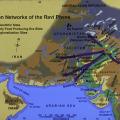
Arrows extend from Harappa to likely source areas for raw materials such as agate, lapis lazuli, steatite, marine shell and copper. These raw materials were transformed into ornaments and tools at Harappa for local trade. The Ravi Phase denotes a… >
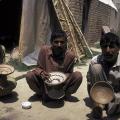
Mohammad Nawaz (center) and Zaman (right) holding replicas of hand-built Ravi style pottery. Bashir on the left holds an original Ravi bowl-on-stand that dates to around 3300 BCE. >
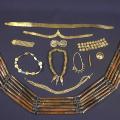
Fired steatite was an important material used in many different types of Indus jewelry. Steatite beads are found in all four necklaces in the center of this collection of jewelry from Harappa and Mohenjo-daro. >