Home

Main navigation

  • home
  • slides
  • essays
  • articles
  • books
  • video
  • q & a
  • blog
Secondary menu
  • about us
    • scholars
    • privacy
    • support
    • image rights
    • credits
    • contact us
  • resources

Ancient Indus questions answered by Rita P. Wright, Associate Professor in the Department of Anthropology at New York University, Assistant Director of the Harappa Archaeological Research Project, and Director of the Beas Landscape and Settlement Survey near Harappa. She is author of The Ancient Indus: Urbanism, Economy, and Society and on this website the essay Beas Landscape and Settlement Survey.

44. Who is excavating in the ancient Indus area right now, and where and can students participate?

Richard H. Meadow
Shereen Ratnagar
Rita P. Wright

Submitted bu Ane À Ailes

42. What is current thinking on the female diety with outstretched arms in the ancient Indus, Egyptian and Mesopotamian cultures?

Iravatham Mahadevan
Jane McIntosh
Richard H. Meadow
Rita P. Wright

There is an image common to the Indus, Ancient Egyptian and Mesopotamian river cultures of a female deity standing with arms outstretched, holding two apparently deadly animals at bay. In the case of the Indus, the animals have been identified as 'tigers', in Ancient Egyptian and Mesopotamian they are crocodiles. What are the current theories on the iconography(ies) of these images; the reasons for their presence in three civilizations and what their presence might indicate in terms of the interrelationships between these cultures? Submitted by Ian Whitney

82. Have the remains of a marketplace or shop been found at any of the Indus sites?

Dennys Frenez
Jonathan Mark Kenoyer
Massimo Vidale
Randall Law
Rita P. Wright

Are there any structural remains in any of the Harappan sites to point to a marketplace or shop where goods were bought and sold? What do scholars have to say about the market system in those days, apart from the well-known theory of goods being stored in a storehouse and taken by boats for trade?

Asked by Biswajeet Rath

19. What have been the most interesting findings about the Harappan Civilization during the last two decades?

Iravatham Mahadevan
Jane McIntosh
Richard H. Meadow
Shereen Ratnagar
Rita P. Wright

What in your view are the most exciting, significant or illuminating insights gained? What avenues would you like to explore in future asssuming absolutely no practical or financial constraints whatsoever? Submitted by Paul Toth and Gharial Abramnova from school student questions

83. What do we know about the ecology of the Indus Valley (and the adjacent areas) during the period in which this civilization prospered?

Gwen Robbins Schug
Paolo Biagi
Shereen Ratnagar
Rita P. Wright

How much of the area that we now see as desert was actually forested in those times?

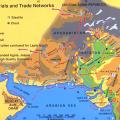
12. Was the trade relationship between the Harappans and the Mesopotamians a direct one?

Iravatham Mahadevan
Jane McIntosh
Richard H. Meadow
Shereen Ratnagar
Rita P. Wright

Or were there any mediators in Iran (which had a civilization in ancient periods which was located in the southwestern part of fertile cresent region)? As you know, the Rosetta Stone was issued by Ptolemy \/ - which was due to interactions between the Greeks and Egyptians. This interaction started with settling of Ionians and Cretans as per by Herodotus. Could it be that these mediators would have used both the cuneiform and Indus valley script? What are the possibilities of finding a bilingual according to you? Submitted by Arthur Evans

84. Is it possible for cotton used by the Indus Valley Civilization to preserved still after all these years?

Gwen Robbins Schug
Jonathan Mark Kenoyer
Massimo Vidale
Rita P. Wright

For arguments sake if we assume the people of IVC wrote manuscripts in such mediums as cotton, is it possible for those manuscripts to be still preserved? If so, under what conditions, would they be preserved?

18. Why did the Harappans go to such extraordinary lengths and distance to obtain raw materials such as copper?

Jane McIntosh
Richard H. Meadow
Shereen Ratnagar
Rita P. Wright

Why (as far as I know) was all the chert obtained from the Rohri Hills and distributed everywhere else? What does this tell us about the nature of the Harappan economy and society? Submitted by Gharial Abramnova from school student questions

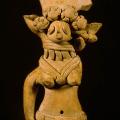
85. What was the function of the figurines? Were they sacrificial objects?

Massimo Vidale
Rita P. Wright

Rita P. Wright and Massimo Vidale answer.

25. Was feminine beauty exemplified by a race different than the one inhabiting the IVC?

Jane McIntosh
Shereen Ratnagar
Rita P. Wright

A stark contrast between the features of human figurines and masks of IVC period strikes me. Men have a narrow sloping forehead like a Neanderthal, whereas women exhibit a prominent vertical forehead with a much higher hairline. If my observation stands scrutiny, one possibility that comes to mind is that: Feminine beauty was exemplified by women of a race other than the one inhabiting the IVC. Somewhat like all Barbie dolls possess long limbs irrespective of which race they are supposed to represent. Does that hypothesis make sense? Submitted by Vasant Dave

Pagination

  • Page 1
  • Page 2
  • Page 3
  • Next page
  • Last page
Answers by Author (6)
  • Asko Parpola
  • Iravatham Mahadevan
  • Jane McIntosh
  • Richard H. Meadow
  • Rita P. Wright
  • Shereen Ratnagar
© Harappa.com 1995-2026 31