I would like to know something about the nature of the administrative machinery, their irrigation patterns and nature of society...though i am fully aware that the type of sources we have to analyse these things are minimal.
Massimo Vidale
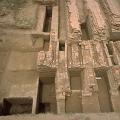
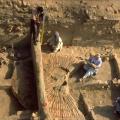
Prof. J. M. Kenoyer, who has recently investigated the Granary at Harappa, is the best person to answer these questions. My impression is that the evidence for the "Granaries" identification is quite flimsy; the type of dig made in the past, simply, was not accurate enough for such an identification, and the various theories so far proposed are pure conjectures. One of these is that the large compartmented building of Harappa was a weaving plant; I like the idea, but at present it is just another guess.
Jane McIntosh
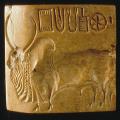
Decipherment of the Indus script would be helpful – if nothing else, it should conclusively settle the non-Aryan/Aryan dispute – but the amount of information this would yield is severely limited.
This case is being made on the basis of circumstantial evidence. Did the people of Indus Valley Civilization interact with people of the Rigveda? What is the relationship between the Indus Valley people and Vedic people? Submitted by Shubha Khandekar and others
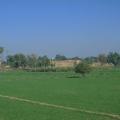
We keep reading that agriculture was prevalent in the Indus Valley Civilisation. But when I read about the planning of the settlements, I was confused as to where exactly the fields were located. Were they outside the walled settlements? Or were they located somewhere within the Lower Town? Submitted by Rizowana Hussaini
Or is there any indication of war between these populations?
Rita Wright
There are Mesopotamian texts from the Akkadian period (2350 – 2200 BC) that speak about battles in which the people of Meluhha were involved. This seems kind of far fetched since the battles took place in what today is eastern Iran. There is very little evidence for warfare in the Indus, as you probably know, but still they appear to have thought they were engaged in battles with the Indus or for political reasons they found it useful to say so.
I would like to know if the valley was green and fertile at that time... and if the cultivation of sugar cane, a highly aggressive culture, and the use of timber to construct led to environmental degradation of the area which then became dry and hostile.
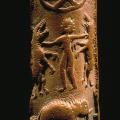
There is an image common to the Indus, Ancient Egyptian and Mesopotamian river cultures of a female deity standing with arms outstretched, holding two apparently deadly animals at bay. In the case of the Indus, the animals have been identified as 'tigers', in Ancient Egyptian and Mesopotamian they are crocodiles. What are the current theories on the iconography(ies) of these images; the reasons for their presence in three civilizations and what their presence might indicate in terms of the interrelationships between these cultures? Submitted by Ian Whitney