Home

Main navigation

  • home
  • slides
  • essays
  • articles
  • books
  • video
  • q & a
  • blog
Secondary menu
  • about us
    • scholars
    • privacy
    • support
    • image rights
    • credits
    • contact us
  • resources

Asko Parpola

Ancient Indus questions answered by Dr. Asko Parpola, Professor at the University of Helsinki, Finland, and author of Deciphering the Indus Script and The Corpus of Indus Seals and Inscriptions. He has numerous articles on this website, and the essay Deciphering the Indus Script.

74. Are there tablets or seals having paragraphic Indus Script or is it just used for decorations and captions?

Asko Parpola
Mayank Vahia

The Babylonian texts like Code of Hammurabi in Akkadian and Sumerian seals of Urukagina state legal codes and regulations. Although the Indus script hasn't been deciphered, have any of the excavations resulted in similar seals which contain major textual references or is the Indus script just used as a tool for decoration?

75. Where does the interpretive controversy with Farmer on the Indus script stand today?

Asko Parpola
Massimo Vidale
Mayank Vahia

Answered by Massimo Vidale, Asko Parpola and Mayank Vahia.

80. Were there any schools, universities or academies at Indus sites?

Asko Parpola
Jonathan Mark Kenoyer
Massimo Vidale

Massimo Vidale
We have no evidence, but they certainly had, because complex culture needs to transmitted by specialized institutions. The "Assembly hall" on the Citadel of Mohenjo-Daro might have been something similar, if the excavators were right.

Jonathan Mark Kenoyer
So far we have not found any buildings that could be interpreted as institutions of education. Indus peoples undoubtedly had ways to teach their children, but they were probably done in small houses that do not look any different from other houses.

27. How did Harappans measure value?

Asko Parpola
Iravatham Mahadevan
Richard H. Meadow

How did they "pay"? I have often wondered how this took place in practice, assuming there was no currency as we understand it. How were luxury / prestige items such as gold and gemstone jewelery obtained by those who had access to them. How did ordinary people trade and obtain necessities and adornments, eg pots, cloth, food, bangles and everyday jewelery? What was the role of the rulers?

1. What happened after 1800 BCE?

Asko Parpola

I would like to draw some comments about the nature of the transformation that took place after 1800 BC, the spread of the Harappan culture over different parts of the subcontinent and their linkages with some of the Megalithic cultures of South India, non-Harappan Chalcolithic cultures and Vedic cultures. Submittted by Narottam Vinit

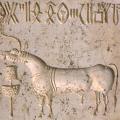
49. One unicorn horn or two?

Asko Parpola

Is it a bull (according to a recent British Museum/BBC history of the World series) and not a unicorn? A bull with two horns always shown from the side? A mythical one-horn beast? What is his significance? Submitted by Gharial Abramnova from school student questions

36. Are there still many unread ancient Mesopotamian texts in archives that if researched properly, might cast light on the Indus civilization?

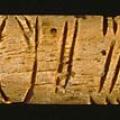
  • Incised ivory rod from Mohenjo-daro MD-412
Asko Parpola

Asko Parpola
Yes, there are still many unread cuneiform texts in the museums. [The ancient Indus trade village in Mesopotamia of] Guabba could be identified from one such text.

58. Why has the language of Harappa not been deciphered?

Asko Parpola
Jonathan Mark Kenoyer
Massimo Vidale
Nisha Yadav

What are the difficulties which makes it impossible to decipher the Harappan language? Aren't there any similarities with other languages?

Scholars answer another question from site visitors.

62. How old is the oldest ancient Indus writing?

Asko Parpola
Jonathan Mark Kenoyer
Massimo Vidale
Mayank Vahia
Nisha Yadav

Another question answered by expert ancient Indus scholars.

65. Why have Western and Indian experts studied the Harappan civilisation?

Asko Parpola
Massimo Vidale
Shereen Ratnagar

Among the more intriguing questions from site visitors, answered by three Indus archaeologists, from India, Italy and Finland.

Pagination

  • Page 1
  • Page 2
  • Next page
  • Last page
Large unicorn seal
Answers by Author (6)
  • Asko Parpola
  • Iravatham Mahadevan
  • Jane McIntosh
  • Richard H. Meadow
  • Rita P. Wright
  • Shereen Ratnagar
© Harappa.com 1995-2026 31