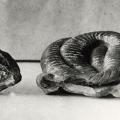
Four terracotta animal figures in a row. Left: possibly an armadillo, find no. Ab 923, found in Mound F in the parallel wall area, and which is published in Vats 1940 (Vol. II) Pl. LXXVII no. 26, and described by Vats: “No. 26 (Ab923) is a fine … >
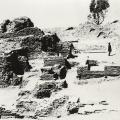
Mound A-B Trench B: General View from East-South East. This image was published in Vats' monograph as Pl XXX, d. "In the high western part [of mound A-B] (PI. XXX, d, left back-ground) in square P 18/4, Stratum I. Rai… >
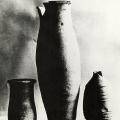
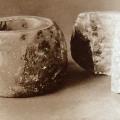
"The pottery found at Harappa is of the light red or brown colour, excepting some specimens which are black. The latter colour is produced by the application of a variety of earth after it has been fired once." >
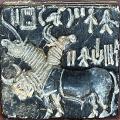
Describing another composite animal seal with the same three animals – short-horned bull or bison, unicorn and goat – Dr. Kenoyer writes (Ancient Cities, p. 194): "Square seal with multiple creatures combined to make a single animal. The rounded… >
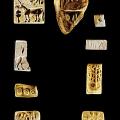
A collection of inscribed objects found along the main street leading to the southern gateway of Mound E at Harappa. The fragmentary seal on the left is the earliest seal found to date, and depicts a bovine carved in a very archaic style. At the top… >
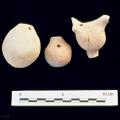
Hollow egg shaped whistles may have been used for making music and for accompaniment to singers, a tradition that is still present in rural areas of Pakistan and India. The bird shaped whistles were probably used to amuse children and may represent … >
The excavation map is defined by the Harappa Archaeological Research Project, and shows the extent of occupation phases during different chronological phases. The major excavation areas featured in this presentation are Trenches 38, 39 and 42 on Mou… >
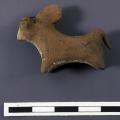
This figurine is from Early Harappan (Period 2, Kot Diji Phase) levels at Harappa. The legs on are joined together, and along with the highly stylized hump, delicate horns and tail, are characteristic stylistic features of the Early Harappan bull fi… >
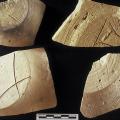
These particular symbols made on the bottom of terra cotta vessels prior to firing were probably made by potters during the Kot Dijian Period in order to identify their own vessels or ones being made for specific customers. Some of these single pre-… >